Kurama-dera
Mount Kurama
Researched and translated with AI assistance. Every claim is linked to its source, but errors get through, so check the official site for opening times, fees and closures.About
In short
Founded in 770 on Mount Kurama, where the Kongosho stone floor before the main hall is described as a place of practice for uniting with cosmic energy.
Quick facts
- Address
- 1074 Kuramahoncho, Sakyo-ku, Kyoto
- Spiritual entities
- Avalokiteśvara (Kannon · Gwaneum, 観音菩薩)
About this place
Kurama-dera stands on Mount Kurama in Sakyo, Kyoto, and is the head temple of Kurama-kokyo. It began in 770, when Gantei, a senior disciple of the priest Ganjin, climbed the mountain guided by a dream oracle and a white horse and built a hermitage enshrining Bishamonten. Its object of worship is Sonten, which the temple explains as the cosmic life and cosmic energy that gives rise to everything that exists, human beings included. Three bodies — the thousand-armed Kannon, Bishamonten, and Goho Mao-son — are together called Sonten. The Kongosho floor before the main hall is modelled on a star mandala and is described as a place of practice where a person unites with Sonten.
Origin and history
In 770, at the end of the Nara period, Gantei — a senior disciple of Ganjin of Toshodai-ji in Nara — climbed Mount Kurama on the night of the fourth day of the first month, guided by a dream oracle and by a white horse, and built a hermitage enshrining Bishamonten.
In 796 Fujiwara no Isendo, head of the office of construction at To-ji, wished to build a hall enshrining Kannon. Under a revelation that Bishamonten and Kannon are one and the same at root, he laid out the temple buildings, enshrined Bishamonten, and later had a thousand-armed Kannon carved and enshrined alongside it.
In the Edo period the form of devotion to the principal image of Bishamonten shifted from a deity of war to a deity of good fortune. In 1947 the first abbot, Shingaku Koun, unified this varied history of devotion under the name Kurama-kokyo, and in 1949 Kurama-dera became its head temple.
What it is locally associated with
The Kongosho
The temple records that the Kongosho before the main hall, modelled on a star mandala of Sonten’s waves, is a place of practice where a person unites with Sonten.
documented historySonten is cosmic life
The temple explains Sonten as the cosmic life and cosmic energy that gives rise to everything that exists, human beings included.
documented historyA dream and a white horse
In 770 Gantei climbed Mount Kurama guided by a dream oracle and a white horse, and built a hermitage enshrining Bishamonten.
documented historyThe Mao-den at the inner sanctuary
The Mao-den has been venerated since ancient times as the rock seat where Goho Mao-son descended.
folk tradition
What the temple teaches on this mountain is not who to ask, but what a thing is. Sonten, its object of worship, is the cosmic life and cosmic energy that gives rise to everything that exists, human beings included — that is the temple’s own account. The spirit of the moon, love, is the thousand-armed Kannon; the spirit of the sun, light, is Bishamonten; the spirit-king of the earth, power, is Goho Mao-son. The three together are called Sonten.
And all of that comes down to one patch of ground. The Kongosho before the main hall, the temple records, is modelled on a star mandala across which the waves of Sonten — cosmic energy — spread without end, and is a place of practice where a person, holding the power of the cosmos within, unites with Sonten, which is the cosmos itself. Nowhere else on this list does a place write, in its own words, that the ground you stand on is the practice.
At the inner sanctuary, the Mao-den has been venerated since ancient times as the rock seat and rock precinct where Goho Mao-son descended. Along the approach, on the path of tree roots, the roots trace patterns across the surface because the sandstone here was hardened by an intrusion of molten magma and the roots could not reach down into it.
The temple posts no list of things to be granted. What it posts is a prayer instead: beautiful as the moon, warm as the sun, strong as the earth. Living with the heart of Sonten as one’s own heart — that, the temple says, is devotion to Sonten.
Claims and evidence levels 4
- Kurama-dera was founded in 770 by Gantei, a senior disciple of Ganjin, who climbed Mount Kurama guided by a dream oracle and a white horse and enshrined Bishamonten in a hermitage. documented history
- Its object of worship, Sonten, is explained by the temple as the cosmic life and cosmic energy giving rise to all that exists; the thousand-armed Kannon, Bishamonten and Goho Mao-son are together called Sonten. documented history
- The Kongosho before the main hall is modelled on a star mandala and is described by the temple as a place of practice where a person unites with Sonten. documented history
- The Mao-den at the inner sanctuary has been venerated since ancient times as the rock seat and rock precinct where Goho Mao-son descended. folk tradition
Related guides
- How to visit a shrine or temple in JapanThe country-wide basics: purifying at the water basin, the two-bows-two-claps-one-bow form at shrines, and what temples do instead.
- What a "power spot" actually isA modern Japanese coinage, not a traditional religious category. Where the word came from, what it does and does not claim, and why this site uses it anyway.
- Shrine or temple?A shrine is Shinto and a temple is Buddhist, and you can usually tell at the gate. Why the line is cleaner on paper than on the ground, and what a government order in 1868 has to do with it.
- Omamori, ema, omikuji and goshuinThe four things you are most likely to receive, write, draw or be given at a shrine or temple, what each is actually for, and the one of them people most often get wrong.
Sources
Last updated:
Similar places
8 places
 Temple
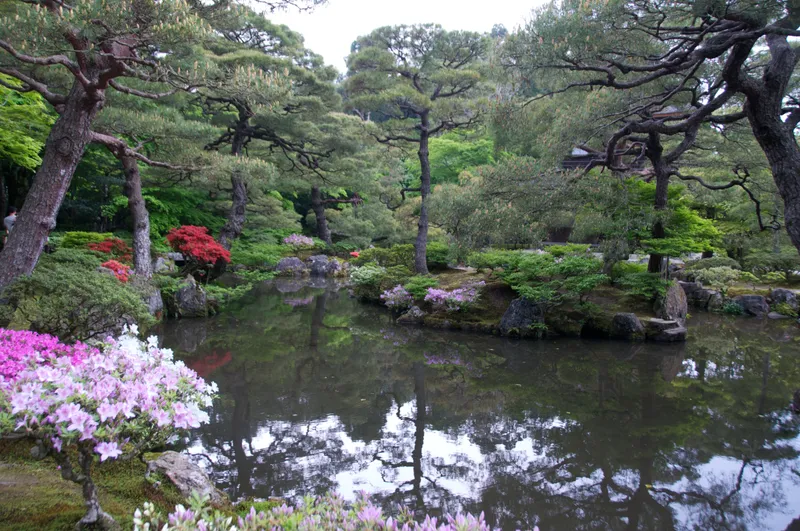
Ginkaku-ji
Ashikaga Yoshimasa’s mountain villa, later a temple — and he died without seeing the pavilion finished.
 Temple
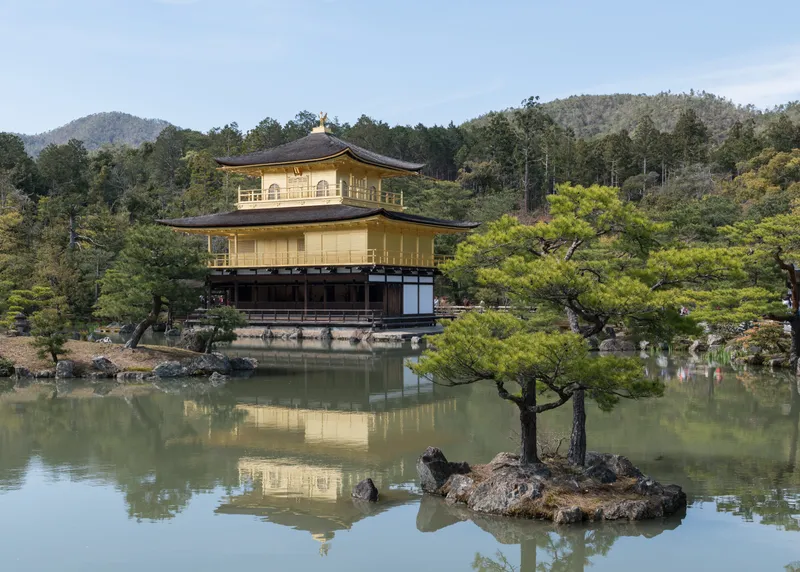
Kinkaku-ji
The mountain villa of Ashikaga Yoshimitsu, made a temple by his will — its pavilion holding a Shaka triad, a Kannon hall and the Buddha’s relics on three floors.
 Temple
Rokkakudo
- Skill & Mastery
Said to be founded by Prince Shotoku, and the birthplace of ikebana — the head of the Ikenobo school serves as its abbot.
 Temple
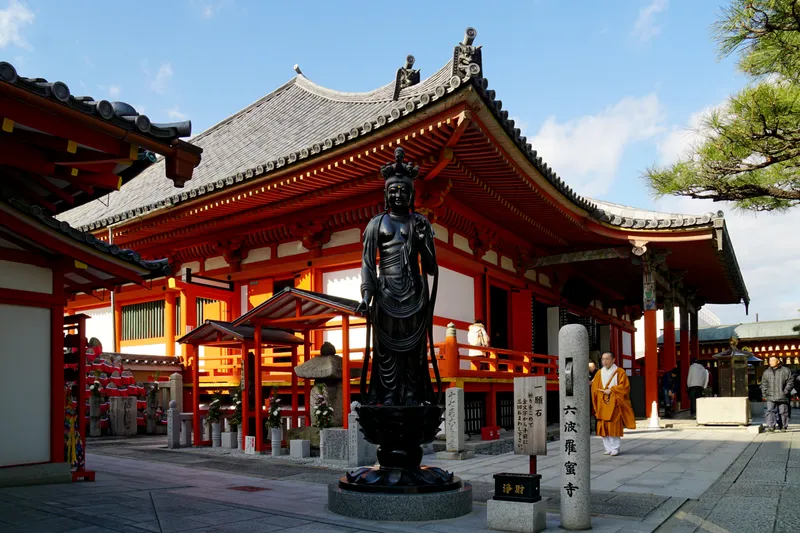
Rokuharamitsu-ji
- Health & Healing
Founded in 951, where Kuya hauled a Kannon he had carved through the streets against an epidemic — and the tea he gave the sick is still served.
 Temple
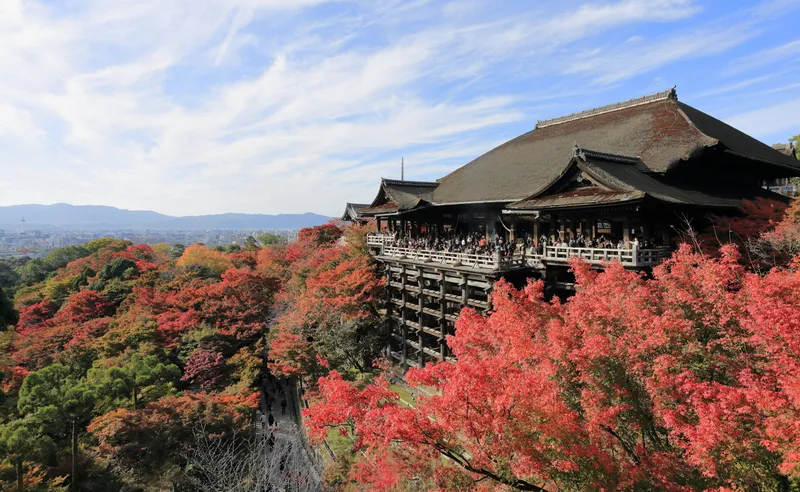
Kiyomizu-dera
- Career & Work
- Health & Healing
- Love & Romance
A Kannon temple begun in 778 beside the Otowa waterfall, venerated by those seeking health, advancement and a good match.
 Temple
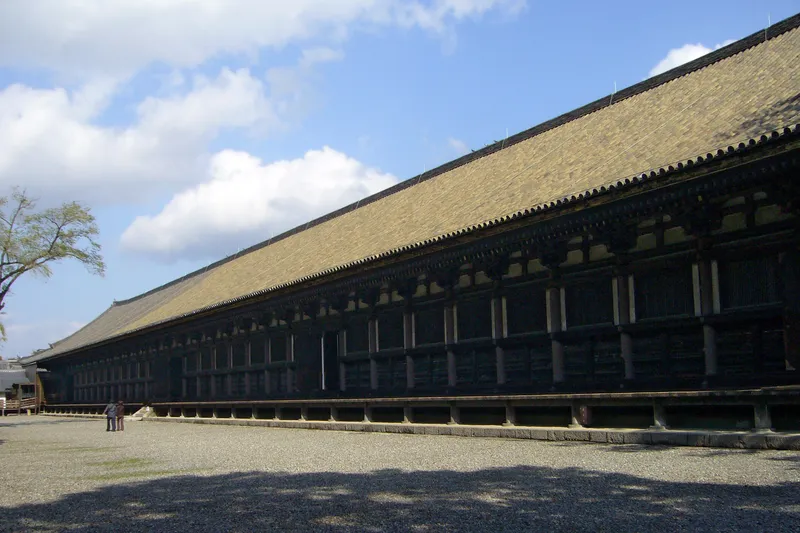
Sanjusangendo
A hall founded inside the detached palace of the retired Emperor Go-Shirakawa, holding a thousand and one standing images of Kannon.
 Temple
Daigo-ji
- Fertility & Children
Founded in 874, and the temple where Emperor Daigo obtained a son through prayer — then took the temple’s name as his own.
 Temple
Matsuo-dera
- Protection & Safety
- Wish Fulfillment
Built in 718 by Prince Toneri while he was compiling the Nihon Shoki, at forty-two and in his unlucky year, praying that the book be completed safely and misfortune warded off.
No places match your filters