Kumata Jinja
Researched and translated with AI assistance. Every claim is linked to its source, but errors get through, so check the official site for opening times, fees and closures.About
In short
Founded in 862 with an oracle in the deity’s own voice: I am the guardian of this land, and if I am worshipped hereafter I shall make the realm at peace and the people prosperous.
Quick facts
- Address
- 2-1-67 Hiranomiyacho, Hirano-ku, Osaka
- Spiritual entities
- Izanagi (伊邪那岐命) · Izanami (伊邪那美命) · Susanoo no Mikoto (素盞嗚尊)
About this place
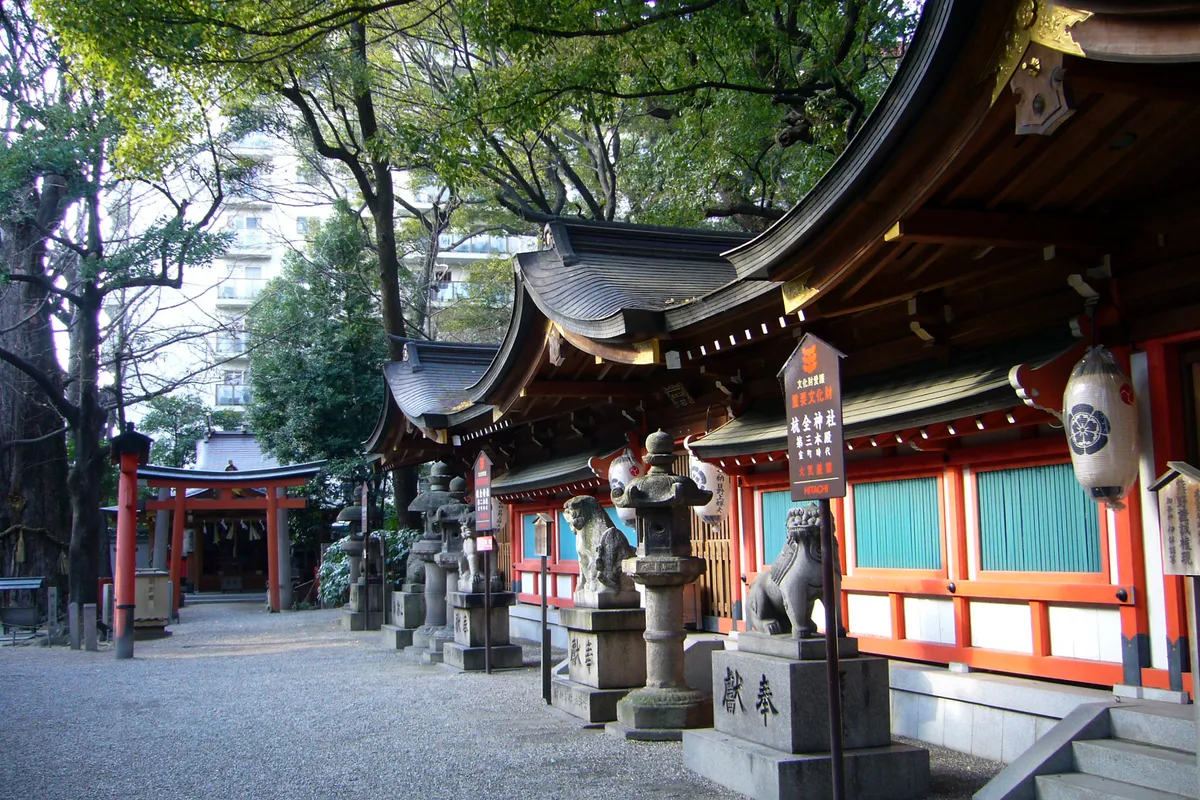
Kumata Jinja is in Hirano, Osaka. It is transmitted to have begun in 862, when Sakanoue no Tomichi, son of Sakanoue no Tamuramaro, invited the Gion sanctuary of Susanoo here. At that time, it is transmitted, there came an oracle: "I am the guardian deity of this land; if I am worshipped hereafter, I shall make the realm at peace and the people prosperous." The first main hall enshrines Susanoo; the second Izanami, Hayatama-o and Kotosaka-o; the third Izanagi. The second hall was built in 1190 and the third in 1321 by decree of Emperor Go-Daigo. The summer festival runs from 11 to 14 July, with nine danjiri floats from the nine neighbourhoods of Hirano.
Origin and history
Kumata Jinja is transmitted to have begun in 862, when Sakanoue no Tomichi, son of Sakanoue no Tamuramaro, invited the Gion sanctuary of Susanoo to this place. At that time, it is transmitted, an oracle came: "I am the guardian deity of this land; if I am worshipped hereafter, I shall make the realm at peace and the people prosperous."
The first main hall enshrines Susanoo; the second, Izanami, Hayatama-o and Kotosaka-o; the third, Izanagi. The second hall was built in 1190 and the third in 1321, by decree of Emperor Go-Daigo.
The summer festival runs from 11 to 14 July, with nine danjiri floats from the nine neighbourhoods of Hirano.
What it is locally associated with
The oracle of the guardian
At the founding, it is transmitted, an oracle came: "I am the guardian deity of this land; if I am worshipped hereafter, I shall make the realm at peace and the people prosperous."
folk traditionThree halls, three centuries apart
The first main hall dates to 862, the second to 1190, and the third to 1321, built by decree of Emperor Go-Daigo.
documented historyNine floats for nine neighbourhoods
The summer festival runs from 11 to 14 July with nine danjiri floats from the nine neighbourhoods of Hirano.
documented history
At this shrine the deity sets out its own terms, in the first person. The oracle at the founding in 862: I am the guardian deity of this land; if I am worshipped hereafter, I shall make the realm at peace and the people prosperous. I will protect, therefore worship me. What is described is not what will be granted, but what follows from the worship.
There are three halls, and the years they were built stand three centuries apart. Susanoo’s hall in 862, the second in 1190, the third in 1321 by decree of Go-Daigo. This is not a shrine that went up at once, but one that grew a hall at a time.
The summer festival runs 11 to 14 July, with nine danjiri floats from the nine neighbourhoods of Hirano. That the number of floats matches the number of neighbourhoods says what kind of festival it is.
Claims and evidence levels 3
- At the founding in 862 an oracle is transmitted: "I am the guardian deity of this land; if I am worshipped hereafter, I shall make the realm at peace and the people prosperous." folk tradition
- The shrine has three main halls, built in 862, 1190 and 1321, the last by decree of Emperor Go-Daigo. documented history
- Its summer festival runs 11–14 July with nine danjiri floats from the nine neighbourhoods of Hirano. documented history
Related guides
- How to visit a shrine or temple in JapanThe country-wide basics: purifying at the water basin, the two-bows-two-claps-one-bow form at shrines, and what temples do instead.
- What a "power spot" actually isA modern Japanese coinage, not a traditional religious category. Where the word came from, what it does and does not claim, and why this site uses it anyway.
- Shrine or temple?A shrine is Shinto and a temple is Buddhist, and you can usually tell at the gate. Why the line is cleaner on paper than on the ground, and what a government order in 1868 has to do with it.
- Omamori, ema, omikuji and goshuinThe four things you are most likely to receive, write, draw or be given at a shrine or temple, what each is actually for, and the one of them people most often get wrong.
Sources
Last updated:
Similar places
8 places
 Shrine
Tamaki Shrine
- Protection & Safety
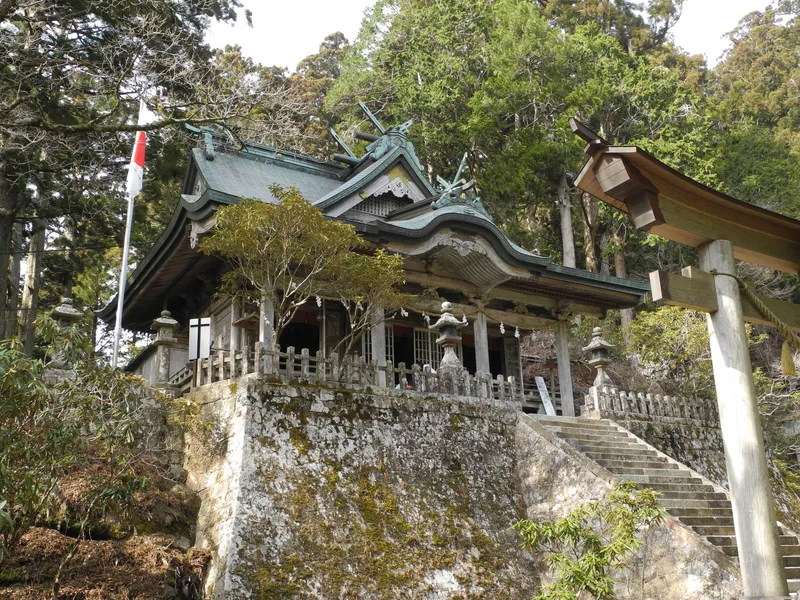
A shrine near the summit of Mount Tamaki, at 1,076 metres, transmitted as founded to enshrine Hayatama for the warding of fire from the palace and the driving off of evil.
 Shrine
Namba Yasaka Jinja
- Protection & Safety
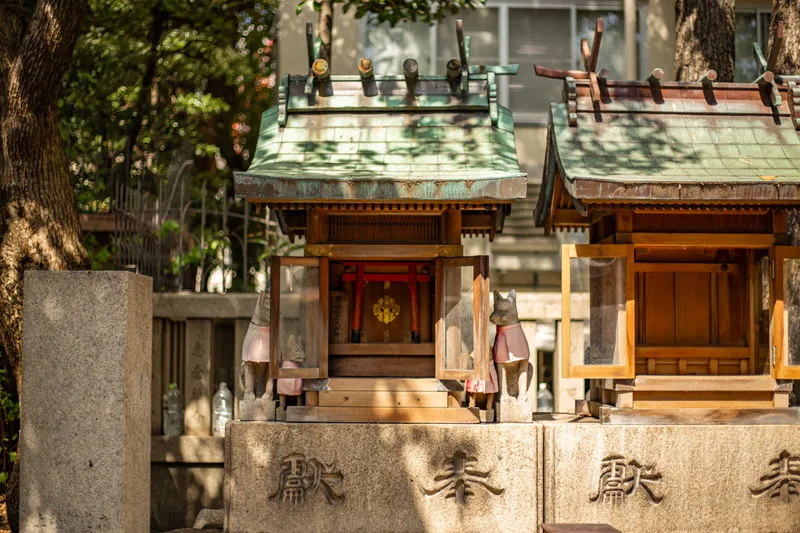
Its deity Susanoo is described as having put down the great serpent and removed the hardship of the people; it was long the tutelary deity of the whole Namba district.
 Shrine
Niukawakami Shrine, Middle Shrine
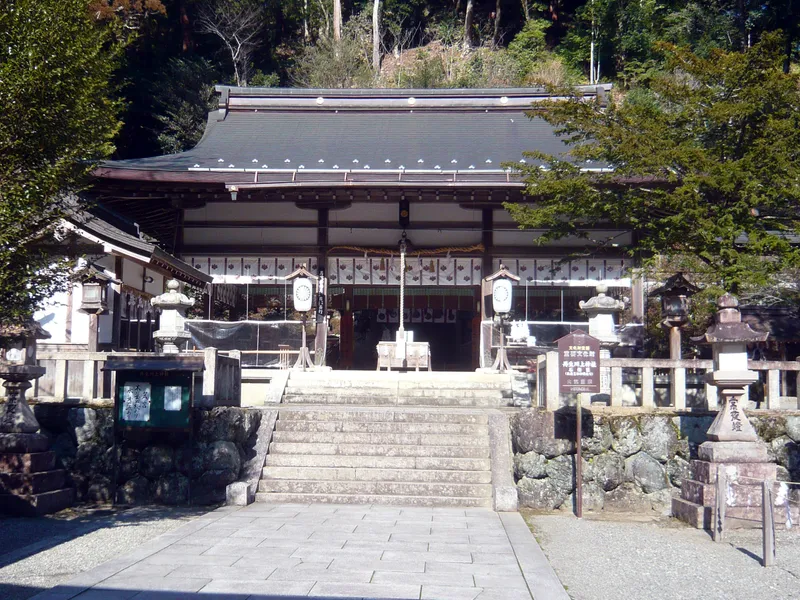
Founded on an oracle — "if you raise my shrine pillars at Niukawakami and revere me, I shall send sweet rain for the realm and stop the long rains" — and dedicated to Mizuhanome, who governs water.
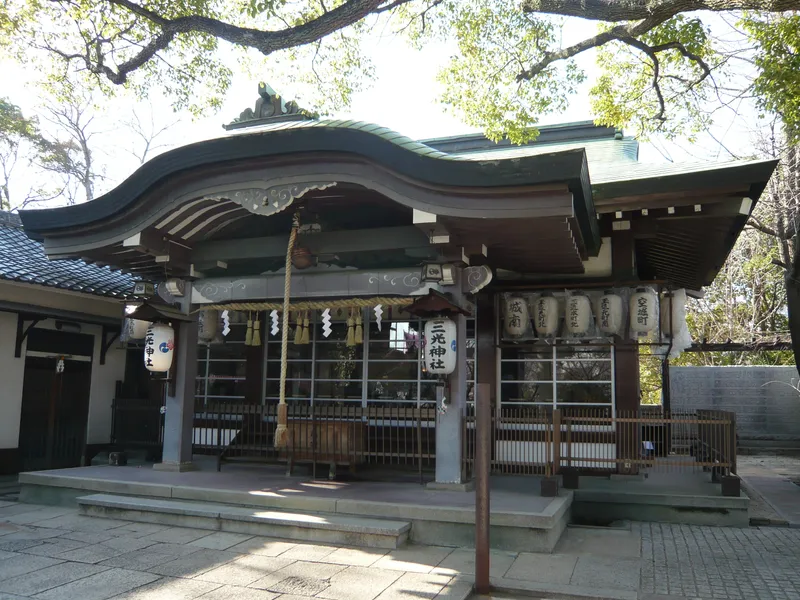 Shrine
Sanko Jinja
- Health & Healing
Known since antiquity as the only deity in all Japan for warding off palsy, with its rite held for seven days from 1 June each year.
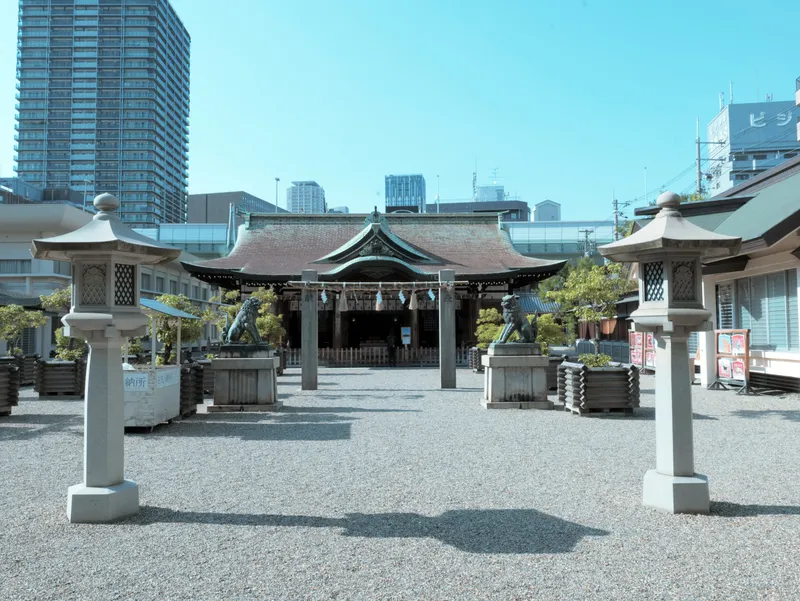 Shrine
Imamiya Ebisu Jinja
- Money & Prosperity
Founded in 600 as the guardian deity of a marketplace, and revered since as a protector of prosperous trade and full good fortune.
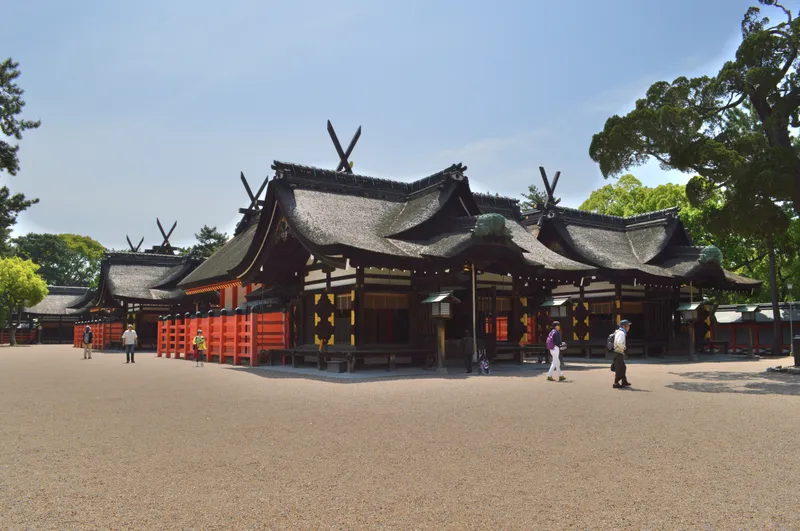 Shrine
Sumiyoshi Taisha
- Protection & Safety
- Purification
Head shrine of Japan’s twenty-three hundred Sumiyoshi shrines, guardian of voyages since the envoys to Sui and Tang, and ancestral deity of purification.
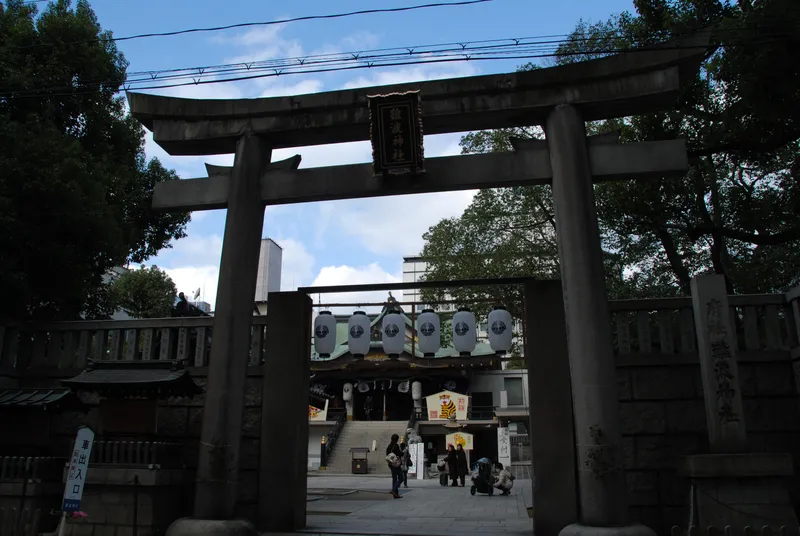 Shrine
Namba Jinja
Transmitted as founded when Emperor Hanzei opened his palace at Shibagaki and enshrined his father, Emperor Nintoku.
 Shrine
Ikasuri Jinja
- Family & Home
- Fertility & Children
- Money & Prosperity
Because it is the deity of this ground, the shrine records, it governs safe childbirth, children’s safe growth and safety in trade.
No places match your filters