Isshin-ji
The temple of the bone buddhas
Researched and translated with AI assistance. Every claim is linked to its source, but errors get through, so check the official site for opening times, fees and closures.About
In short
Begun in 1185 from Honen’s hermitage, and known since 1887 for its bone buddhas — images of Amida cast from human ashes.
Quick facts
- Address
- 2-8-69 Osaka, Tennoji-ku, Osaka
- Spiritual entities
- Amitābha (Amida Nyorai · Amita-bul, 阿弥陀如来)
About this place
Isshin-ji is a Jodo temple in Tennoji, Osaka. Its origin is dated to 1185, when Honen, founder of the Pure Land school, practised the meditation on the setting sun at a four-by-four-bay hermitage here called the New Hermitage of Arahaka. The hut was called Genku-an after Honen’s own name, and was later renamed Isshin-ji. From the end of the Edo period it was busy as the temple of the segaki rite, performed every day of the year, and since the bone buddha was made in 1887 it has been known as the temple of the bone buddhas. A bone buddha is an image of Amida made from cremated remains; the practice has run for more than 130 years since the first was cast, and some two million of the dead now sit in the ossuary and bone buddha hall in the form of Amida.
Origin and history
Isshin-ji’s origin is dated to 1185, when Honen, who founded the Pure Land school, practised the meditation on the setting sun at the four-by-four-bay hermitage here called the New Hermitage of Arahaka. The hut was called Genku-an after Honen’s own name, and was later renamed Isshin-ji.
In 1600, the year of Sekigahara, Tokugawa Ieyasu’s eighth son Senchiyo died young and his funeral was held at Isshin-ji. In the winter campaign at Osaka in 1614, Ieyasu’s headquarters were placed here.
From the end of the Edo period the temple was busy as the temple of the segaki rite, performed every day of the year, and since the bone buddha was made in 1887 it has been known as the temple of the bone buddhas.
What it is locally associated with
The bone buddhas
Images of Amida made from cremated remains, begun in 1887. Some two million of the dead now sit there in the form of Amida.
documented historyTo venerate one is a double offering
The temple explains that venerating a bone buddha is at once an offering to the dead and to the buddha. Designated an intangible folk cultural property of Osaka in 2005.
documented historyHonen and the setting sun
Its origin is dated to 1185, when Honen practised the meditation on the setting sun at the hermitage called the New Hermitage of Arahaka.
documented history
There are buddhas here made of people. A bone buddha is an image of Amida made from cremated remains. Making a buddha out of ashes — this unheard-of custom, the temple records, began at Isshin-ji in 1887.
The number is the weight of it. More than 130 years since the first casting, some two million of the dead now sit in the ossuary and bone buddha hall in the form of Amida. Eight images stand there now. Fourteen have been made in all; six from before the war were lost to war damage. Counted with the ones that burned, this temple’s last century and a bit is also Japan’s.
What people do here is not asking. To venerate a bone buddha, the temple explains, is at once to make offering to the dead and to make offering to the buddha. The one who is worshipped and the ones on whose behalf are the same. In 2005 the practice was designated an intangible folk cultural property of the city of Osaka.
It began with a hut. In 1185 Honen practised the meditation on the setting sun at the New Hermitage of Arahaka — the discipline of watching the sun go down in the west.
Claims and evidence levels 3
- Isshin-ji dates its origin to 1185, when Honen practised the meditation on the setting sun at a hermitage here later renamed Isshin-ji. documented history
- The making of bone buddhas — images of Amida from cremated remains — began at Isshin-ji in 1887; some two million of the dead are now enshrined in that form. documented history
- Eight bone buddhas stand now; fourteen have been made in all, six of them lost to war damage. The practice was designated an intangible folk cultural property of Osaka in 2005. documented history
Related guides
- How to visit a shrine or temple in JapanThe country-wide basics: purifying at the water basin, the two-bows-two-claps-one-bow form at shrines, and what temples do instead.
- What a "power spot" actually isA modern Japanese coinage, not a traditional religious category. Where the word came from, what it does and does not claim, and why this site uses it anyway.
- Shrine or temple?A shrine is Shinto and a temple is Buddhist, and you can usually tell at the gate. Why the line is cleaner on paper than on the ground, and what a government order in 1868 has to do with it.
- Omamori, ema, omikuji and goshuinThe four things you are most likely to receive, write, draw or be given at a shrine or temple, what each is actually for, and the one of them people most often get wrong.
Sources
Last updated:
Similar places
8 places
 Shrine
Horikoshi Jinja
- Wish Fulfillment
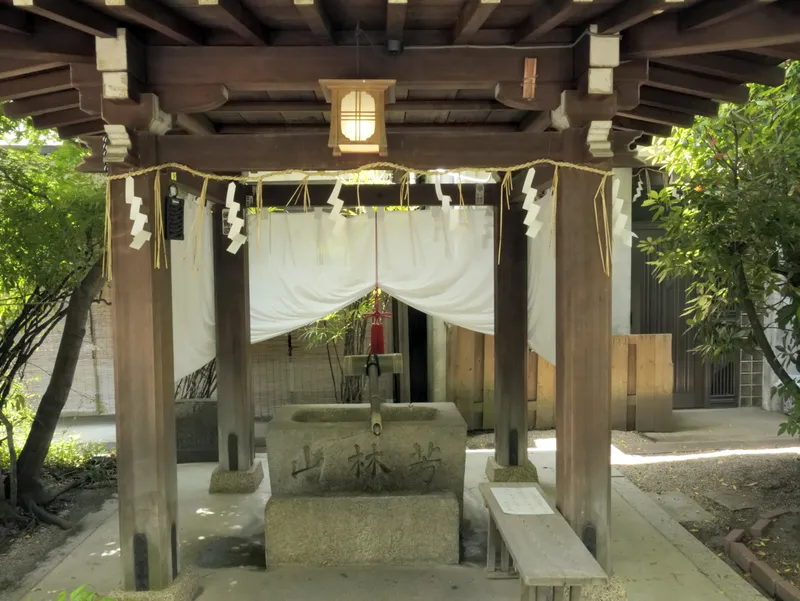
Founded by Prince Shotoku at the same time as Shitenno-ji in memory of his uncle Emperor Sushun, and said to grant one wish in a lifetime.
 Temple
Shoman-in Aizendo
- Love & Romance
- Money & Prosperity
- Bonds & Matchmaking
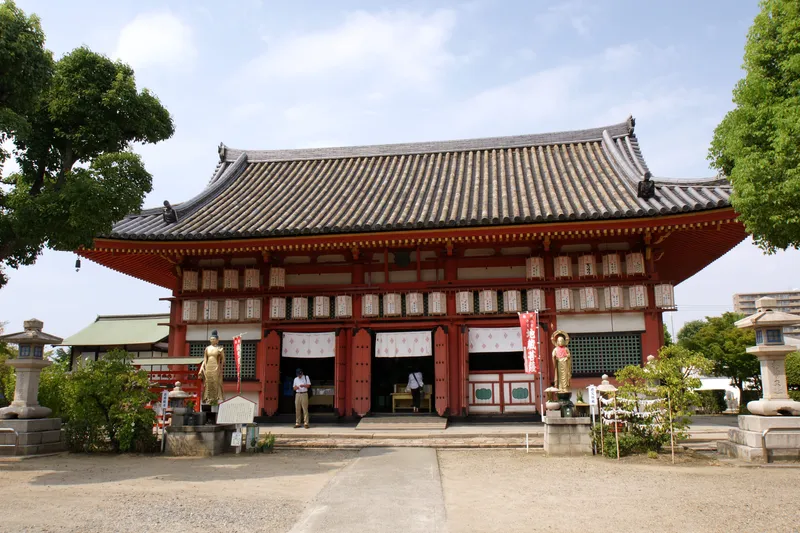
Founded by Prince Shotoku in 593 on the site of his dispensary — called the birthplace of welfare work — and known for the binding of ties and harmony between husband and wife.
 Temple
Shitenno-ji
- Health & Healing
- Money & Prosperity
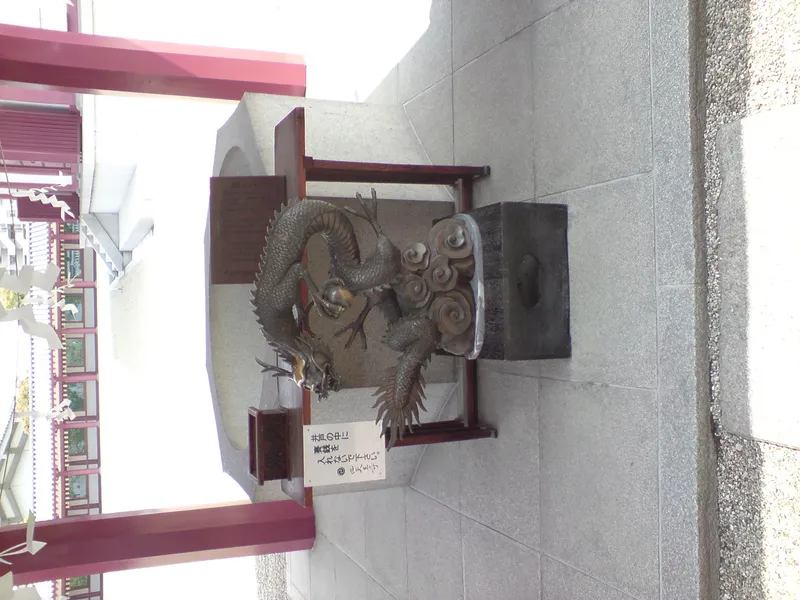
Founded in 593 when Prince Shotoku made good on a battlefield vow — Japan’s first official state temple, still praying daily for recovery from illness and prosperity in business.
 Shrine
Sanko Jinja
- Health & Healing
Known since antiquity as the only deity in all Japan for warding off palsy, with its rite held for seven days from 1 June each year.
 Shrine
Imamiya Ebisu Jinja
- Money & Prosperity
Founded in 600 as the guardian deity of a marketplace, and revered since as a protector of prosperous trade and full good fortune.
 Shrine
Namba Yasaka Jinja
- Protection & Safety
Its deity Susanoo is described as having put down the great serpent and removed the hardship of the people; it was long the tutelary deity of the whole Namba district.
 Shrine
Kozu-gu
- Fertility & Children
- Money & Prosperity
Founded in 866, when an imperial order sent a search for the ruins of the old capital and the shrine was built where they were found.
 Shrine
Namba Jinja
Transmitted as founded when Emperor Hanzei opened his palace at Shibagaki and enshrined his father, Emperor Nintoku.
No places match your filters