Silleuksa, Bongmisan
Boeunsa
Researched and translated with AI assistance. Every claim is linked to its source, but errors get through, so check the official site for opening times, fees and closures.About
In short
The temple where the only surviving Goryeo brick pagoda in Korea stands.
Quick facts
- Address
- 73 Silleuksa-gil, Yeoju-si, Gyeonggi-do
About this place
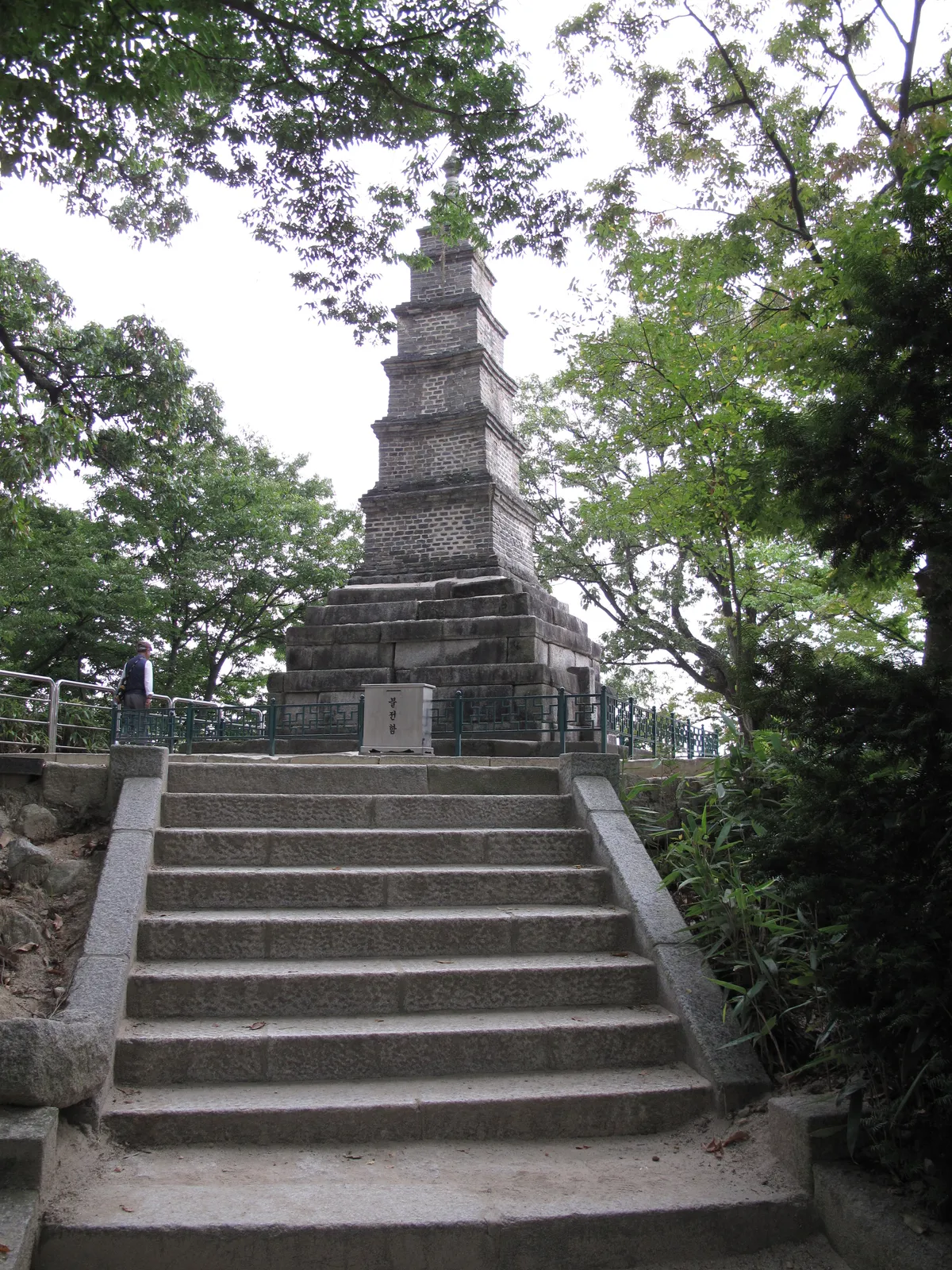
Silleuksa stands on Bongmisan in Yeoju, Gyeonggi-do. One account holds that the name Silleuk comes from a legend in which the royal master Naong restrained a dragon-horse with a wondrous bridle. The temple grew great because Naong showed various marvels here and passed away; three months later, on the fifteenth day of the eighth month of 1376, a stupa enshrining his crown-bone relic was raised on the bank to the north, and a large rebuilding was carried out with it. From 1469, when Yeongneung was moved to Yeoju from Daemosan in Gwangju, the court determined to make Silleuksa the memorial temple of that tomb; a great rebuilding began in the second month of 1472 and in eight months more than two hundred kan of buildings were repaired or newly raised. The following year the queen dowager renamed the temple Boeunsa, requiting kindness. The multi-storey brick pagoda of Silleuksa is the only surviving Goryeo brick pagoda and is designated a Treasure.
Origin and history
One account holds that the name Silleuk comes from a legend in which the royal master Naong restrained a dragon-horse with a wondrous bridle.
The temple grew great because Naong showed various marvels here and passed away. Three months later, on the fifteenth day of the eighth month of 1376, a stupa enshrining his crown-bone relic was raised on the bank to the north, and a large rebuilding was carried out with it.
From 1469, when Yeongneung was moved to Yeoju, the court determined to make Silleuksa the memorial temple of that tomb. A great rebuilding began in the second month of 1472, and in eight months more than two hundred kan of buildings were repaired or newly raised; the following year the queen dowager renamed the temple Boeunsa.
The multi-storey brick pagoda of Silleuksa is the only surviving Goryeo brick pagoda and is designated a Treasure.
What it is locally associated with
The only Goryeo brick pagoda
The multi-storey brick pagoda of Silleuksa is the only surviving Goryeo brick pagoda and is designated a Treasure.
documented historyNaong’s passing and stupa
Naong showed marvels here and passed away; three months later a stupa holding his crown-bone relic was raised on the northern bank, with a large rebuilding.
documented historyEight months, two hundred kan
The rebuilding begun in the second month of 1472 repaired or raised more than two hundred kan in eight months, and the temple was renamed Boeunsa the next year.
documented history
Something stands here of which the country has only one. The multi-storey brick pagoda is the only surviving Goryeo brick pagoda. Of pagodas raised in brick rather than stone, one Goryeo example remains, and it is at this temple.
What first made the temple great was a death. Naong showed marvels here and passed away, and three months later, on the fifteenth of the eighth month of 1376, a stupa holding his crown-bone relic went up on the northern bank, with a large rebuilding beside it. Hoeamsa in Yangju, in the same province, records that Naong rebuilt that temple in 1378, while this record has him dying here in 1376. The two do not sit together, and each is left as its own source has it.
What made it great a second time was the court. When Yeongneung was moved to Yeoju in 1469 the temple was appointed its memorial temple, and from the second month of 1472 more than two hundred kan were repaired or raised over eight months. The next year its name became Boeunsa — requiting kindness.
On being the only survivor, this temple pairs with Bunhwangsa in Gyeongju. That temple’s pagoda is the oldest of the Silla stone pagodas, built of stone dressed to imitate brick; this one is built of actual brick. Two kinds, different in material and in age, each surviving in a single example.
Gyeonggi’s temples are recorded this way, with a count of bays. Bongseonsa in Namyangju stands at eighty-nine, Hoeamsa in Yangju at two hundred and sixty-six.
Claims and evidence levels 2
- The multi-storey brick pagoda here is the only surviving Goryeo brick pagoda in Korea. documented history
- Made the memorial temple of Yeongneung from 1469, it was rebuilt at more than two hundred kan in eight months from 1472 and renamed Boeunsa. documented history
Related guides
- How to visit a Korean templeHands together and hands folded, how the bows work, and what to do at the threshold of a hall. Starting with what is different from visiting a Japanese shrine.
- The small hall behind the main one — sansingak and samseonggakUphill from the main hall of a Korean temple stands a smaller one, and inside it an old man with a tiger. This is where the indigenous religion sits, inside the Buddhist institution.
- Templestay — a night at a templeA programme that puts you inside a temple’s own timetable for a day or two. What you do, which type to book, and what to be ready for.
- Prayer sites and the one wishThe three great Gwaneum sites, the five relic halls, and the crowds before the entrance exam. Where the saying about one wish comes from, and where the record stops.
Sources
- 봉미산 신륵사(鳳尾山 神勒寺) — 한국민족문화대백과사전 (accessed 2026-08-16)
Last updated:
Similar places
8 places
 Temple
Yongmunsa, Yongmunsan
The temple whose courtyard ginkgo was granted an office by King Sejong of Joseon.
 Temple
Sangwonsa, Chiaksan
The temple whose bell a pheasant struck three times, and whose mountain was renamed for it.
 Temple
Guryongsa, Chiaksan
A temple whose founding legend has a single written charm dry up the pool where nine dragons lived.
 Temple
Chiljangsa, Chilhyeonsan
- Exams & Study
The mountain and the temple are both named for seven robbers who became seven sages.
 Temple
Sujongsa, Ungilsan
Named because what a king took for a bell in the night turned out to be dripping water in a cave.
 Temple
Bongeunsa
- Family & Home
Founded by a widow to pray for her dead husband’s repose, and later made head temple of the Seon school.
 Temple
Yongjusa
- Family & Home
The temple King Jeongjo refounded beside his father’s grave, holding the woodblocks of the sutra on what children owe their parents.
 Temple
Yeonjudae
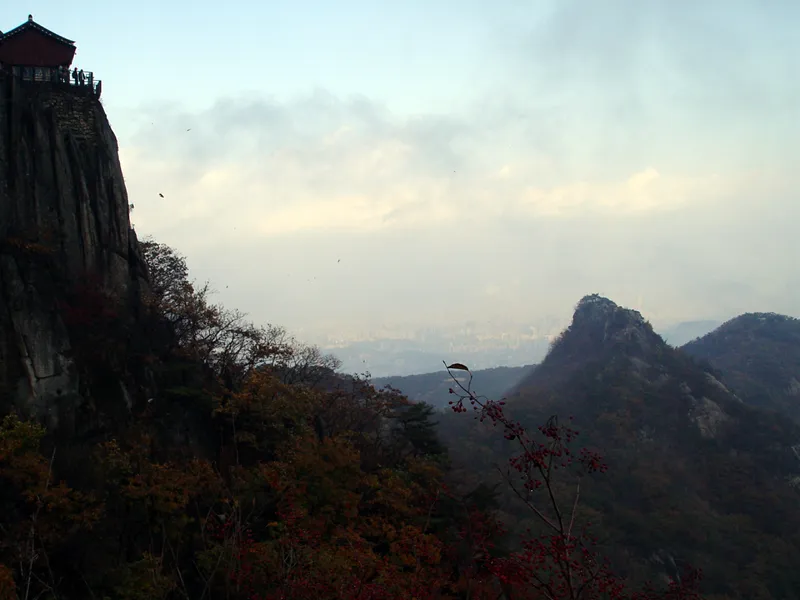
A hermitage at the cliff edge on Gwanaksan, named for men who climbed here to look toward the fallen capital and weep.
No places match your filters