Hwagyesa, Samgaksan
Bodeogam
Researched and translated with AI assistance. Every claim is linked to its source, but errors get through, so check the official site for opening times, fees and closures.About
In short
A temple paid for by two men holding the same title, two hundred and fifty years apart.
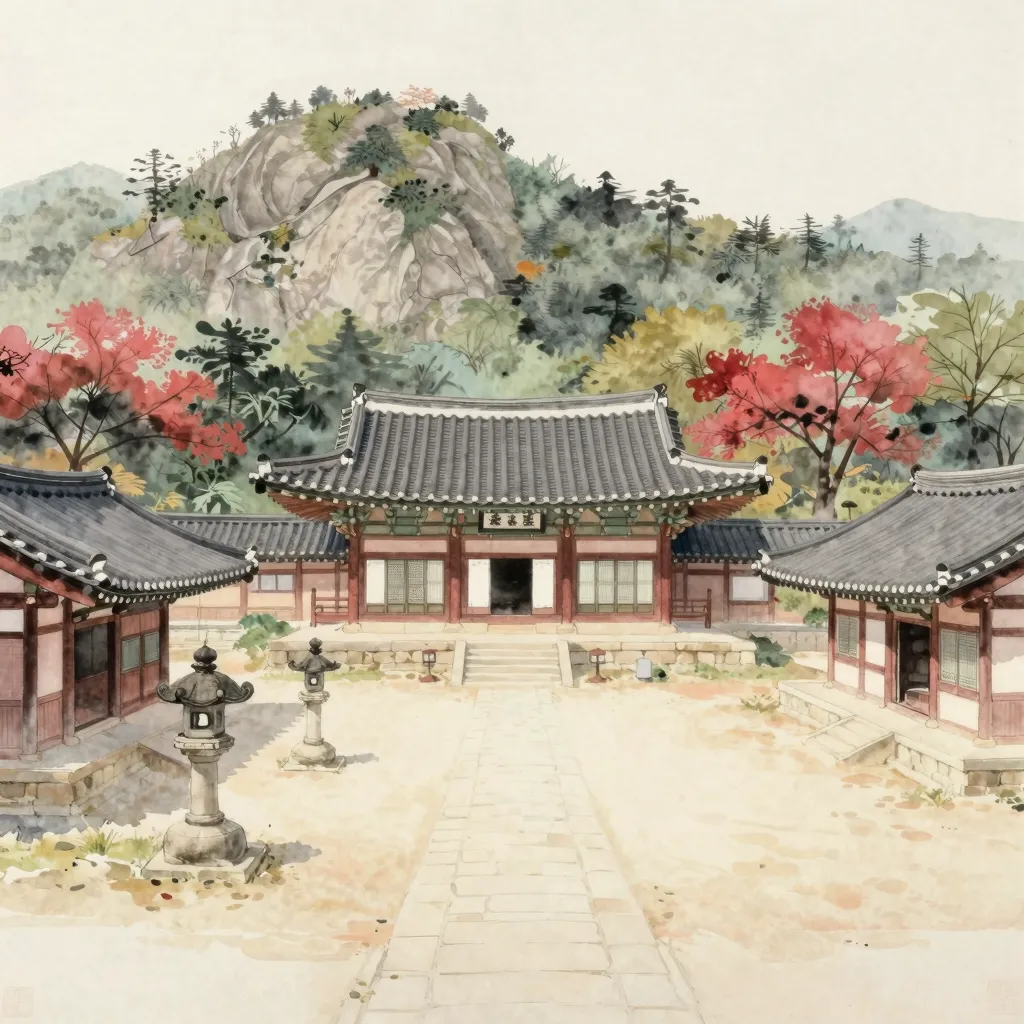
Quick facts
- Address
- 117 Hwagyesa-gil, Gangbuk-gu, Seoul
About this place
Hwagyesa stands in Gangbuk-gu, Seoul. Under King Gwangjong of Goryeo the master Tanmun founded Bodeogam at Buheo-dong on Samgaksan, near the present temple. In 1522 the master Sinwol, in agreement with Yi, Prince Seopyeong, moved it to the present site, built three halls and fifty kan of monks’ quarters, and renamed it Hwagyesa. When fire destroyed everything in the ninth month of 1618, Dowol rebuilt it the following year with a donation from the Grand Prince Deokheung, birth father of King Seonjo, completing the work in the third month of the year after. In 1866 Yongseon and Beomun repaired the decayed buildings with a donation from the Heungseon Daewongun. Hwagyesa is known for its overseas propagation centred on the international Seon centre opened by Seungsahn in 1984. Its main hall is designated tangible heritage of Seoul, and the bronze bell made by the monk Sain is designated a Treasure.
Origin and history
Under King Gwangjong of Goryeo the master Tanmun founded Bodeogam at Buheo-dong on Samgaksan, near the present temple.
In 1522 the master Sinwol, in agreement with Yi, Prince Seopyeong, moved it to the present site, built three halls and fifty kan of monks’ quarters, and renamed it Hwagyesa.
When fire destroyed everything in the ninth month of 1618, Dowol rebuilt it the following year with a donation from the Grand Prince Deokheung, birth father of King Seonjo, completing the work in the third month of the year after. In 1866 Yongseon and Beomun repaired the decayed buildings with a donation from the Heungseon Daewongun.
Hwagyesa is known for its overseas propagation centred on the international Seon centre opened by Seungsahn in 1984.
What it is locally associated with
Two donations, 250 years apart
The temple was rebuilt after the 1618 fire with the Grand Prince Deokheung’s donation, and repaired in 1866 with the Heungseon Daewongun’s.
documented historyFrom Bodeogam to Hwagyesa
In 1522 the master Sinwol moved the temple to its present site with Prince Seopyeong, built three halls and fifty kan of quarters, and renamed it Hwagyesa.
documented historyThe international Seon centre of 1984
The temple is known for its overseas propagation centred on the international Seon centre opened by Seungsahn in 1984.
documented history
The men who twice raised this temple up held the same title. After the fire of 1618, the Grand Prince Deokheung, birth father of King Seonjo, gave the donation for its rebuilding; in 1866 the Heungseon Daewongun gave the donation for the repair of its decayed buildings. Some two hundred and fifty years apart, two men in the same office paid for the same temple.
The later of the two appears on another page of this site. Yonggungsa on Yeongjongdo in Incheon is the temple he renamed in 1864, after praying there for ten years. The repair here is 1866 — two years between them.
The temple itself moved once. It began as Bodeogam at Buheo-dong on Samgaksan, and in 1522 the master Sinwol, in agreement with Prince Seopyeong, moved it to the present ground, built three halls and fifty kan of quarters, and it became Hwagyesa.
There is recent history too. Seungsahn opened an international Seon centre here in 1984, and the temple came to be known for the overseas propagation centred on it.
Claims and evidence levels 2
- The temple was rebuilt in 1619 with a donation from the Grand Prince Deokheung and repaired in 1866 with a donation from the Heungseon Daewongun. documented history
- The master Sinwol moved it to its present site in 1522 and renamed it Hwagyesa. documented history
Related guides
- How to visit a Korean templeHands together and hands folded, how the bows work, and what to do at the threshold of a hall. Starting with what is different from visiting a Japanese shrine.
- The small hall behind the main one — sansingak and samseonggakUphill from the main hall of a Korean temple stands a smaller one, and inside it an old man with a tiger. This is where the indigenous religion sits, inside the Buddhist institution.
- Templestay — a night at a templeA programme that puts you inside a temple’s own timetable for a day or two. What you do, which type to book, and what to be ready for.
- Prayer sites and the one wishThe three great Gwaneum sites, the five relic halls, and the crowds before the entrance exam. Where the saying about one wish comes from, and where the record stops.
Sources
- 삼각산 화계사(三角山 華溪寺) — 한국민족문화대백과사전 (accessed 2026-08-16)
Last updated:
Similar places
8 places
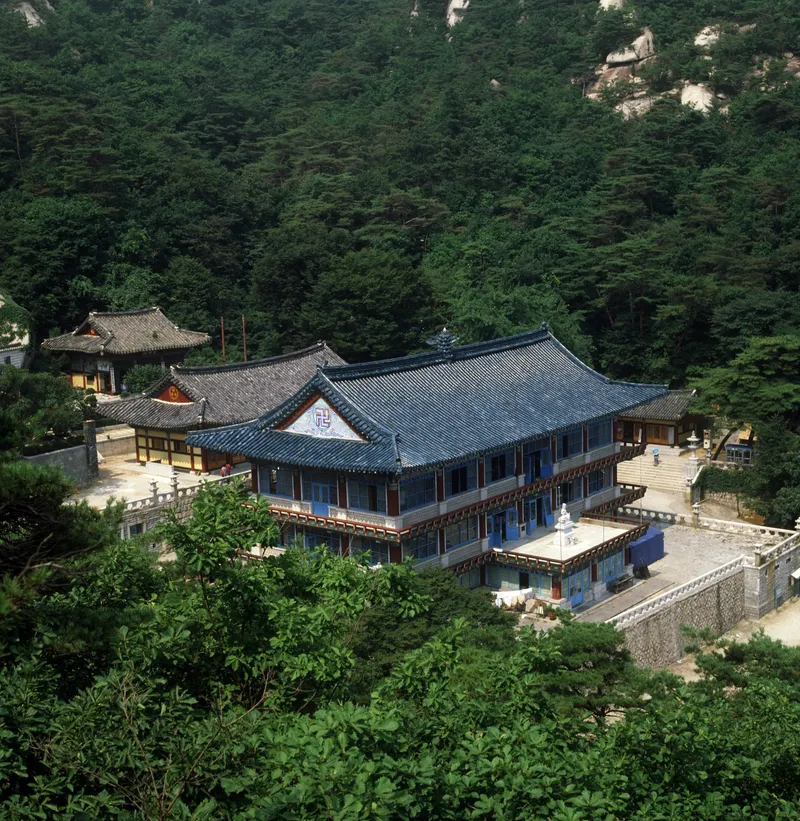 Temple
Doseonsa
- Wish Fulfillment
Founded by Doseon in 862, with a rock-carved Avalokiteshvara he is said to have split the stone by hand to cut, and a stream of people who come to pray.
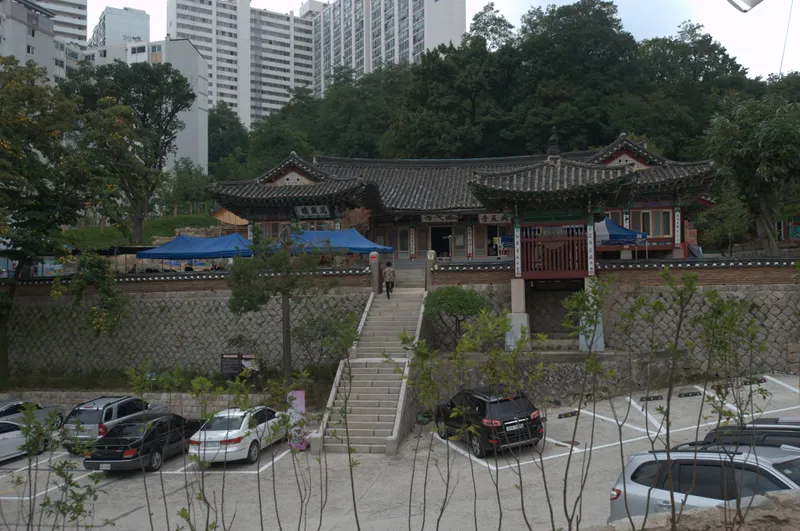 Temple
Heungcheonsa, Samgaksan
A temple of more than a hundred and seventy kan, raised beside a queen’s tomb by the king who had lost her.
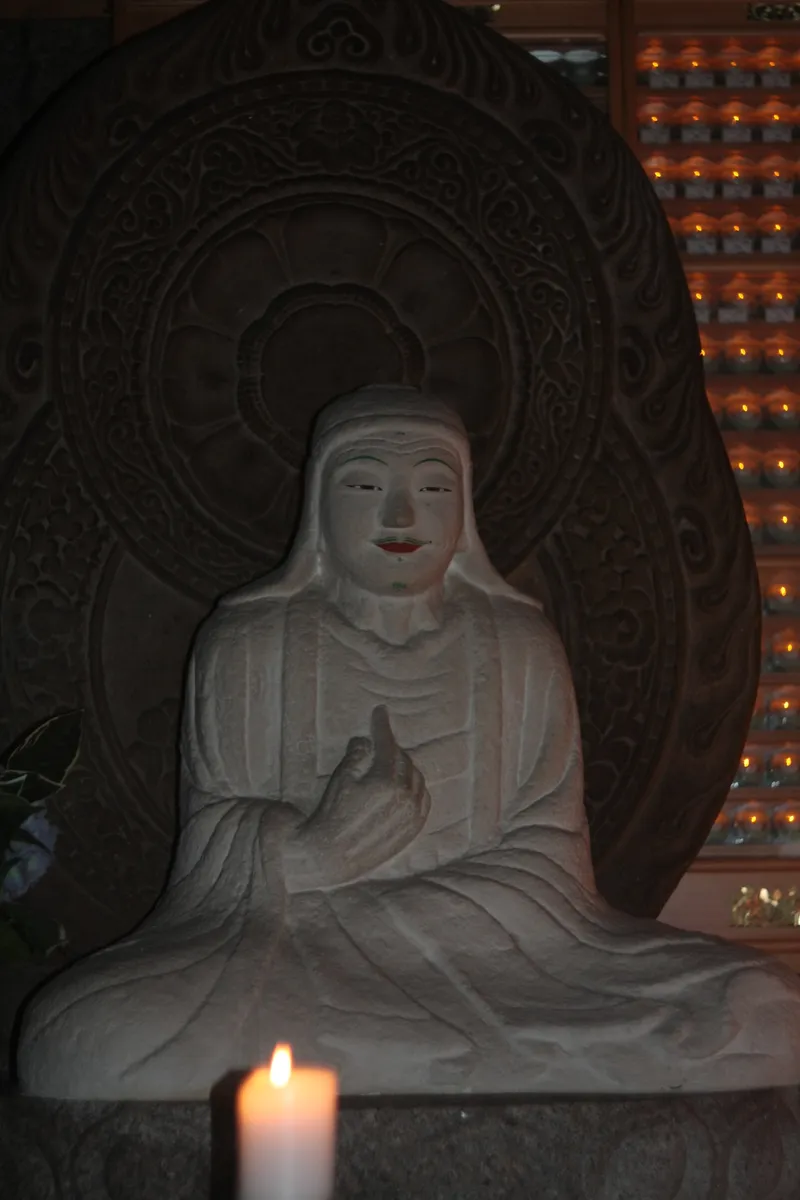 Temple
Seunggasa, Bukhansan
A temple holding a stone portrait of an Indian monk who went to Tang China.
 Temple
Jingwansa, Bukhansan
The temple where a Korean flag was found inside a wall.
 Shrine
Donggwanwangmyo
- Protection & Safety
A shrine to Guan Yu raised after the Imjin War, the only one of Seoul’s four such shrines still standing.
 Temple
Jogyesa
- Exams & Study
The head temple of the Jogye Order, in the middle of downtown Seoul, where a prayer for children ends the day before the national entrance exam each year.
 Shrine
Guksadang, Inwangsan
- Fertility & Children
- Health & Healing
- Protection & Safety
A shaman shrine moved from Namsan to the slope of Inwangsan in 1925 under Japanese pressure, where roughly a hundred gut rites are still held each year.
 Temple
Bongwonsa, Ansan
The temple where the leaders of the 1884 coup learned the reformist thought behind it.
No places match your filters