Hahoe Samsindang Tree
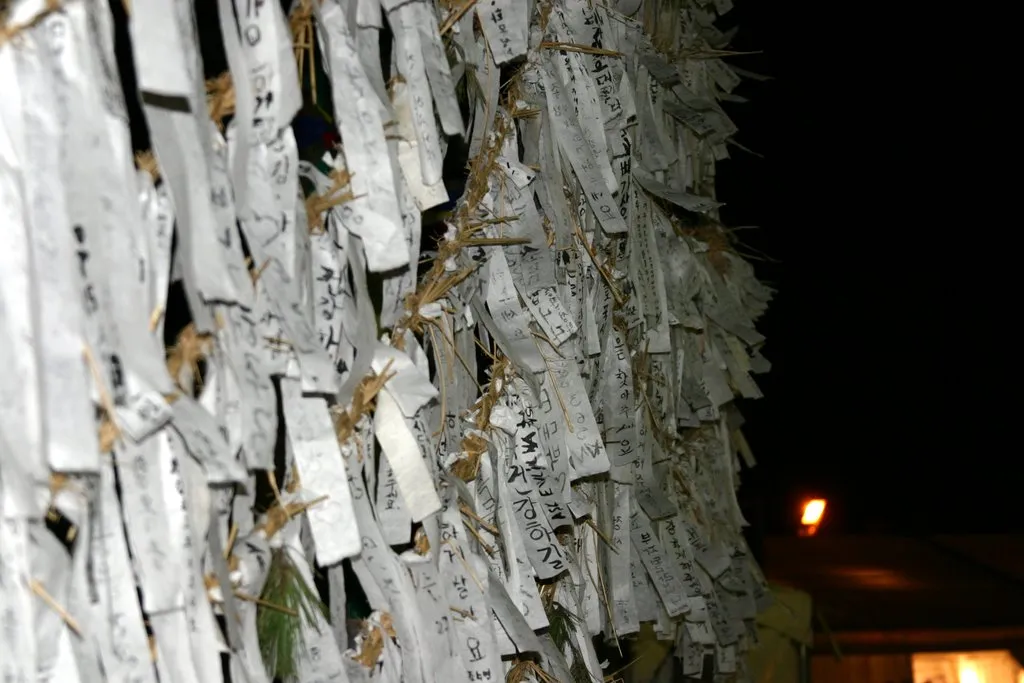
Samsindang · the Hahoe village zelkova
Researched and translated with AI assistance. Every claim is linked to its source, but errors get through, so check the official site for opening times, fees and closures.About
In short
A zelkova over six hundred years old at the centre of Hahoe village, the shrine of Samsin, the deity who grants children.
Quick facts
- Address
- Hahoe-ri, Pungcheon-myeon, Andong-si, Gyeongsangbuk-do
About this place
The Samsindang is a zelkova more than six hundred years old standing at the centre of Hahoe village in Pungcheon, Andong, North Gyeongsang. The Encyclopedia of Korean Culture defines Samsin as the deity who grants children and oversees childbirth and nursing. The village rites fall on the first full moon of the year and on the Buddha’s birthday: on the night of the full moon the rites are held at the upper and middle shrines, and the following morning an offering is made at the Samsindang. Hahoe was designated a National Folklore Cultural Heritage on 14 January 1984.
Origin and history
The Encyclopedia of Korean Culture describes Hahoe as a single-clan village established in late Goryeo by the Pungsan Ryu family in Hahoe-ri, Pungcheon, Andong, and describes the Samsindang as a zelkova more than six hundred years old at the centre of the village.
The village rites are held each year on the first full moon and on the Buddha’s birthday. On the night of the full moon, rites are performed at the upper and middle shrines; the next morning an offering is made at the Samsindang.
The village was designated a National Folklore Cultural Heritage on 14 January 1984.
What it is locally associated with
The deity who grants children
The encyclopedia defines Samsin as the deity who grants children and oversees childbirth and nursing. This tree is Samsin’s shrine.
folk traditionA zelkova of six hundred years
It stands at the centre of the village and is recorded as more than six hundred years old.
documented historyThe offering comes the next morning
Rites are held at the upper and middle shrines on the night of the first full moon; the offering here is made the following morning.
documented history
What this tree is responsible for is in its name. The encyclopedia defines Samsin as the deity who grants children and oversees childbirth and nursing, and records that when a child is born a table is set for Samsin to pray for the health of mother and infant. The Samsindang, then, is the place of mothers and children.
What the record does not set down is what was asked at this particular tree, or how. This page can say what kind of deity Samsin is, and that this tree is Samsin’s shrine, and no further.
The village has more than one shrine. The upper one, also called Grandmother Kim of the Seonangdang, is the deity of the Hahoe byeolsingut; the middle one is the Guksadang, on the right of the slope leading up to it. The Samsindang is the third, apart from both, and its offering comes a day later, in the morning.
Claims and evidence levels 4
- The Samsindang is a zelkova more than six hundred years old at the centre of Hahoe village in Andong. documented history
- The Encyclopedia of Korean Culture defines Samsin as the deity who grants children and oversees childbirth and nursing. documented history
- Village rites fall on the first full moon and the Buddha’s birthday; the full-moon rites are held at the upper and middle shrines, and an offering is made at the Samsindang the next morning. documented history
- Hahoe village was designated a National Folklore Cultural Heritage on 14 January 1984. documented history
Sources
- 안동 하회마을(安東 河回마을) — 한국민족문화대백과사전 — Academy of Korean Studies (accessed 2026-08-12)
- 삼신(三神) — 한국민족문화대백과사전 — Academy of Korean Studies (accessed 2026-08-12)
Last updated:
Similar places
8 places
 Temple
Seokguram
- Family & Home
A stone grotto begun in 751 by Kim Dae-seong for his parents in a former life, paired with Bulguksa, which he built for his parents in this one.
 Temple
Bongjeongsa, Cheondeungsan
The temple where the oldest wooden building in Korea stands.
 Temple
Yongjusa
- Family & Home
The temple King Jeongjo refounded beside his father’s grave, holding the woodblocks of the sutra on what children owe their parents.
 Temple
Bongeunsa
- Family & Home
Founded by a widow to pray for her dead husband’s repose, and later made head temple of the Seon school.
 Temple
Bogwangsa, Goryeongsan
- Family & Home
The temple King Yeongjo attached to the tomb of the woman who bore him.
 Temple
Gounsa, Deungunsan
A temple whose name kept its sound but changed its characters, to hold one man’s pen name.
 Temple
Dorisa, Naengsan
Founded, the account says, because flowers were in full bloom here in winter — and handed down as the first temple in Silla.
 Historic Site
Mungyeong Saejae
- Exams & Study
The highest and hardest pass on the road from the southeast to the capital, with three gates strung along six and a half kilometres.
No places match your filters