Bongjeongsa, Cheondeungsan
Researched and translated with AI assistance. Every claim is linked to its source, but errors get through, so check the official site for opening times, fees and closures.About
In short
The temple where the oldest wooden building in Korea stands.
Quick facts
- Address
- 222 Bongjeongsa-gil, Seohu-myeon, Andong-si, Gyeongsangbuk-do
About this place
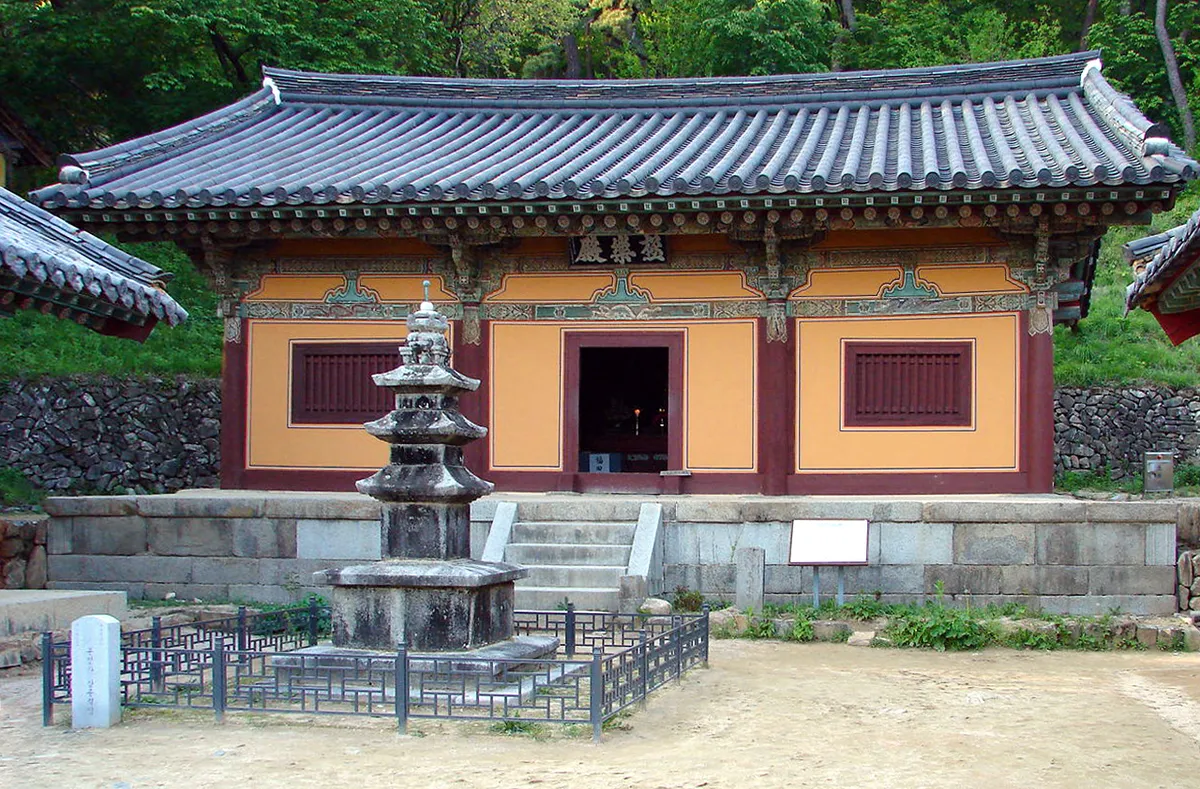
Bongjeongsa stands on Cheondeungsan in Seohu-myeon, Andong-si, Gyeongsangbuk-do. The name is said to have been given because the lie of the land here is as though a phoenix were settling on it. As for the founding, the temple is taken to have been founded before the Goryeo period, and from the first founding by Neungin in the Silla period it has been carried on unbroken through repairs by Milam, Wongam, Anchung, Bojo, Saseung, Singyeong and others. The Geungnakjeon of Bongjeongsa is known as the oldest building in the country and was designated a National Treasure in 1962. A ridge-beam text of 1625 records that the roof of the building was repaired in 1363, and on that basis it is taken to be the oldest wooden building in Korea, put up at least by the middle Goryeo period, in the twelfth or thirteenth century. In 2018 the temple was inscribed on the World Heritage list as one of the Sansa, Buddhist Mountain Monasteries in Korea.
Origin and history
The name is said to have been given because the lie of the land here is as though a phoenix were settling on it.
As for the founding, the temple is taken to have been founded before the Goryeo period, and from the first founding by Neungin in the Silla period it has been carried on unbroken through repairs by Milam, Wongam, Anchung, Bojo, Saseung, Singyeong and others.
The Geungnakjeon of Bongjeongsa is known as the oldest building in the country and was designated a National Treasure in 1962. A ridge-beam text of 1625 records that the roof of the building was repaired in 1363, and on that basis it is taken to be the oldest wooden building in Korea, put up at least by the middle Goryeo period, in the twelfth or thirteenth century.
In 2018 the temple was inscribed on the World Heritage list as one of the Sansa, Buddhist Mountain Monasteries in Korea.
What it is locally associated with
The oldest wooden building in Korea
The Geungnakjeon is taken to be the oldest wooden building in Korea, put up at least by the middle Goryeo period, in the twelfth or thirteenth century. It was designated a National Treasure in 1962.
documented history1363, inside a text of 1625
A ridge-beam text of 1625 records that the roof of the building was repaired in 1363.
documented historyA phoenix settling
The name is said to have been given because the lie of the land here is as though a phoenix were settling on it.
folk tradition
What carries a firm date here is not the temple but a building. Of the founding there is only that it appears to predate Goryeo, and a tradition that Neungin first raised it in the Silla period. The Geungnakjeon, though, has years attached to it.
How those years were arrived at is the building’s own history. Inside a ridge-beam text written in 1625 sits a record that the roof was repaired in 1363. That means it was already old enough in 1363 to need its roof redone, and so it is taken to have been built at least by the twelfth or thirteenth century — the oldest wooden building in Korea. It became a National Treasure in 1962.
Gyeongsang’s old temples are often recorded this way, by what is oldest. Muryangsujeon at Buseoksa in Yeongju was designated a National Treasure in the same year, 1962, and both temples entered the World Heritage list in 2018 among the Sansa, Buddhist Mountain Monasteries in Korea.
One other thing on this site has its age fixed by writing found within it. The Amitabha triad wall painting at Muwisa in Gangjin is dated to 1476 by the inscriptions at its lower left and right. One is writing on a beam, the other writing on a painting.
The name came from the ground. The site the temple sits on is likened to a phoenix settling, and so it became Bongjeongsa.
Claims and evidence levels 2
- The Geungnakjeon is taken to be the oldest wooden building in Korea, dated by a 1625 ridge-beam text that records a roof repair in 1363. documented history
- The temple is said to be named for a site that lies as though a phoenix were settling on it, and to have been first founded by Neungin in the Silla period. folk tradition
Related guides
- How to visit a Korean templeHands together and hands folded, how the bows work, and what to do at the threshold of a hall. Starting with what is different from visiting a Japanese shrine.
- The small hall behind the main one — sansingak and samseonggakUphill from the main hall of a Korean temple stands a smaller one, and inside it an old man with a tiger. This is where the indigenous religion sits, inside the Buddhist institution.
- Templestay — a night at a templeA programme that puts you inside a temple’s own timetable for a day or two. What you do, which type to book, and what to be ready for.
- Prayer sites and the one wishThe three great Gwaneum sites, the five relic halls, and the crowds before the entrance exam. Where the saying about one wish comes from, and where the record stops.
Sources
- 천등산 봉정사(天燈山 鳳停寺) — 한국민족문화대백과사전 (accessed 2026-08-16)
- 안동 봉정사 극락전(安東 鳳停寺 極樂殿) — 한국민족문화대백과사전 (accessed 2026-08-16)
Last updated:
Similar places
8 places
 Natural Site
Hahoe Samsindang Tree
- Family & Home
A zelkova over six hundred years old at the centre of Hahoe village, the shrine of Samsin, the deity who grants children.
 Temple
Gounsa, Deungunsan
A temple whose name kept its sound but changed its characters, to hold one man’s pen name.
 Temple
Buseoksa, Bonghwangsan
Built where a woman turned dragon turned rock, and hung in the air until five hundred bandits left.
 Temple
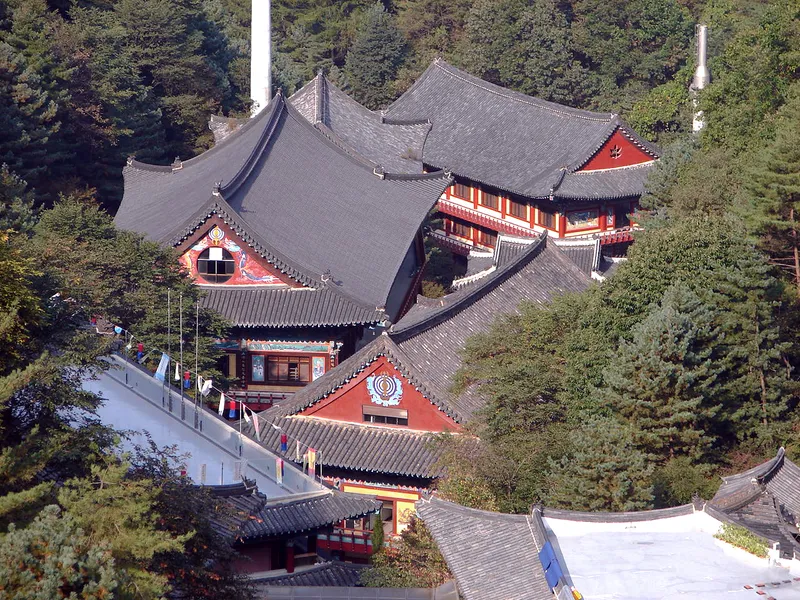
Guinsa
The head temple of the Cheontae Order, founded in 1945, with a five-storey concrete hall that seats ten thousand.
 Temple
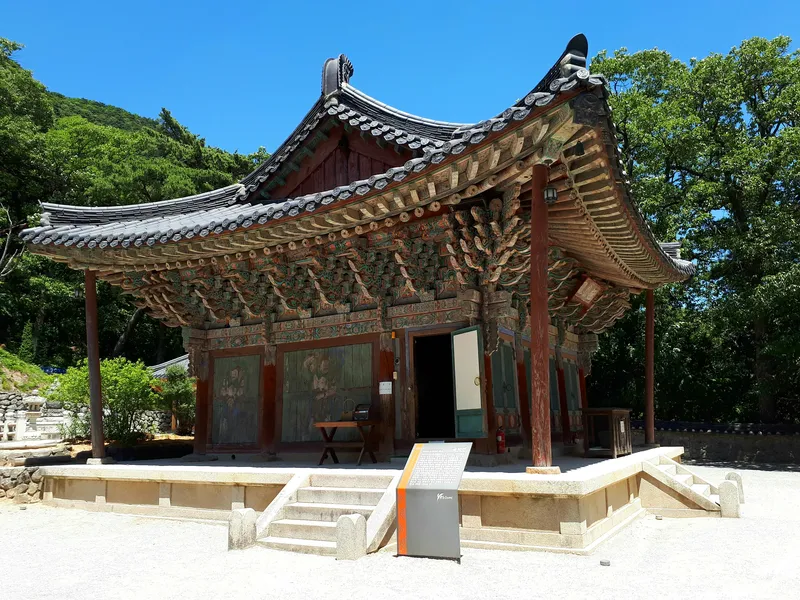
Dorisa, Naengsan
Founded, the account says, because flowers were in full bloom here in winter — and handed down as the first temple in Silla.
 Sacred Mountain
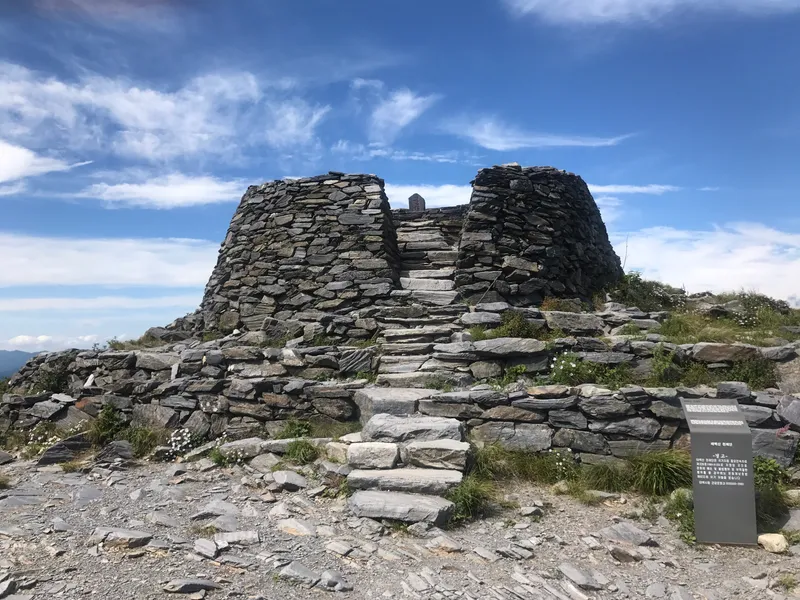
Taebaeksan Cheonjedan
- Miscellaneous
A stone altar for heaven rites on the summit, where a rite is offered each National Foundation Day and where the state has sacrificed since Silla.
 Temple
Manggyeongsa, Taebaeksan
Built to house a stone image of Manjushri that its founder came here because he had heard it had appeared.
 Historic Site
Mungyeong Saejae
- Exams & Study
The highest and hardest pass on the road from the southeast to the capital, with three gates strung along six and a half kilometres.
No places match your filters