Mungyeong Saejae
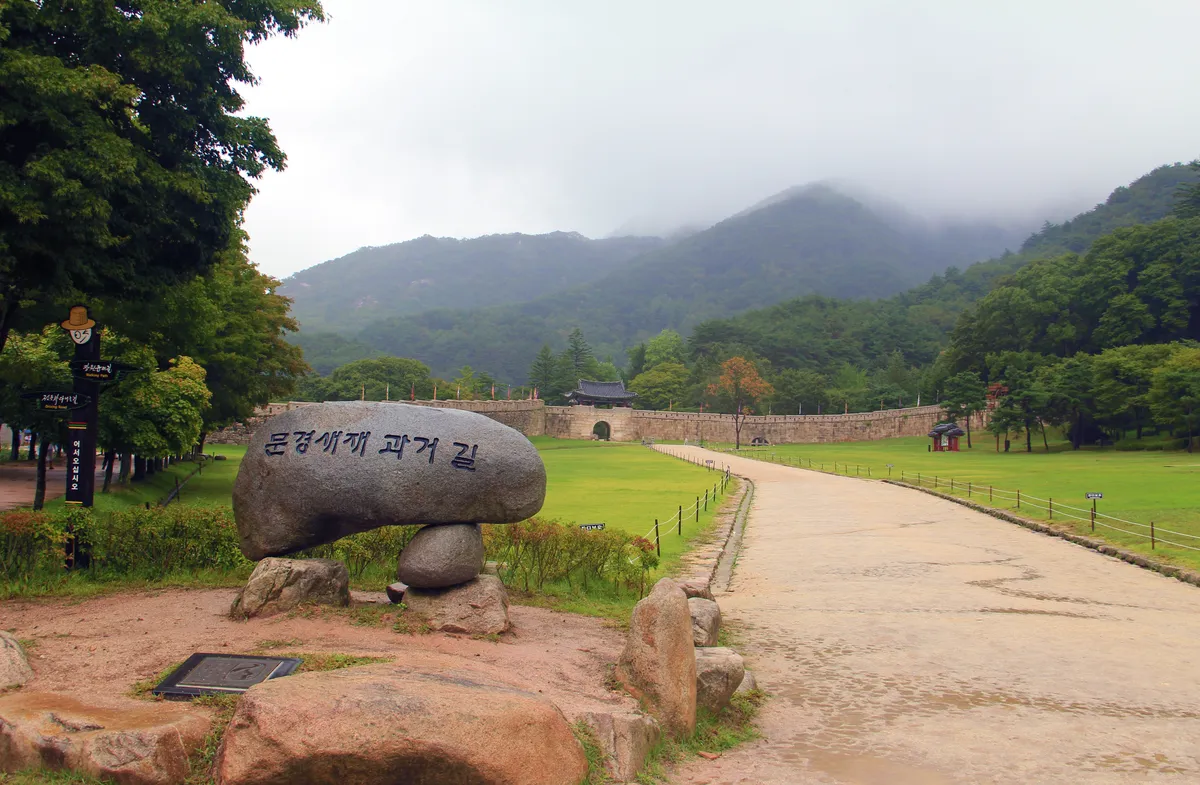
Joryeong · Chaekbawi
Researched and translated with AI assistance. Every claim is linked to its source, but errors get through, so check the official site for opening times, fees and closures.About
In short
The highest and hardest pass on the road from the southeast to the capital, with three gates strung along six and a half kilometres.
Quick facts
- Address
- Mungyeong-eup, Mungyeong-si, Gyeongsangbuk-do
About this place
Mungyeong Saejae is the pass between Mungyeong in North Gyeongsang and Goesan in North Chungcheong, written in Chinese characters as Joryeong. It was the highest and most difficult crossing on the Yeongnam-daero, the road linking the Han and Nakdong river basins, and mattered for travel, defence and trade alike. Three gates run along it over six and a half kilometres. The gates were designated a Historic Site in 1966, the area a provincial park in 1981, and the pass a Scenic Site in 2007.
Origin and history
Joryeong is the pass between Mungyeong-eup in Mungyeong and Yeonpung-myeon in Goesan, called Saejae or Mungyeong Saejae. In the name Saejae, "sae" refers to the silver grass and scouring rush that grow there and "jae" means a high pass that can be crossed.
It was the highest and hardest crossing on the Yeongnam-daero and carried weight in travel, defence, trade and culture; with Jungnyeong and Chupungnyeong it was one of the roads joining the capital to the southeast. The gates were designated a Historic Site in 1966, the provincial park followed in 1981, and the pass became a Scenic Site in 2007.
What it is locally associated with
Three gates
Juheulgwan, then Jogokgwan, then Joryeonggwan, over six and a half kilometres.
documented historyThe name Saejae
"Sae" refers to silver grass and scouring rush; "jae" means a high pass that can be crossed.
documented historyChaekbawi
Scholars bound for the examinations are said to have piled stones here, and people facing exams still come.
folk tradition
The link between this pass and examinations comes from its being the road to the state examinations. Scholars from the southeast crossed here on their way to the capital, and it is told that at Chaekbawi, a rock along the path, they piled stones while praying to pass. People facing examinations still come.
The Chaekbawi story is not in the state record. Nor is the widely repeated account that scholars chose this route because Mungyeong means "hearing joyful news": the name of the pass, Saejae, derives from the grasses growing on it, not from that phrase.
Claims and evidence levels 4
- Joryeong, called Saejae or Mungyeong Saejae, was the highest and most difficult pass on the Yeongnam-daero linking the capital to the southeast, and carries three gates over six and a half kilometres. documented history
- In the name Saejae, "sae" refers to the silver grass and scouring rush of the pass and "jae" means a high crossing. documented history
- The gates were designated a Historic Site in 1966, the provincial park established in 1981, and the pass designated a Scenic Site in 2007. documented history
- It is told that scholars travelling to the state examinations piled stones at Chaekbawi along the path while praying to pass; the rock does not appear in the state record. folk tradition
Sources
- 조령(鳥嶺) — 한국민족문화대백과사전 — Academy of Korean Studies (accessed 2026-08-10)
- 문경새재도립공원 — 한국민족문화대백과사전 — Academy of Korean Studies (accessed 2026-08-10)
Last updated:
Similar places
8 places
 Temple
Chiljangsa, Chilhyeonsan
- Exams & Study
The mountain and the temple are both named for seven robbers who became seven sages.
 Temple
Gatbawi
- Exams & Study
- Wish Fulfillment
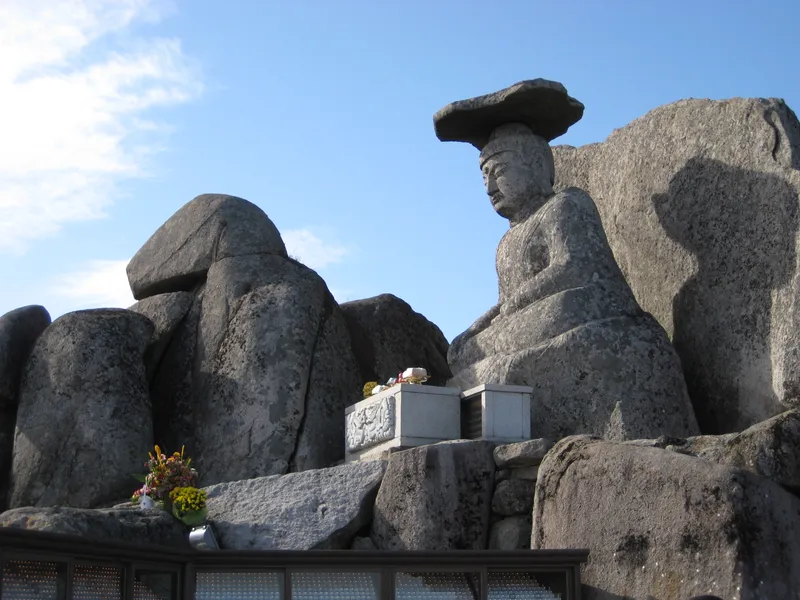
A Unified Silla stone Buddha seated on the summit of Gwanbong on Palgongsan, and the busiest prayer site in the country in the weeks before the university entrance exam.
 Temple
Jogyesa
- Exams & Study
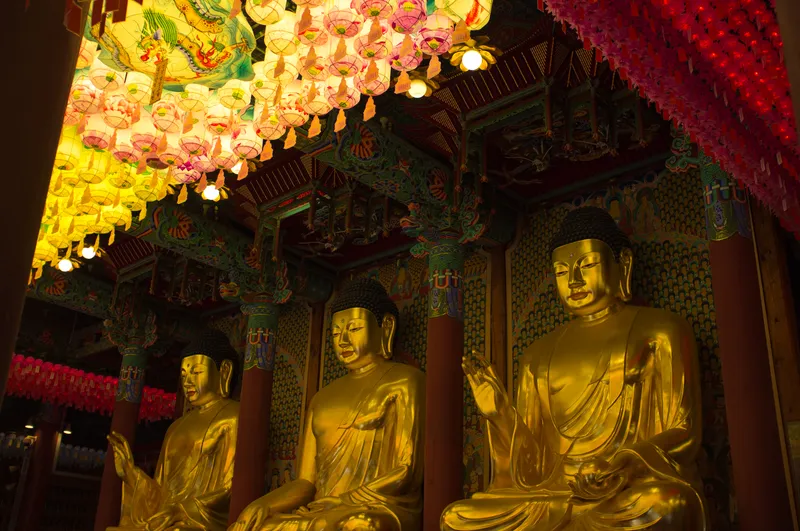
The head temple of the Jogye Order, in the middle of downtown Seoul, where a prayer for children ends the day before the national entrance exam each year.
 Temple
Beopjusa
- Miscellaneous
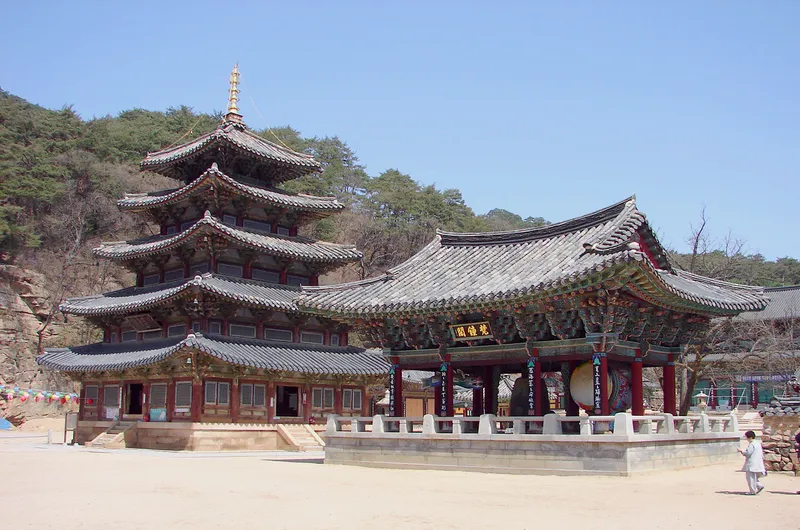
Founded in 553 and grown into the centre of Maitreya devotion, holding the only wooden pagoda in Korea.
 Temple
Guinsa
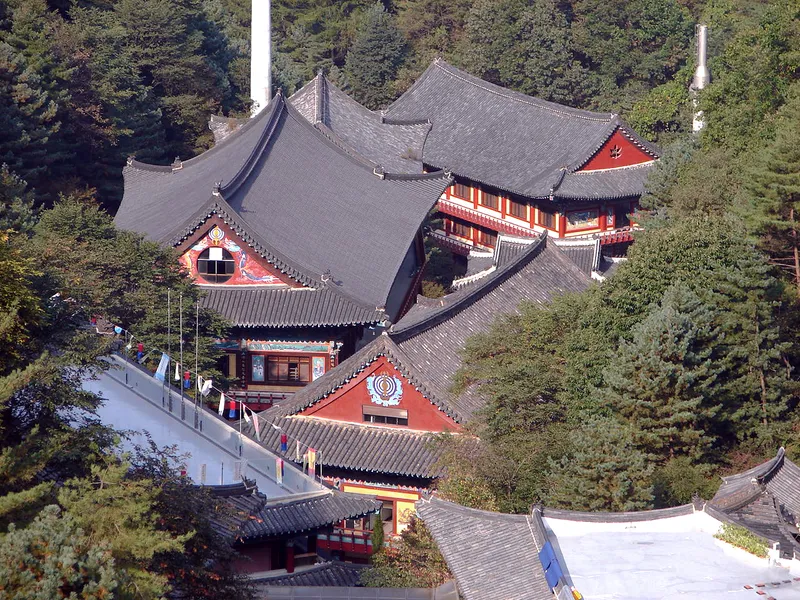
The head temple of the Cheontae Order, founded in 1945, with a five-storey concrete hall that seats ten thousand.
 Natural Site
Hahoe Samsindang Tree
- Family & Home
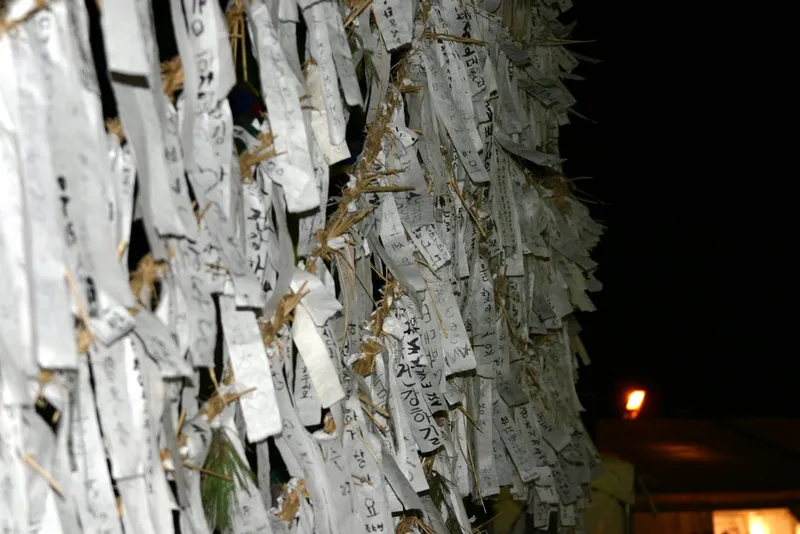
A zelkova over six hundred years old at the centre of Hahoe village, the shrine of Samsin, the deity who grants children.
 Temple
Sangwonsa, Chiaksan
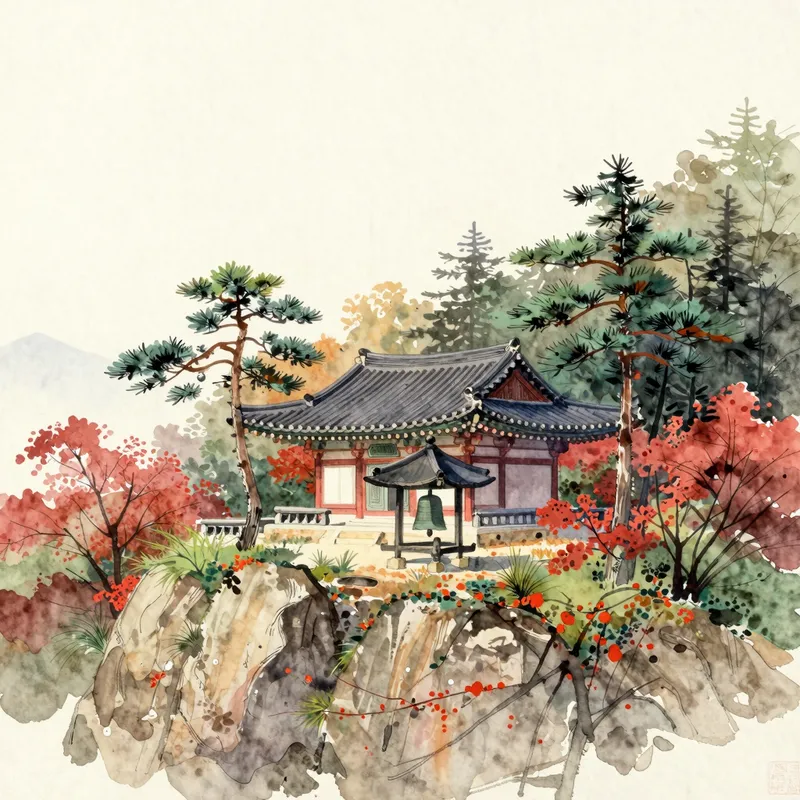
The temple whose bell a pheasant struck three times, and whose mountain was renamed for it.
 Temple
Bongjeongsa, Cheondeungsan
The temple where the oldest wooden building in Korea stands.
No places match your filters