Miyajidake Shrine
Researched and translated with AI assistance. Every claim is linked to its source, but errors get through, so check the official site for opening times, fees and closures.About
In short
Empress Jingu is said to have prayed from this mountaintop before sailing — “grant me, I pray, an opening of fortune” — and the deity here is revered as one who grants any wish at all.
Quick facts
- Address
- 7-1 Miyaji Motomachi, Fukutsu, Fukuoka
- Spiritual entities
- Empress Jingu (神功皇后)
About this place
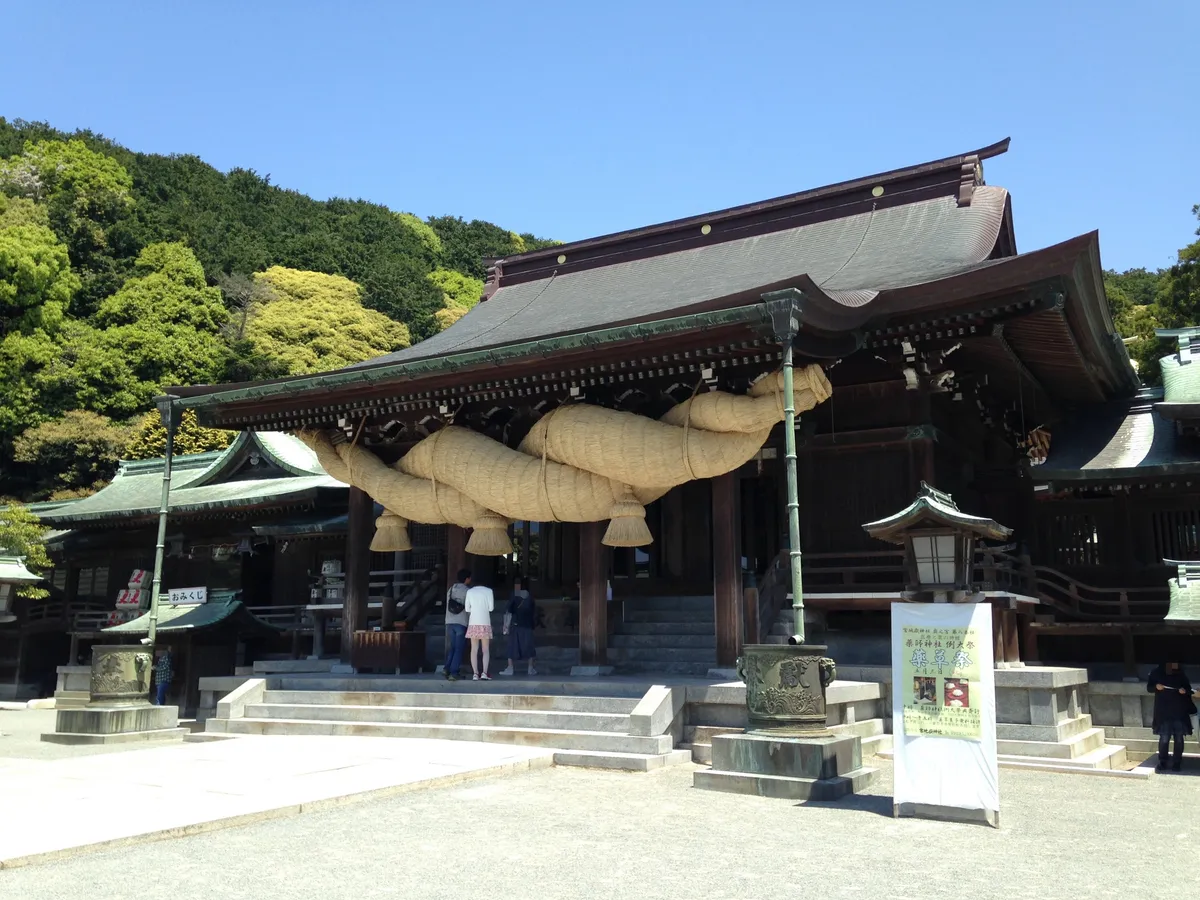
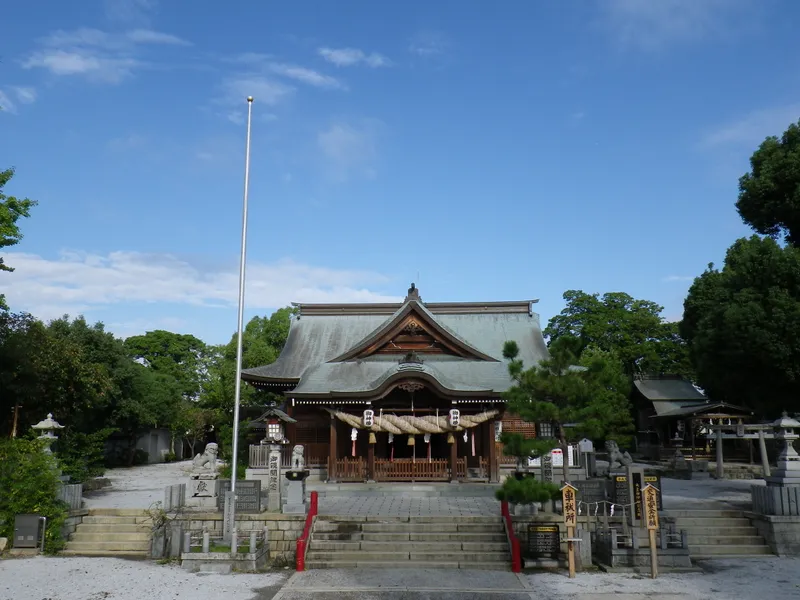
Miyajidake Shrine is in Fukutsu, Fukuoka. Its deities are Okinagatarashihime, otherwise Empress Jingu, together with Katsumura no Okami and Katsuyori no Okami. The Kojiki, the Nihon Shoki and other records say that on her crossing she stayed in this land, and that from the summit of Miyajidake, looking out over the open sea, she set up an altar to the deities of heaven and earth and prayed: “Bearing the mandate of heaven I shall cross to that land; grant me, I pray, an opening of fortune” — and then set sail. Afterwards the head of the Azumi clan who had accompanied her was enshrined with her, the three together as the three deities of Miyajidake. The shrine is revered as a deity of opening fortune who prevails over anything and who will grant any wish at all. In the precinct stands the largest horizontal stone chamber in Japan, in which twenty national treasures and several hundred further treasures lay.
Origin and history
The deities are Okinagatarashihime, otherwise Empress Jingu, together with Katsumura no Okami and Katsuyori no Okami.
The Kojiki, the Nihon Shoki and other records say that on her crossing she stayed in this land, and that from the summit of Miyajidake, looking out over the open sea, she set up an altar to the deities of heaven and earth and prayed: “Bearing the mandate of heaven I shall cross to that land; grant me, I pray, an opening of fortune” — and then set sail. Afterwards the head of the Azumi clan who had accompanied her was enshrined with her, the three together as the three deities of Miyajidake.
Eighteen hundred years ago that mountain was a sacred precinct of the northern Kyushu court. The largest horizontal stone chamber in Japan, in which twenty national treasures and several hundred further treasures lay, speaks for its history.
What it is locally associated with
Any wish at all
The deity is revered as one of opening fortune who prevails over anything and who will grant any wish at all.
folk traditionA prayer from the summit, then a sailing
From the summit she set up an altar and prayed, “Bearing the mandate of heaven I shall cross to that land; grant me, I pray, an opening of fortune”, and then set sail.
folk traditionThe largest stone chamber in Japan
The precinct holds the largest horizontal stone chamber in Japan, in which twenty national treasures and several hundred further treasures lay.
documented history
What survives here are the words a person said. Bearing the mandate of heaven I shall cross to that land; grant me, I pray, an opening of fortune — spoken, the shrine records, from the summit of Miyajidake looking out over the open sea, before the sailing. Quoted speech on this list is usually the god’s: at Katsuragi Hitokotonushi Shrine and Niukawakami in Nara the deity speaks in the first person. Here it is the human half of the exchange that was kept.
The wishes are not bounded. A deity of opening fortune who prevails over anything, who will grant any wish at all — that is how the shrine puts it. Declining to narrow what it is good for is itself the character of the place.
Three deities are enshrined, and two of them are the head of the clan who accompanied her. The one who prayed and the ones who crossed with her stand together.
In the precinct is the largest horizontal stone chamber in Japan, in which twenty national treasures and several hundred further treasures lay. A place of prayer standing over a grave is a shape this list has met before, at Mozu Hachimangu in Osaka.
Claims and evidence levels 3
- The shrine transmits that Empress Jingu prayed from the summit of Miyajidake for an opening of fortune before setting sail on her crossing. folk tradition
- The deity is revered as one who grants any wish at all and prevails over anything. folk tradition
- The precinct holds the largest horizontal stone chamber in Japan, which contained twenty national treasures and several hundred further treasures. documented history
Related guides
- How to visit a shrine or temple in JapanThe country-wide basics: purifying at the water basin, the two-bows-two-claps-one-bow form at shrines, and what temples do instead.
- What a "power spot" actually isA modern Japanese coinage, not a traditional religious category. Where the word came from, what it does and does not claim, and why this site uses it anyway.
- Shrine or temple?A shrine is Shinto and a temple is Buddhist, and you can usually tell at the gate. Why the line is cleaner on paper than on the ground, and what a government order in 1868 has to do with it.
- Omamori, ema, omikuji and goshuinThe four things you are most likely to receive, write, draw or be given at a shrine or temple, what each is actually for, and the one of them people most often get wrong.
Sources
Last updated:
Similar places
8 places
 Shrine
Kashiigu
- Family & Home
- Fertility & Children
- Protection & Safety
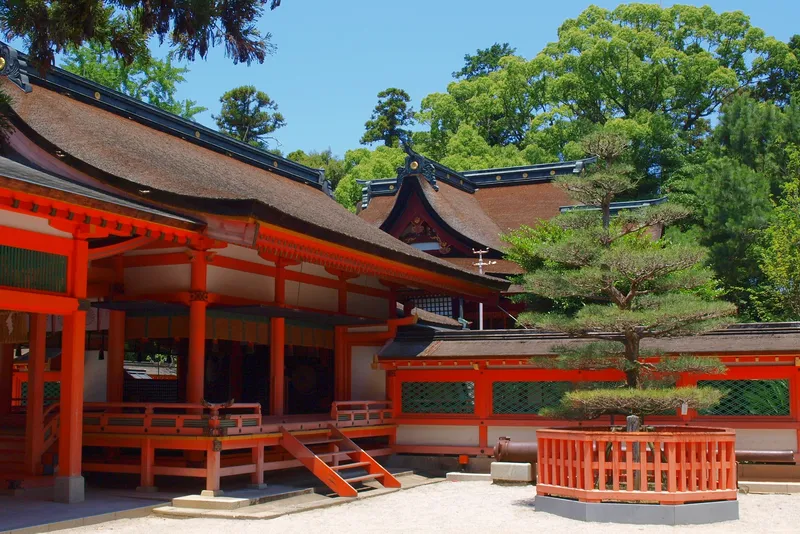
It began when Empress Jingu built a shrine with her own hands for the spirit of her husband Emperor Chuai, and a second hall for the empress herself was later added on her own oracle.
 Shrine
Hakozakigu
- Exams & Study
- Fertility & Children
- Money & Prosperity
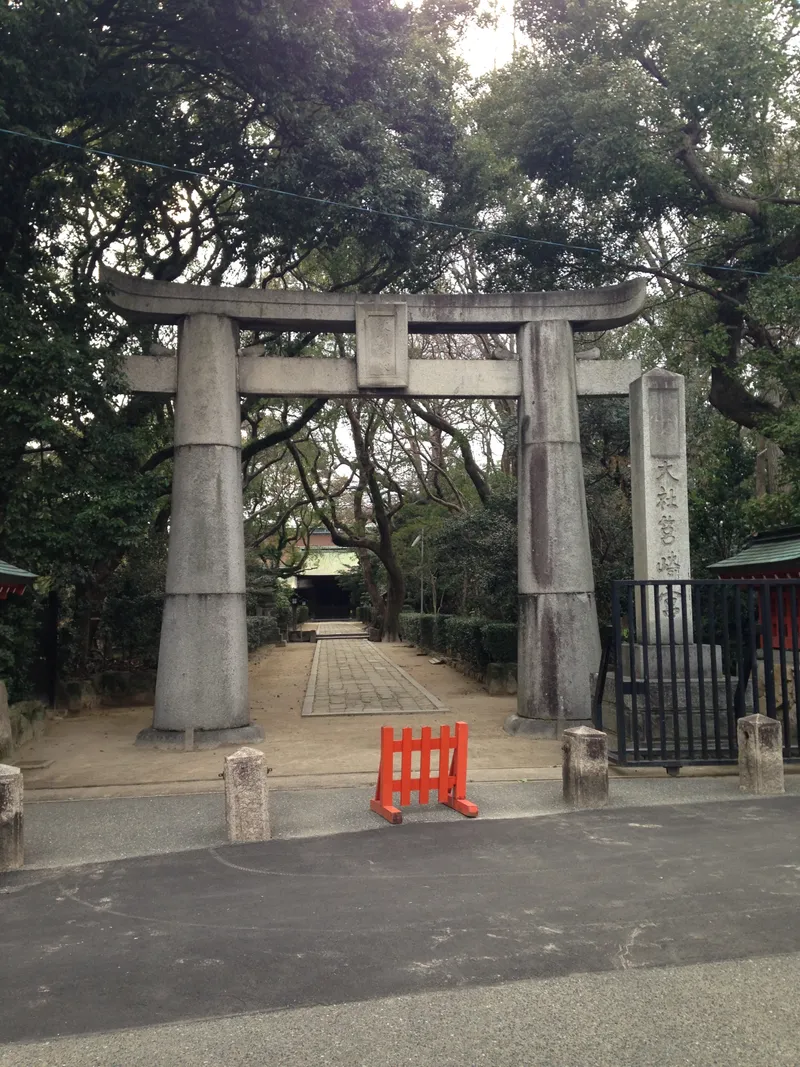
A Hachiman shrine built in 921 after Emperor Daigo, by divine instruction, handed down a piece of imperial calligraphy that the shrine still keeps as its first treasure.
 Shrine
Sumiyoshi Shrine
- Protection & Safety
- Purification
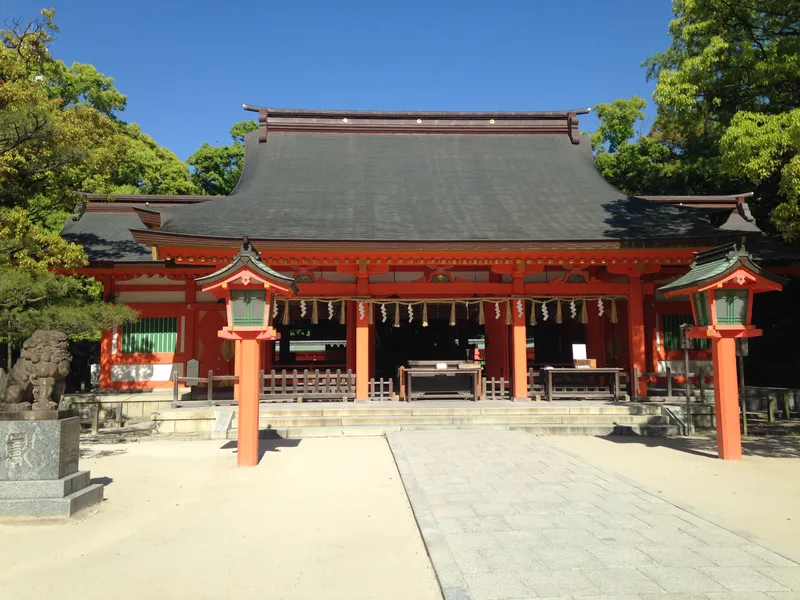
Said to be the first of the 2,129 Sumiyoshi shrines in the country, and revered as a deity who guards against every calamity by means of purity of body and mind.
 Shrine
Umi Hachimangu
- Family & Home
- Fertility & Children
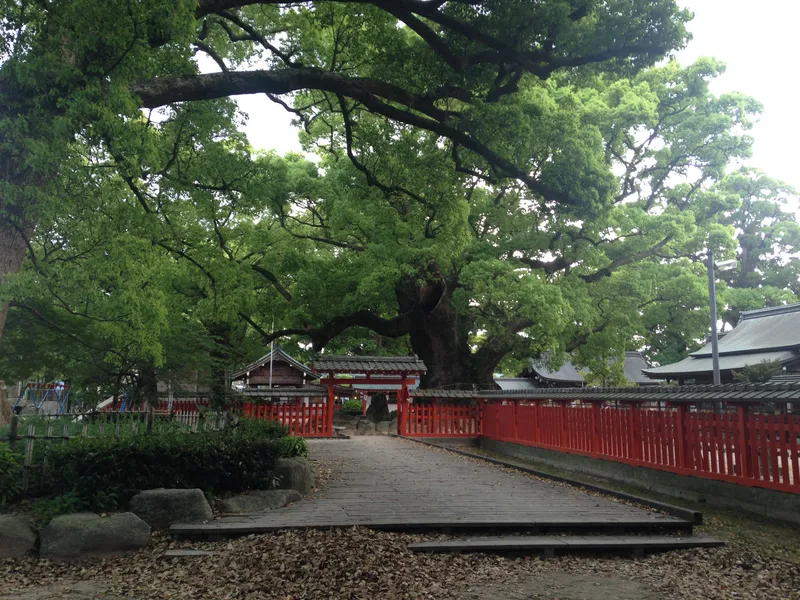
Empress Jingu gave birth to Emperor Ojin here, holding on to the branch of a pagoda tree, and the town’s name comes from that delivery.
 Shrine
Nouso Hachimangu
- Exams & Study
- Family & Home
- Money & Prosperity
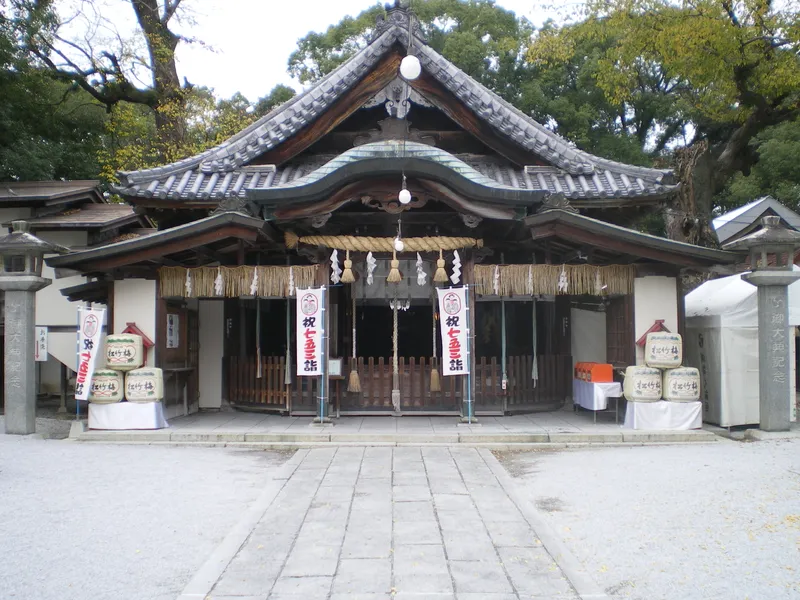
It began when Empress Jingu, on her way back from the campaign in the three Han, chose the grove of Nouso as sacred ground; the word people spoke at the parting gave the town of Iizuka its name.
 Shrine
Momiji Hachimangu
- Career & Work
- Fertility & Children
- Love & Romance
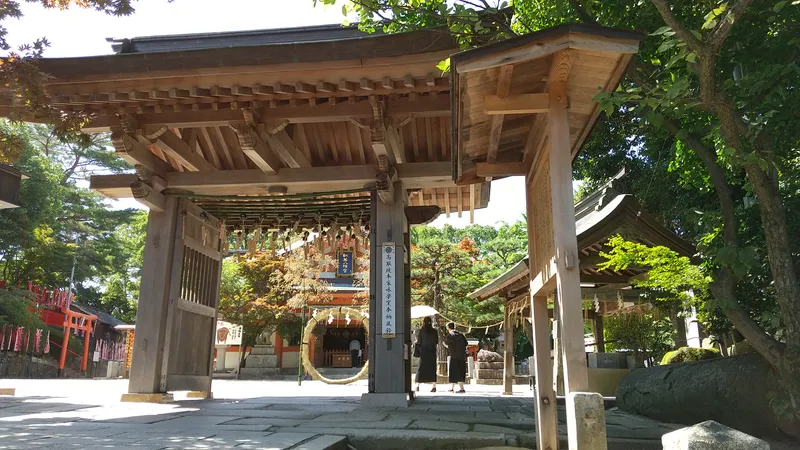
Twelve deities are enshrined here, among them Empress Jingu, Emperor Ojin and Prince Uji no Wakiiratsuko, and the devotion runs to safe birth, the keeping of children, warding off misfortune, bonds and advancement.
 Shrine
Arahito Shrine
- Career & Work
- Money & Prosperity
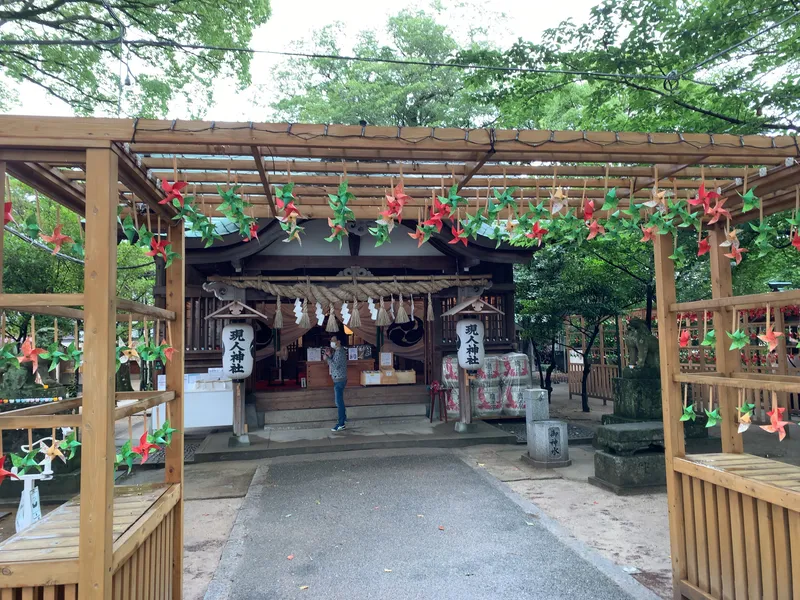
A shrine that calls itself the root and the oldest of the two thousand-odd shrines to the three Sumiyoshi deities, revered as the deity of fortune in work.
 Shrine
Fuuji Hachimangu
- Money & Prosperity
- Protection & Safety
From Ita no Okami to Kaze no Miya to Ita Tenaga Taisha and at last Fuuji Hachimangu — a name two lords each added a character to.
No places match your filters