Gatbawi
Seated Stone Buddha at Gwanbong · Seonbonsa
Researched and translated with AI assistance. Every claim is linked to its source, but errors get through, so check the official site for opening times, fees and closures.About
In short
A Unified Silla stone Buddha seated on the summit of Gwanbong on Palgongsan, and the busiest prayer site in the country in the weeks before the university entrance exam.
Quick facts
- Address
- 176-64 Gatbawi-ro 81-gil, Wachon-myeon, Gyeongsan-si, Gyeongsangbuk-do
About this place
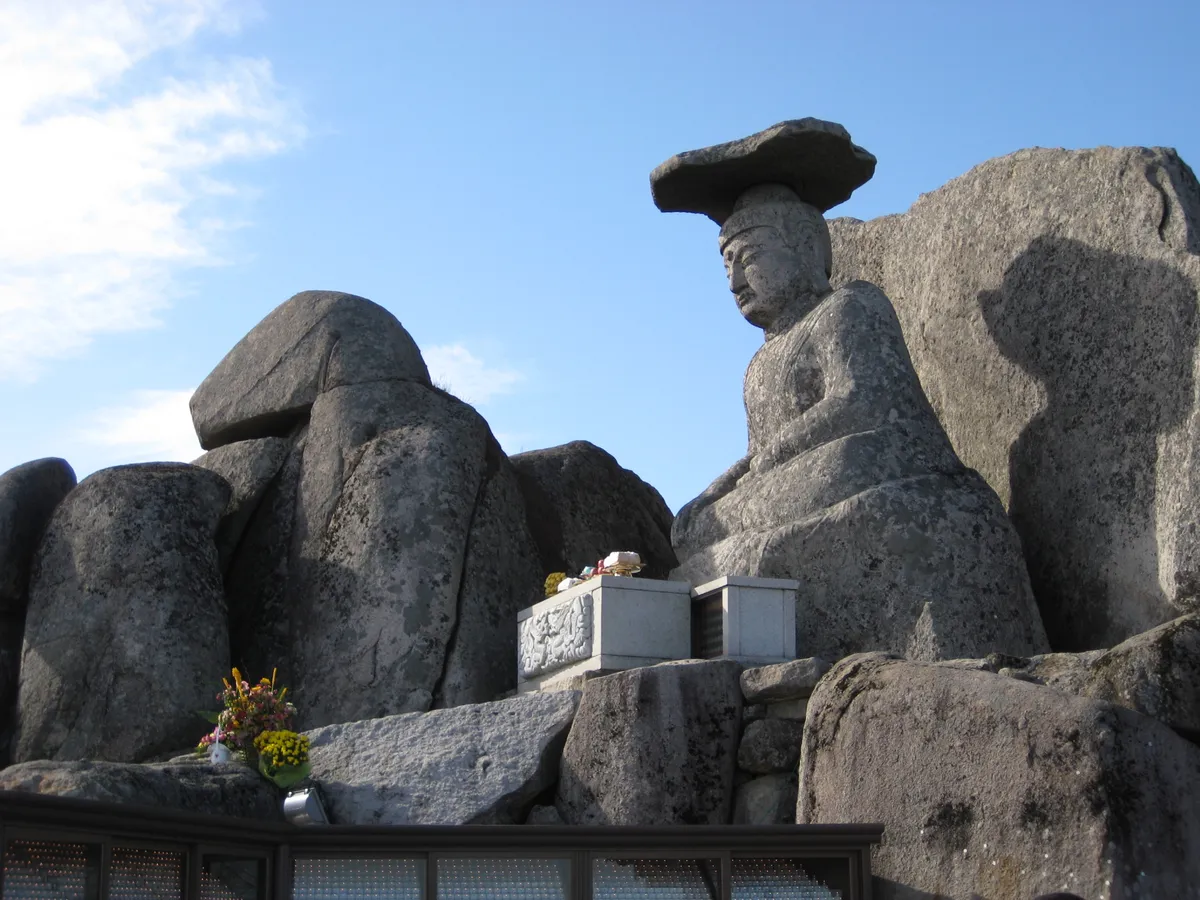
Gatbawi is a seated stone Buddha on the summit of Gwanbong on Palgongsan. It is named for the slab resting on its head like a wide hat. It is thought to date from the late Unified Silla period and was designated a Treasure in 1965. As the entrance exam approaches, people come from all over the country, and the saying that one wholehearted wish will be granted has long followed the place.
Origin and history
Gatbawi is a seated stone Buddha on the summit of Gwanbong, 850 metres up on Palgongsan in Wachon-myeon, Gyeongsan. It was designated a Treasure in 1965 and is considered a work of the late Unified Silla period.
The figure and its pedestal are carved from a single stone, set within an enclosure of rocks standing round it like a screen. It is called the Gatbawi Buddha for the natural stone slab resting on its head like a hat; that slab is substantially broken.
What it is locally associated with
The slab that looks like a hat
A natural stone slab, substantially broken.
documented historyWhich buddha it is has not been settled
The earth-touching mudra belongs to Shakyamuni, yet the record allows it may be a Bhaisajyaguru; the round object on the palm is not identified either.
documented historyGatbawi before the exam
People climb from all over the country in the weeks before the entrance exam, year after year.
local custom
Which buddha this is has not been settled. The Encyclopedia of Korean Culture notes that the figure holds the earth-touching mudra of Shakyamuni, and then that it may nonetheless be a Bhaisajyaguru. The small round object on its palm is not identified as a medicine jar either. The familiar identification as the medicine buddha comes from reading that object as a medicine bowl, and the state record does not go that far.
What people do here, unlike what the figure is, is perfectly clear. As the entrance exam approaches, people climb to Gwanbong from all over the country, and the scene repeats every year. The saying that one wish will be granted has followed the place a long time, but it is something people have passed along rather than something the temple states.
Claims and evidence levels 5
- The seated stone Buddha on the summit of Gwanbong was designated a Treasure in 1965 and is considered a work of the late Unified Silla period. documented history
- The Encyclopedia of Korean Culture records that the figure holds the earth-touching mudra of Shakyamuni but that it may be a Bhaisajyaguru; the small round object on its palm is not identified as a medicine jar. documented history
- The slab on the figure’s head, from which the name comes, is a natural stone and is substantially broken. documented history
- In the weeks before the national university entrance examination, visitors climb to the figure from across the country; the practice is reported annually. local custom
- A saying that one wholehearted wish will be granted here has long circulated; it is popular tradition rather than a statement by the temple. popular modern
Related guides
- How to visit a Korean templeHands together and hands folded, how the bows work, and what to do at the threshold of a hall. Starting with what is different from visiting a Japanese shrine.
- The small hall behind the main one — sansingak and samseonggakUphill from the main hall of a Korean temple stands a smaller one, and inside it an old man with a tiger. This is where the indigenous religion sits, inside the Buddhist institution.
- Templestay — a night at a templeA programme that puts you inside a temple’s own timetable for a day or two. What you do, which type to book, and what to be ready for.
- Prayer sites and the one wishThe three great Gwaneum sites, the five relic halls, and the crowds before the entrance exam. Where the saying about one wish comes from, and where the record stops.
Sources
- 경산 팔공산 관봉 석조여래좌상 — 한국민족문화대백과사전 — Academy of Korean Studies (accessed 2026-08-10)
Last updated:
Similar places
8 places
 Temple
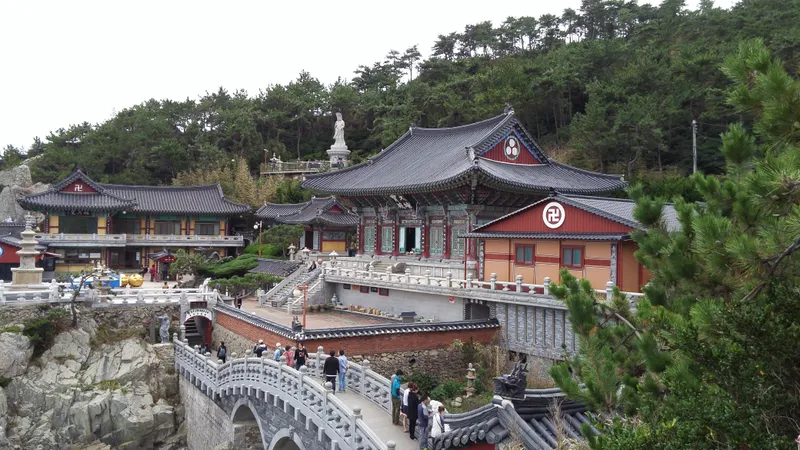
Haedong Yonggungsa
- Wish Fulfillment
One of Korea’s three great Avalokitesvara sites, standing right on the sea.
 Historic Site
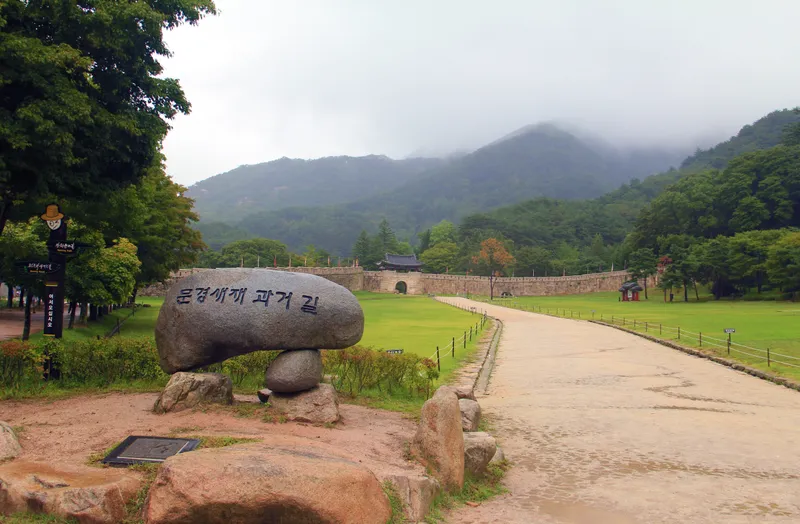
Mungyeong Saejae
- Exams & Study
The highest and hardest pass on the road from the southeast to the capital, with three gates strung along six and a half kilometres.
 Temple
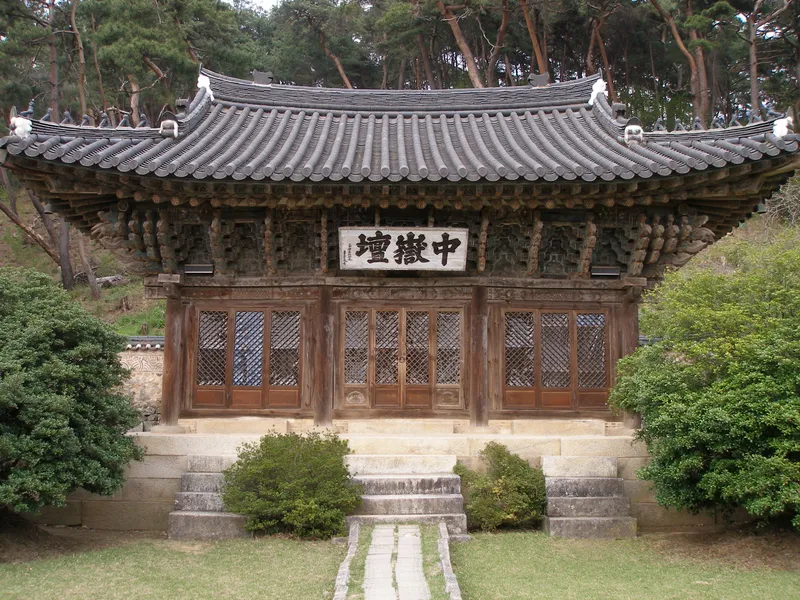
Jungakdan, Sinwonsa
- Wish Fulfillment
The only survivor of the three royal mountain-god altars of Joseon stands in the grounds of Sinwonsa on Gyeryongsan.
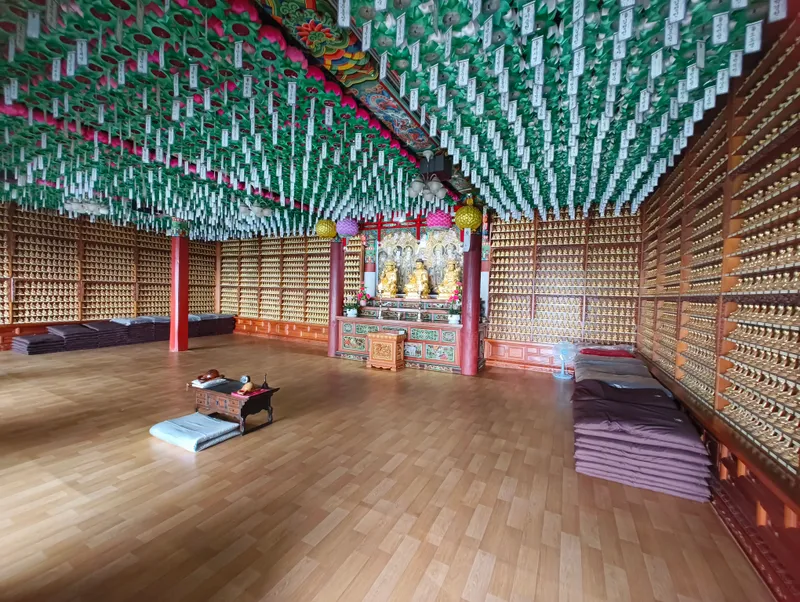 Temple
Boriam
- Wish Fulfillment
An Avalokiteśvara prayer site on the slope of Geumsan, counted with Hongryeonam and Bomunsa among Korea’s three great sites.
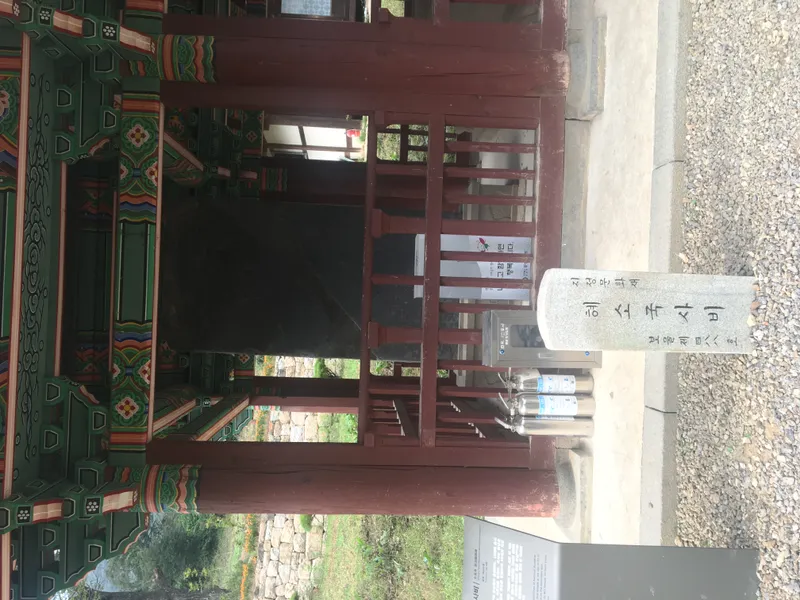 Temple
Chiljangsa, Chilhyeonsan
- Exams & Study
The mountain and the temple are both named for seven robbers who became seven sages.
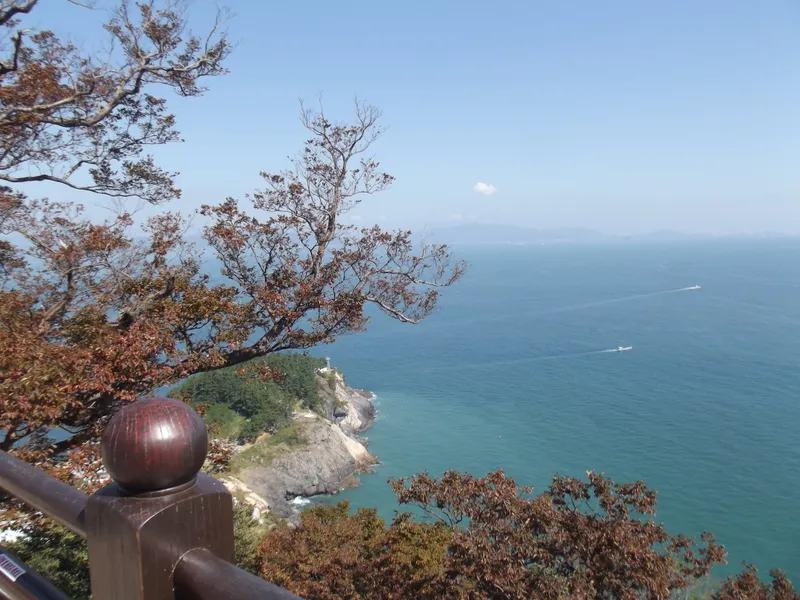 Temple
Hyangiram
- Wish Fulfillment
One of the country’s four sea-facing Avalokiteshvara prayer halls, named "facing the sun" for the sunrise seen from it.
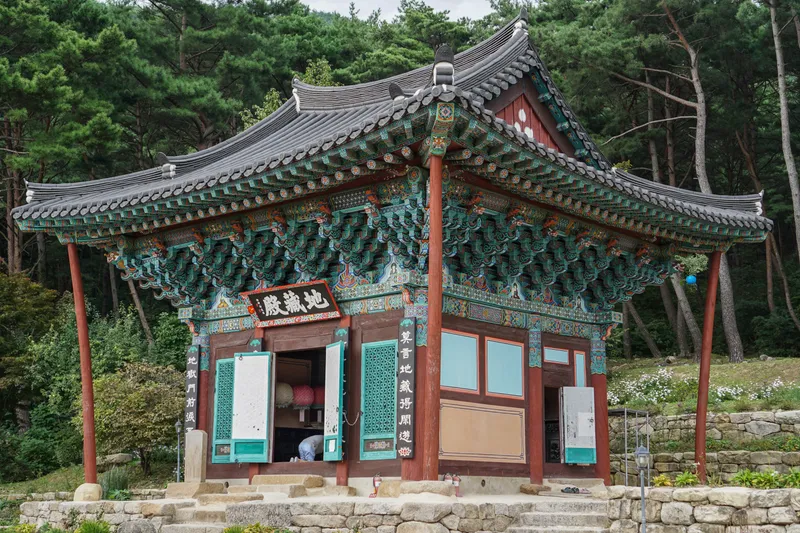 Temple
Bukjijangsa, Palgongsan
A temple where a building’s true name lay in its own ridge-beam record for more than two hundred and fifty years before a repair uncovered it.
 Temple
Donghwasa
A temple on Palgongsan founded by Simji, renamed Donghwasa because paulownia bloomed all around it.
No places match your filters