Girimsa, Hamwolsan
Imjeongsa
Researched and translated with AI assistance. Every claim is linked to its source, but errors get through, so check the official site for opening times, fees and closures.About
In short
Founded by a monk from India, and renamed later by Wonhyo.
Quick facts
- Address
- 437-17 Girim-ro, Munmudaewang-myeon, Gyeongju-si, Gyeongsangbuk-do
About this place
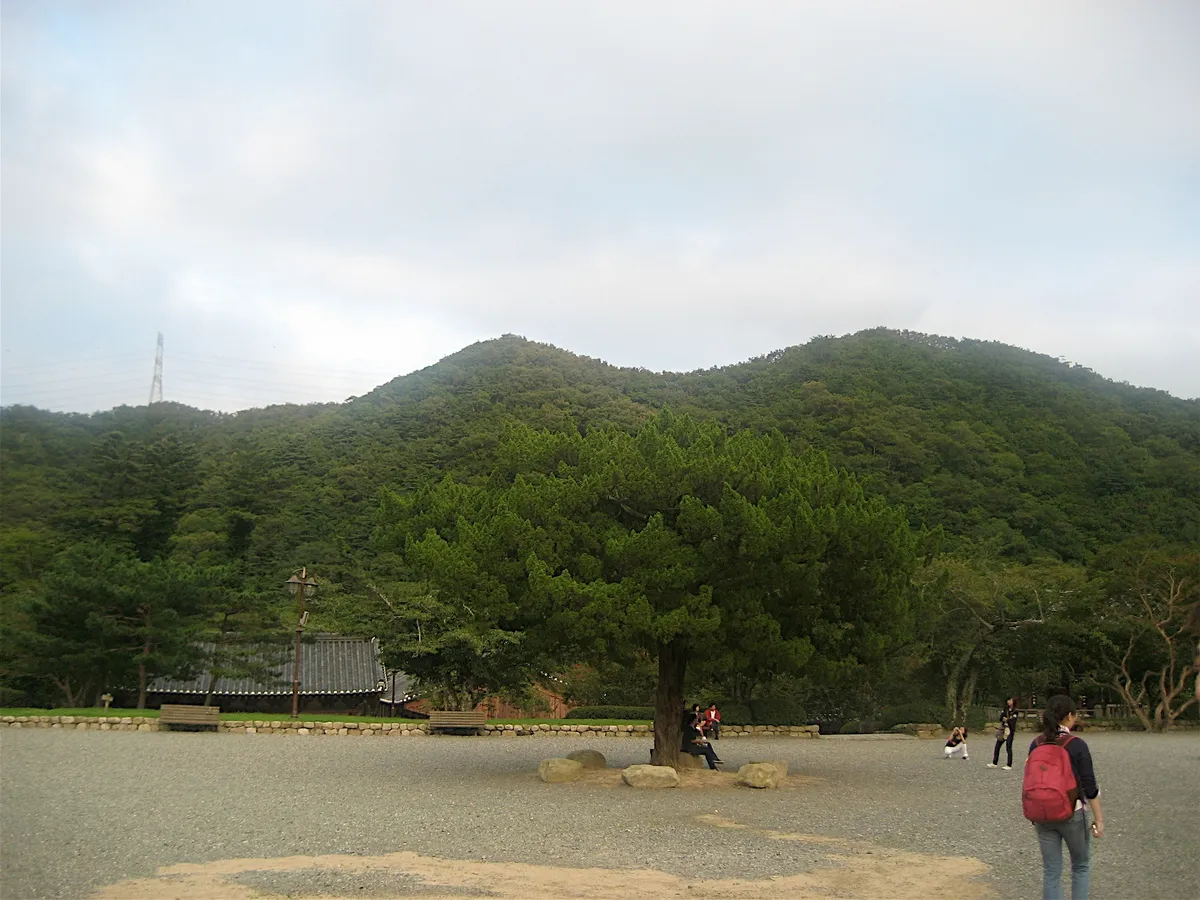
Girimsa stands on Hamwolsan in Munmudaewang-myeon, Gyeongju-si, Gyeongsangbuk-do. In 643 the monk Gwangyu of Cheonchuk, that is India, founded it and it was called Imjeongsa; later Wonhyo rebuilt it, stayed here, and renamed it Girimsa. King Sinmun of Silla took his midday meal in the valley west of this temple on his way back from the Daewangam. In 1862 a great fire reduced a hundred and thirteen bays of buildings to ash; the following spring the temple’s monks began the work with donations from the prefect Song U-hwa and others, and it was restored by the autumn.
Origin and history
In 643 the monk Gwangyu of Cheonchuk, that is India, founded the temple and it was called Imjeongsa. Later Wonhyo rebuilt it, stayed here, and renamed it Girimsa.
King Sinmun of Silla took his midday meal in the valley west of this temple on his way back from the Daewangam.
In 1862 a great fire reduced a hundred and thirteen bays of buildings to ash. The following spring the temple’s monks began the work with donations from the prefect Song U-hwa and others, and it was restored by the autumn.
What it is locally associated with
Founded by a monk from India
In 643 the monk Gwangyu of Cheonchuk, that is India, founded the temple and it was called Imjeongsa.
documented historyThe name Wonhyo changed
Later Wonhyo rebuilt the temple, stayed here, and renamed it Girimsa.
documented historyOn the way back from the Daewangam
King Sinmun of Silla took his midday meal in the valley west of this temple on his way back from the Daewangam.
documented history
The man who founded this temple came from a long way off. In 643 the monk Gwangyu of Cheonchuk founded it under the name Imjeongsa, and later Wonhyo rebuilt it, stayed, and changed the name to Girimsa. The first name was written with the characters for forest and well.
Wonhyo’s name survives both inside Gyeongju and over in Miryang. He stayed at Bunhwangsa, where his stele was later raised, and Jungnimsa, the temple that preceded Pyochungsa in Miryang, is handed down as his founding too.
There is a record of a king passing. It is written that King Sinmun of Silla took his midday meal in the valley west of this temple on his way back from the Daewangam. The Daewangam is the tomb of his father, King Munmu, and it is on this site as Munmudaewangneung. Temple and tomb still stand within the same township.
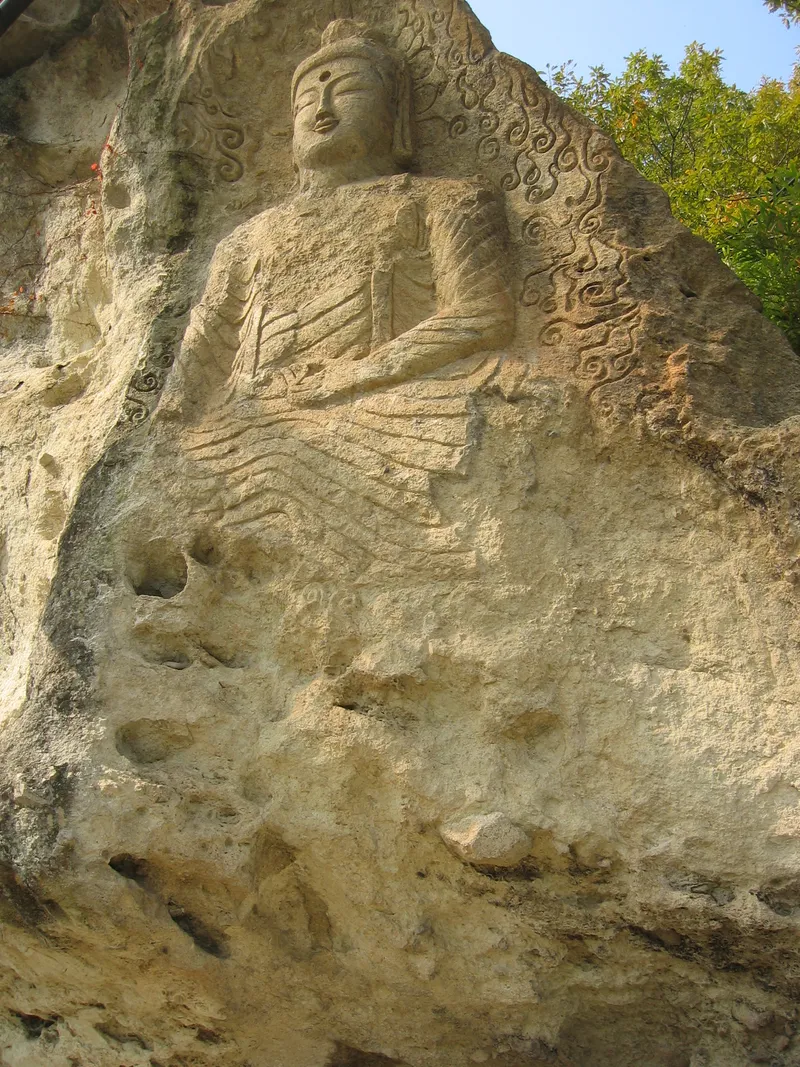
Golgulsa lies in this temple’s valley. It holds twelve stone caves worked out of natural hollows, with a four-metre rock-carved Buddha on the highest face. The two still stand in the same township and on the same road name.
What was lost is on record as a figure too. The great fire of 1862 reduced a hundred and thirteen bays to ash, and work begun the following spring had it restored by the autumn.
Claims and evidence levels 2
- The monk Gwangyu of India founded the temple as Imjeongsa in 643, and Wonhyo later rebuilt it and renamed it Girimsa. documented history
- A great fire in 1862 destroyed a hundred and thirteen bays, restored within the following year. documented history
Related guides
- How to visit a Korean templeHands together and hands folded, how the bows work, and what to do at the threshold of a hall. Starting with what is different from visiting a Japanese shrine.
- The small hall behind the main one — sansingak and samseonggakUphill from the main hall of a Korean temple stands a smaller one, and inside it an old man with a tiger. This is where the indigenous religion sits, inside the Buddhist institution.
- Templestay — a night at a templeA programme that puts you inside a temple’s own timetable for a day or two. What you do, which type to book, and what to be ready for.
- Prayer sites and the one wishThe three great Gwaneum sites, the five relic halls, and the crowds before the entrance exam. Where the saying about one wish comes from, and where the record stops.
Sources
- 함월산 기림사(含月山 祇林寺) — 한국민족문화대백과사전 (accessed 2026-08-16)
Last updated:
Similar places
8 places
 Temple
Golgulsa
A temple of twelve stone caves worked out of natural hollows.
 Temple
Seokguram
- Family & Home
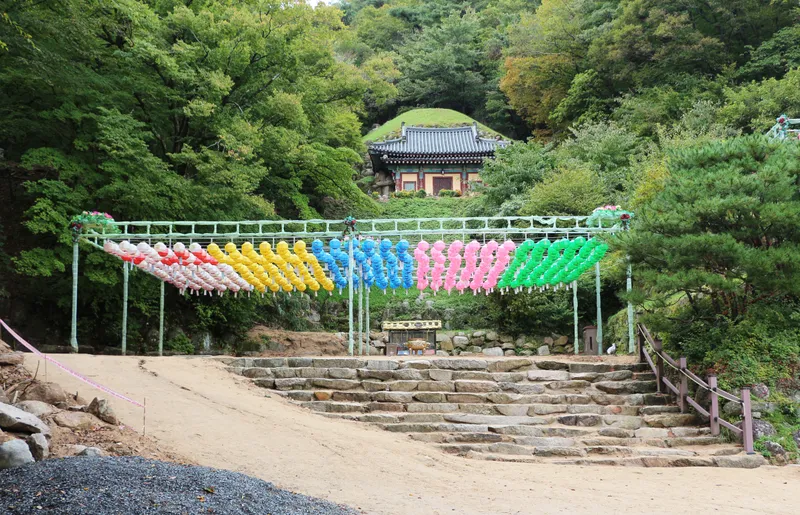
A stone grotto begun in 751 by Kim Dae-seong for his parents in a former life, paired with Bulguksa, which he built for his parents in this one.
 Temple
Bulguksa, Tohamsan
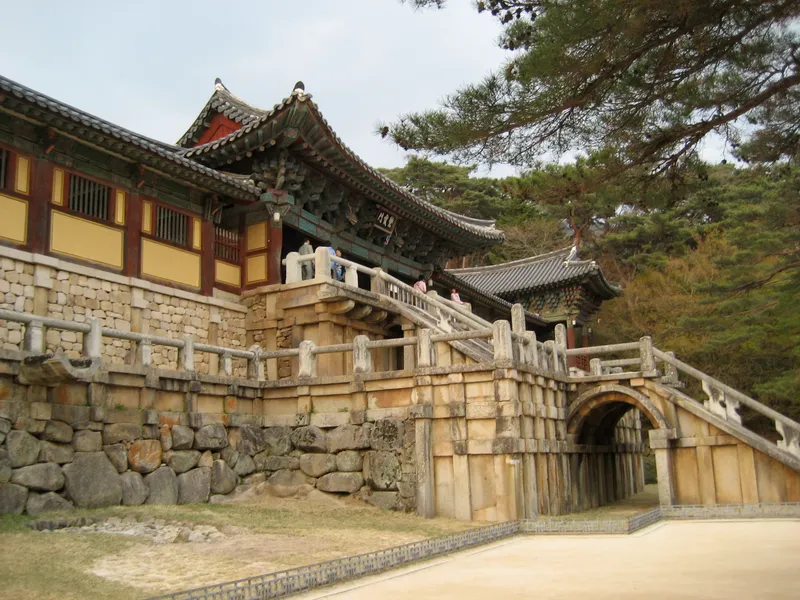
One man built this for the parents of this life, and Seokguram for the parents of a former one.
 Historic Site
Tomb of King Munmu
- Protection & Safety
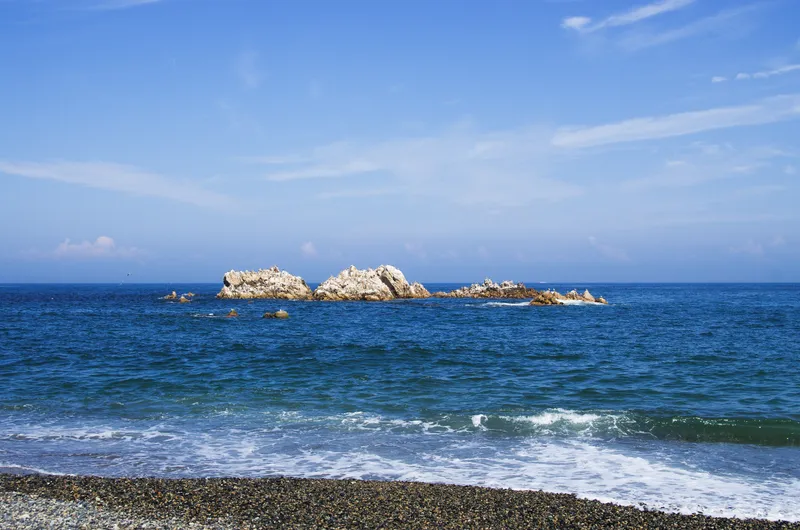
The tomb of King Munmu of Silla, set on a rock in the sea because he willed to become a dragon and guard the East Sea.
 Temple
Bunhwangsa
- Health & Healing
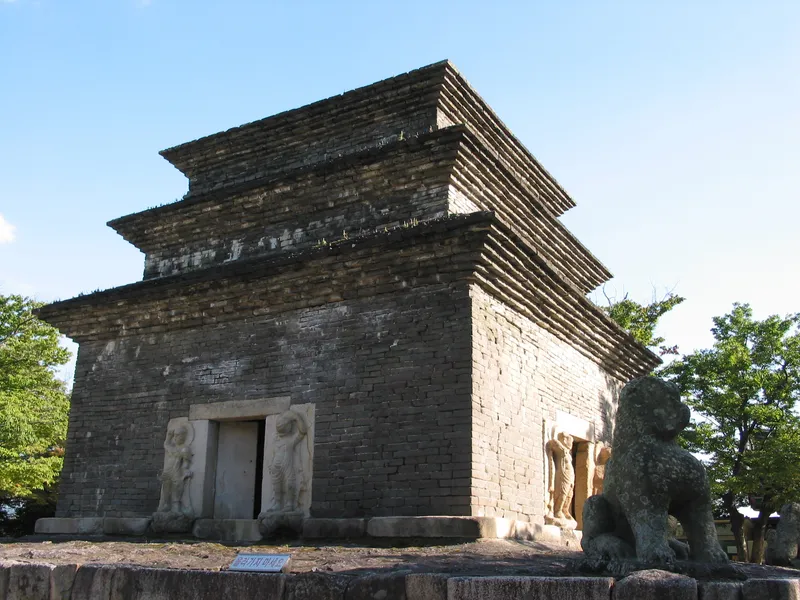
The temple that held the image a blind child’s mother prayed to, after which he saw.
 Temple
Unmunsa, Hogeosan
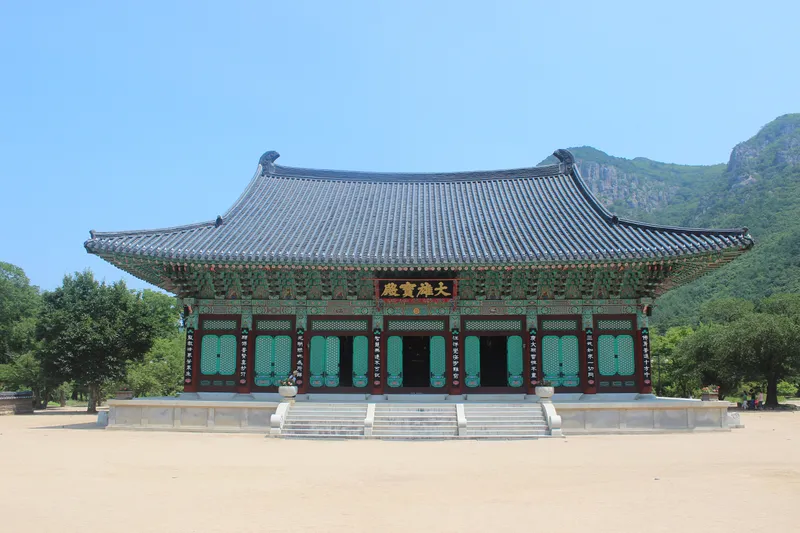
The temple where the line begins that ends with Wongwang writing the five worldly precepts.
 Temple
Bogyeongsa, Naeyeonsan
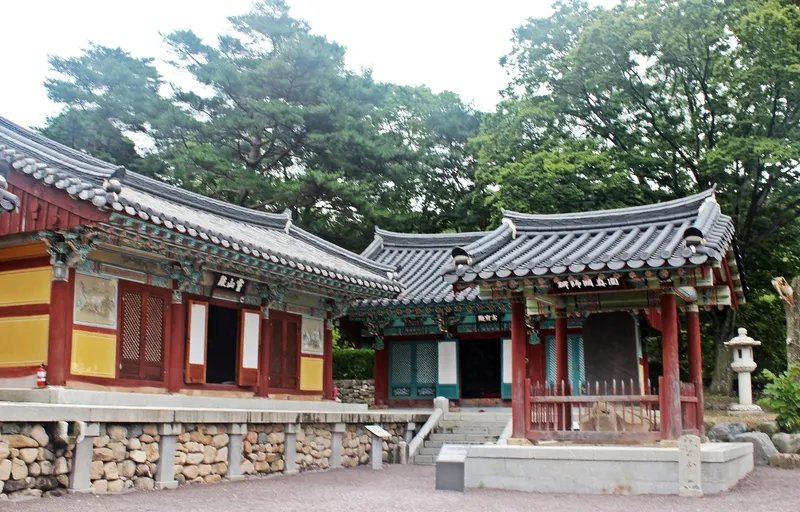
A temple that takes its name from a mirror buried beneath it.
 Temple
Tongdosa
- Protection & Safety
The first of the five relic sanctuaries, whose main hall enshrines no buddha because it faces the relics behind it.
No places match your filters