Gaesimsa, Sangwangsan
Gaewonsa
Researched and translated with AI assistance. Every claim is linked to its source, but errors get through, so check the official site for opening times, fees and closures.About
In short
A temple whose founding record holds two incompatible dates inside a single sentence, so that its year cannot be established.
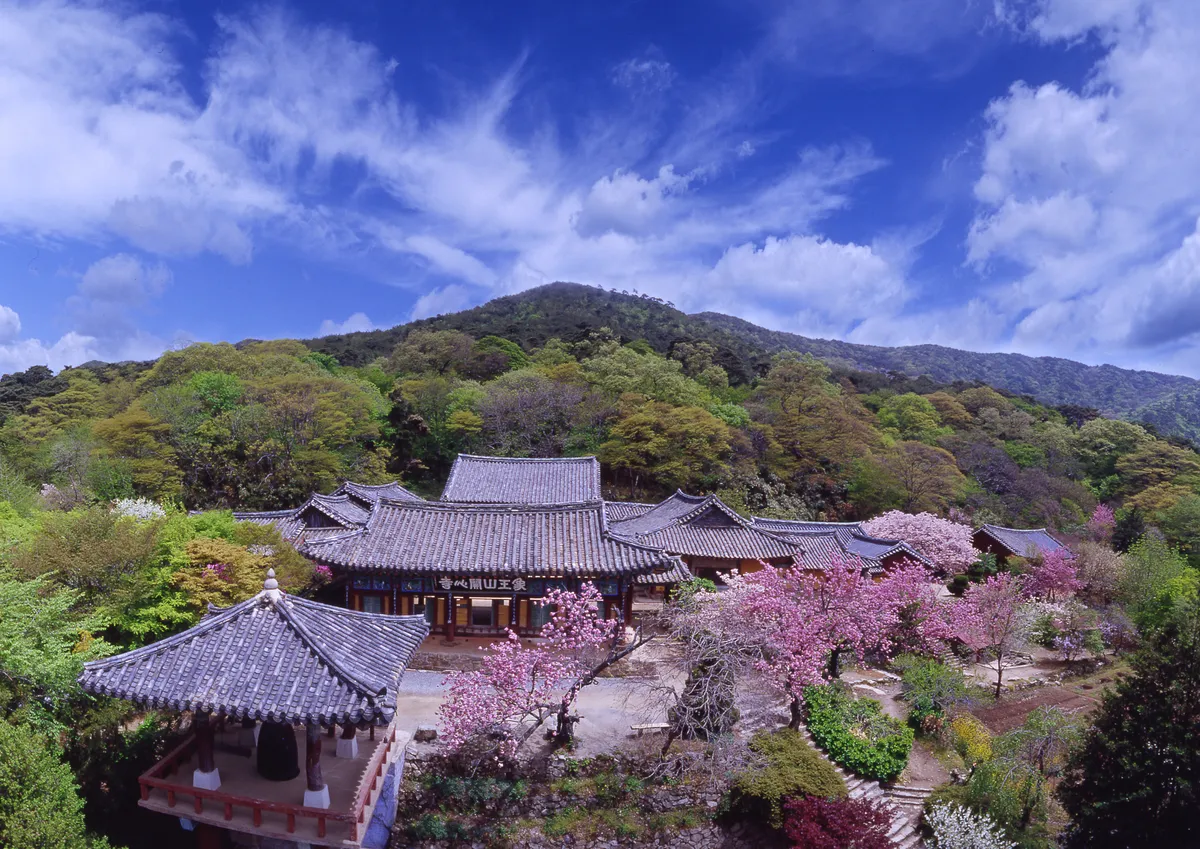
Quick facts
- Address
- 321-86 Gaesimsa-ro, Unsan-myeon, Seosan-si, Chungcheongnam-do
About this place
Gaesimsa stands on Sangwangsan in Unsan-myeon, Seosan. The temple’s own record of its history states that the national master Hyegam founded it in the fifth year of Queen Jindeok of Silla, the fourteenth year of King Uija of Baekje, a gapin year — but the fifth year of Jindeok is 651 and the fourteenth of Uija is 654, so the exact year cannot be established. By the same record the temple was called Gaewonsa at its building, and in 1350 the master Cheoneung rebuilt the main hall and the other halls and renamed it Gaesimsa. The main hall is taken from that record to have been rebuilt in the Goryeo period; an ink inscription found when the hall was dismantled for repair in 1941 shows that it was repaired in 1484, rebuilt in 1644 and repaired again in 1710. The main hall is designated a Treasure.
Origin and history
The temple’s own record of its history states that the national master Hyegam founded it in the fifth year of Queen Jindeok of Silla, the fourteenth year of King Uija of Baekje, a gapin year. But the fifth year of Jindeok is 651 and the fourteenth of Uija is 654, so the exact year cannot be established.
By the same record the temple was called Gaewonsa at its building, and in 1350 the master Cheoneung rebuilt the main hall and the other halls and renamed it Gaesimsa.
The main hall is taken from that record to have been rebuilt in the Goryeo period. An ink inscription found when the hall was dismantled for repair in 1941 shows that it was repaired in 1484, rebuilt in 1644 and repaired again in 1710. The main hall is designated a Treasure.
What it is locally associated with
Two dates that cannot agree
The record gives the founding as the fifth year of Queen Jindeok and the fourteenth of King Uija; these are 651 and 654, so the exact year cannot be established.
documented historyFrom Gaewonsa to Gaesimsa
The temple was called Gaewonsa at its building and became Gaesimsa in 1350, when the master Cheoneung rebuilt the main hall and other halls.
documented historyDates found by taking the hall apart
An ink inscription found when the main hall was dismantled for repair in 1941 established repairs in 1484, 1644 and 1710.
documented history
This temple’s founding record disagrees with itself inside one sentence. It gives the founding as the fifth year of Queen Jindeok of Silla and the fourteenth year of King Uija of Baekje; the first is 651 and the second is 654. The two cannot be the same year, and the record is therefore summarised as one whose exact date cannot be established.
The same province holds several such cases. Gapsa in Gongju has three founding accounts, and Muryangsa in Buyeo states that neither its founding date nor its later history is known. But Gapsa is three separate stories standing side by side; here a single clause fails to agree with itself.
The building is a different matter. When the main hall was taken apart for repair in 1941 an ink inscription came to light, and from it the repair of 1484, the rebuilding of 1644 and the repair of 1710 were established. The temple’s age cannot be known, but the hall’s age emerges when it is opened up.
The name changed once too. It was Gaewonsa at first, and became Gaesimsa in 1350 when the master Cheoneung rebuilt the main hall and the other halls.
Claims and evidence levels 2
- The temple record gives the founding as both the fifth year of Queen Jindeok (651) and the fourteenth of King Uija (654), so the year cannot be established. documented history
- An ink inscription found during the 1941 dismantling shows the main hall was repaired in 1484, rebuilt in 1644 and repaired in 1710. documented history
Related guides
- How to visit a Korean templeHands together and hands folded, how the bows work, and what to do at the threshold of a hall. Starting with what is different from visiting a Japanese shrine.
- The small hall behind the main one — sansingak and samseonggakUphill from the main hall of a Korean temple stands a smaller one, and inside it an old man with a tiger. This is where the indigenous religion sits, inside the Buddhist institution.
- Templestay — a night at a templeA programme that puts you inside a temple’s own timetable for a day or two. What you do, which type to book, and what to be ready for.
- Prayer sites and the one wishThe three great Gwaneum sites, the five relic halls, and the crowds before the entrance exam. Where the saying about one wish comes from, and where the record stops.
Sources
- 서산 개심사 대웅전(瑞山 開心寺 大雄殿) — 한국민족문화대백과사전 (accessed 2026-08-16)
Last updated:
Similar places
8 places
 Temple
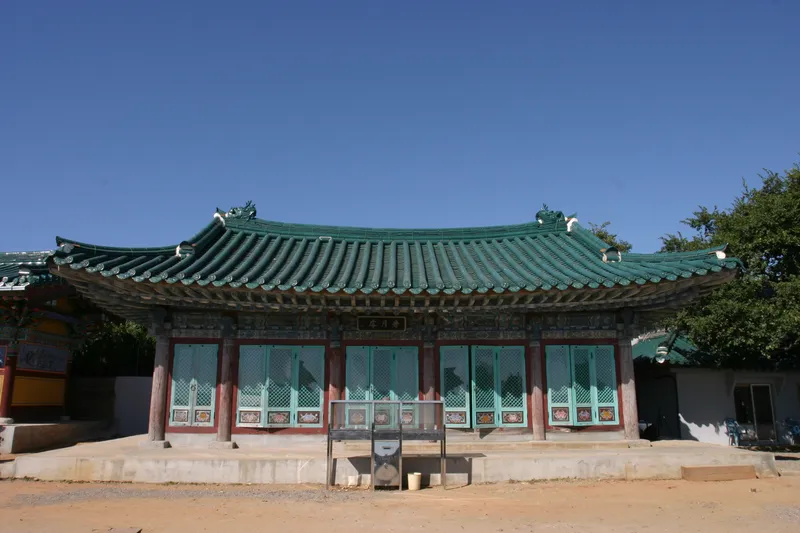
Ganwolam
The hermitage where Muhak Daesa is said to have awakened on seeing the moon, cut off by the tide and reachable again when it falls.
 Temple
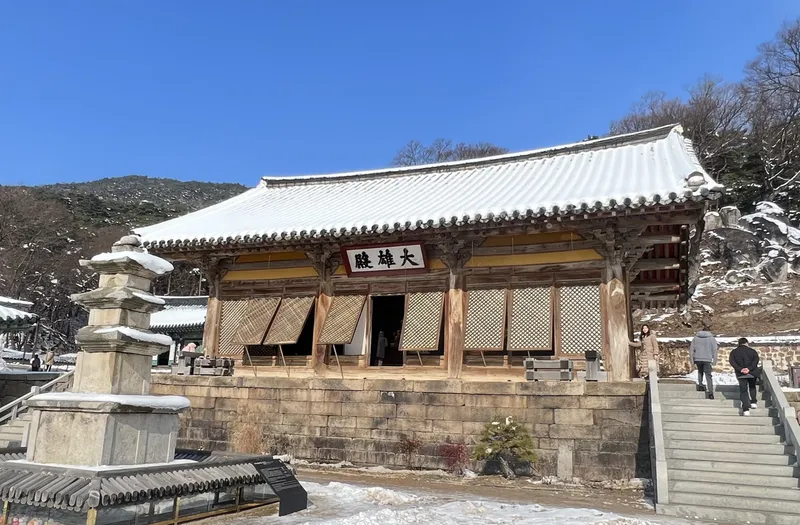
Sudeoksa, Deoksungsan
A temple whose main hall is one of the oldest buildings in Korea whose date of construction is certainly known.
 Historic Site
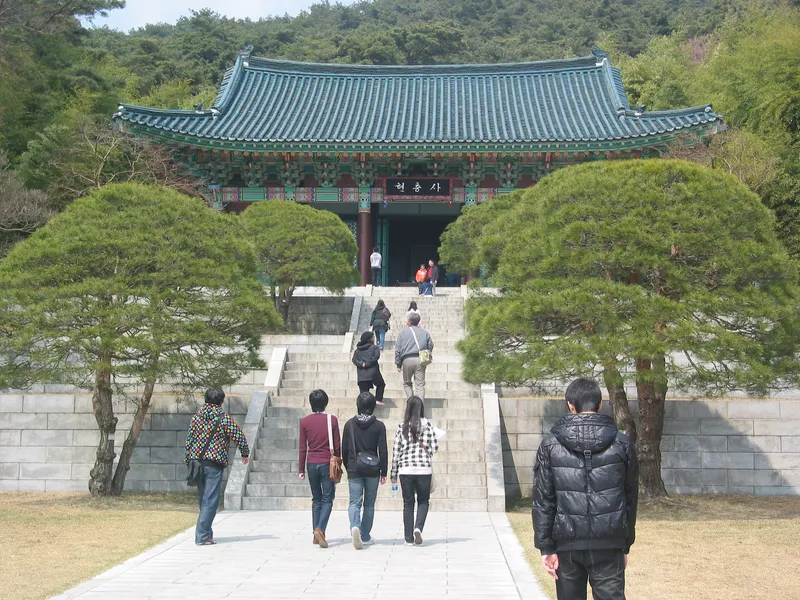
Hyeonchungsa
A shrine raised in 1706 to honour Admiral Yi Sun-sin, left to decay under colonial rule and rebuilt in 1932 by public subscription.
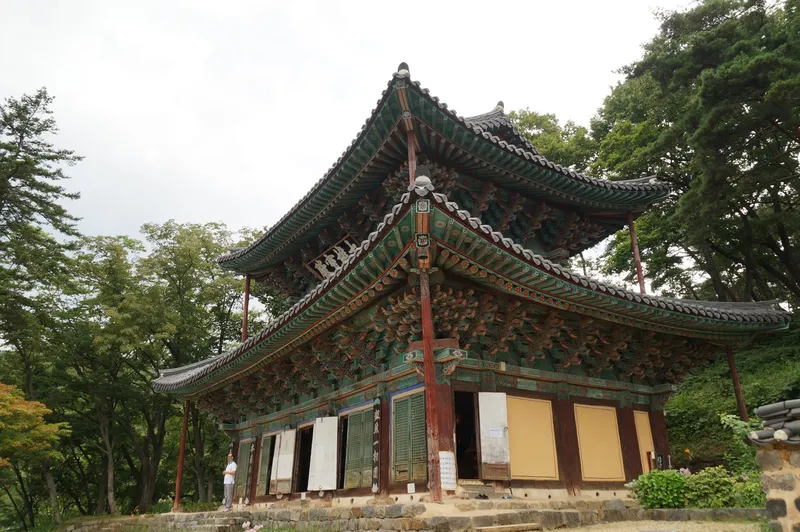 Temple
Magoksa
A thousand-year-old temple on Taehwasan said to have been founded by Jajang, where two main halls stand one behind the other up the slope.
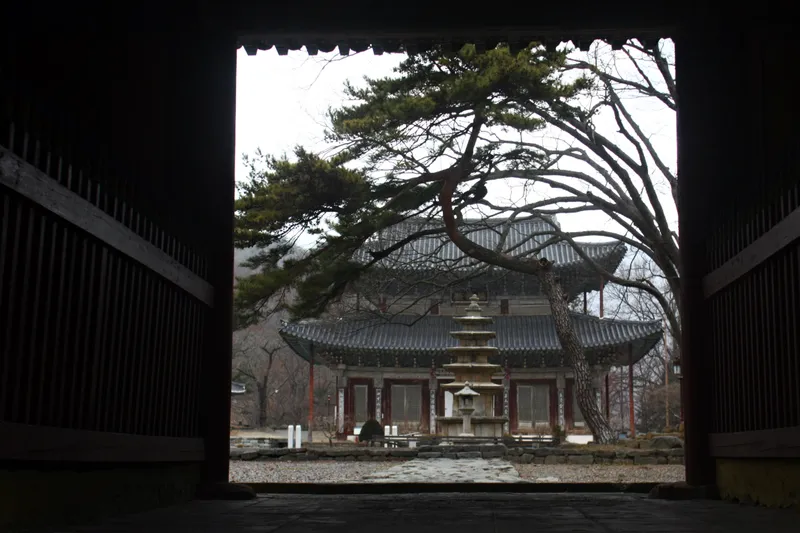 Temple
Muryangsa, Mansusan
The temple where Kim Si-seup spent his last years and died.
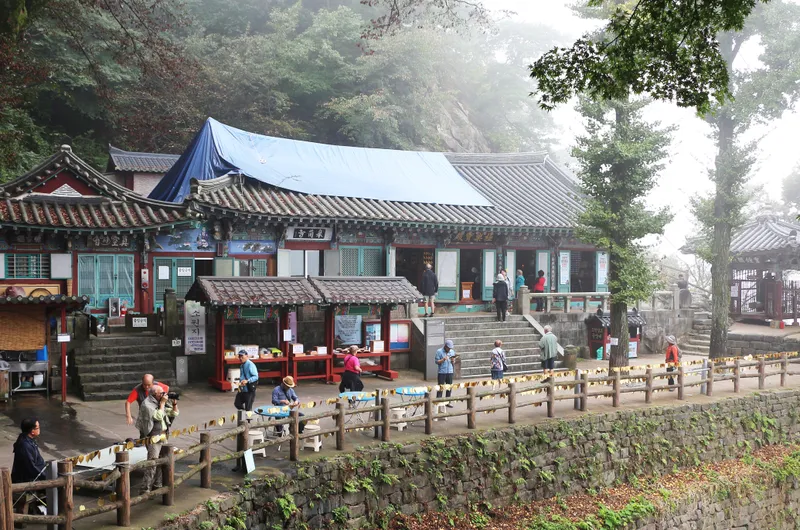 Temple
Goransa
A temple rebuilt by Baekje’s descendants after the kingdom fell, named for the rare fern growing on the cliff behind it.
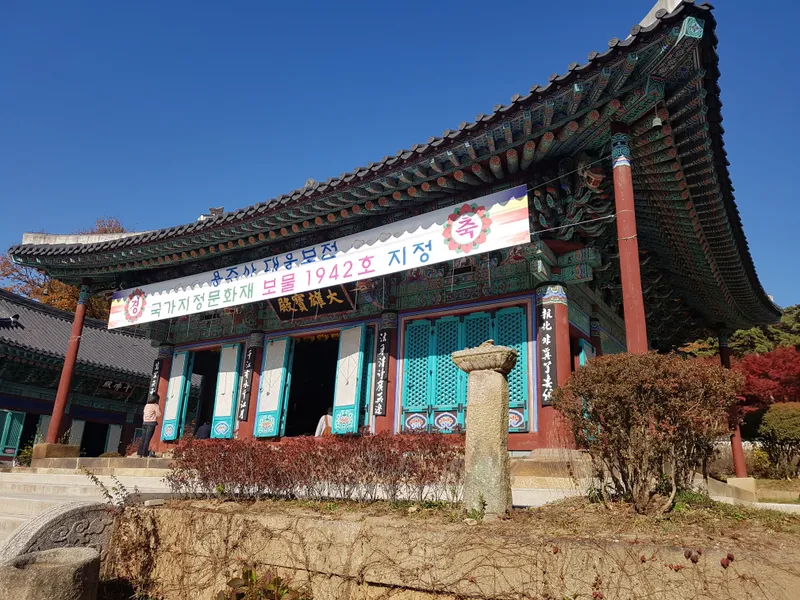 Temple
Yongjusa
- Family & Home
The temple King Jeongjo refounded beside his father’s grave, holding the woodblocks of the sutra on what children owe their parents.
 Temple
Gapsa, Gyeryongsan
A Three Kingdoms temple with three separate accounts of its founding, and where Yeonggyu took ordination.
No places match your filters