Gapsa, Gyeryongsan
Researched and translated with AI assistance. Every claim is linked to its source, but errors get through, so check the official site for opening times, fees and closures.About
In short
A Three Kingdoms temple with three separate accounts of its founding, and where Yeonggyu took ordination.
Quick facts
- Address
- 567-3 Gapsa-ro, Gyeryong-myeon, Gongju-si, Chungcheongnam-do
About this place
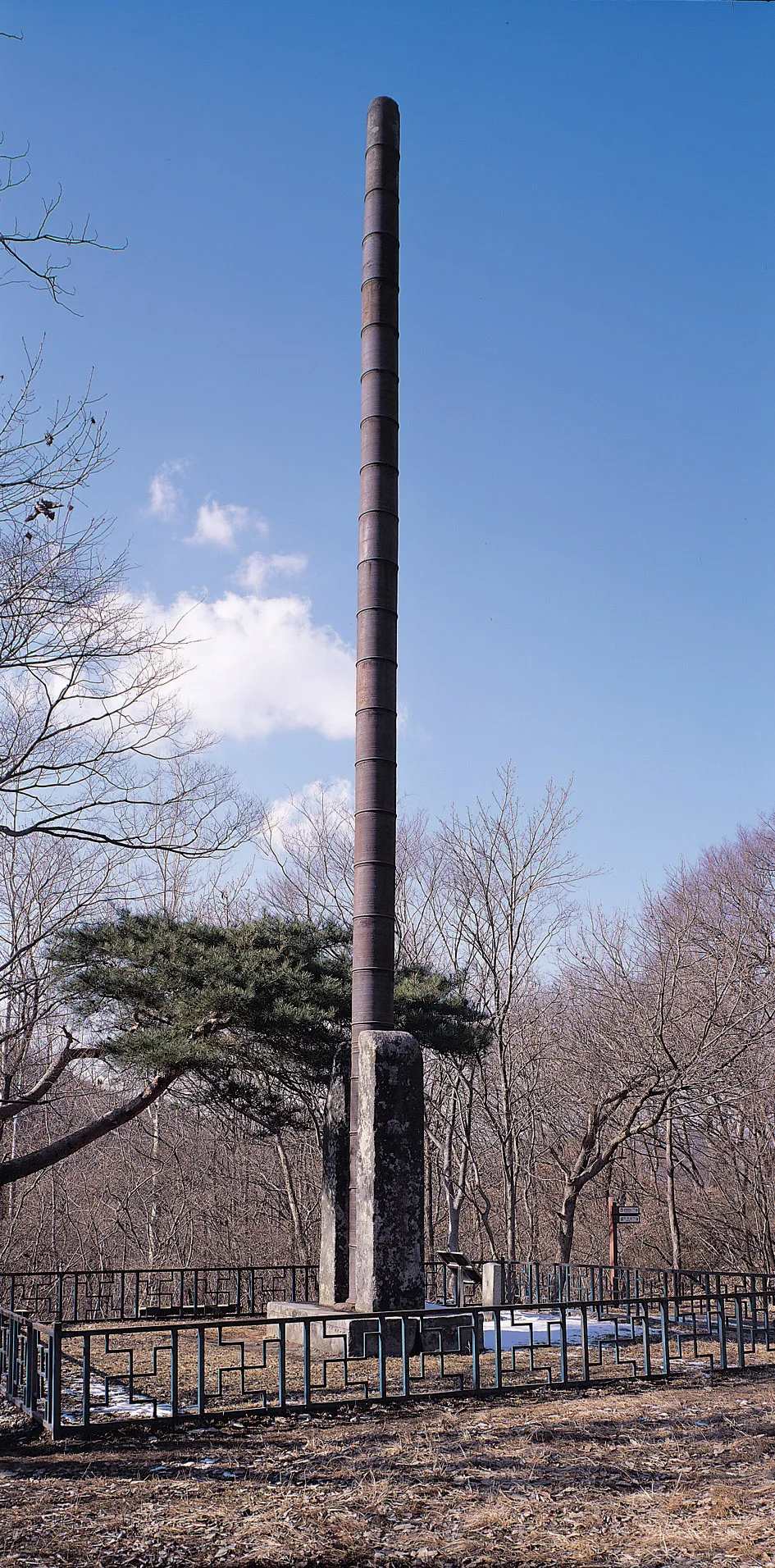
Gapsa stands on Gyeryongsan in Gyeryong-myeon, Gongju, and was founded in the Three Kingdoms period. Of its founding there are several accounts: that the monk Ado founded it in 420; that Hyemyeong founded it in 556; and that Ado founded it and Hyemyeong rebuilt it. In 679 the master Uisang repaired it and made it a place of Hwaeom study, after which it became one of Silla’s ten Hwaeom temples. Yeonggyu took ordination at Gapsa on Gyeryongsan and received the dharma of Cheongheo Hyujeong; after weeping aloud for three days he gathered more than eight hundred monk-soldiers in Chungcheong. Its designated heritage includes the iron flagpole and supports, the stupa, the bronze bell and the woodblocks of the Worin Seokbo, all Treasures, and the tomb of the master Yeonggyu, designated a monument of Chungcheongnam-do in 1977.
Origin and history
Gapsa was founded in the Three Kingdoms period. Of its founding there are several accounts: that the monk Ado founded it in 420; that Hyemyeong founded it in 556; and that Ado founded it and Hyemyeong rebuilt it.
In 679 the master Uisang repaired it and made it a place of Hwaeom study, after which it became one of Silla’s ten Hwaeom temples.
Yeonggyu took ordination at Gapsa and received the dharma of Cheongheo Hyujeong. After weeping aloud for three days he gathered more than eight hundred monk-soldiers in Chungcheong.
Its designated heritage includes the iron flagpole and supports, the stupa, the bronze bell and the woodblocks of the Worin Seokbo, all Treasures, along with the tomb of the master Yeonggyu, designated a monument of Chungcheongnam-do in 1977.
What it is locally associated with
Three founding accounts
That Ado founded it in 420, that Hyemyeong founded it in 556, and that Ado founded it and Hyemyeong rebuilt it are handed down together.
folk traditionAfter three days of weeping
Yeonggyu was ordained here and received Cheongheo Hyujeong’s dharma; after weeping aloud for three days he gathered more than eight hundred monk-soldiers.
documented historyOne of the ten Hwaeom temples
Uisang repaired it in 679 and made it a place of Hwaeom study, after which it became one of Silla’s ten Hwaeom temples.
documented history
This temple’s beginning does not resolve into one account. That Ado raised it in 420, that Hyemyeong raised it in 556, and that Ado raised it and Hyemyeong rebuilt it all stand side by side. Gaesimsa in the same province carries two incompatible dates inside one sentence of its own record, and Muryangsa states that its founding date is unknown. The temples of this province are poor at saying when they began.
One man’s three days, by contrast, are set down exactly. Yeonggyu took ordination here, and after weeping aloud for three days he gathered more than eight hundred monk-soldiers in Chungcheong. What is timed in that sentence is not the raising of an army but the grief before it.
The objects the temple holds do have dates. The iron flagpole and its supports, the stupa, the bronze bell and the Worin Seokbo woodblocks are Treasures. The founding is blurred and the holdings are sharp.
Gyeryongsan carries several entries on this site. Sinwonsa and Donghaksa on the same mountain are already here, and this is the third.
Claims and evidence levels 2
- Three separate accounts of the founding are handed down: Ado in 420, Hyemyeong in 556, and Ado founding with Hyemyeong rebuilding. folk tradition
- Yeonggyu, ordained at this temple, wept aloud for three days and then gathered more than eight hundred monk-soldiers in Chungcheong. documented history
Related guides
- How to visit a Korean templeHands together and hands folded, how the bows work, and what to do at the threshold of a hall. Starting with what is different from visiting a Japanese shrine.
- The small hall behind the main one — sansingak and samseonggakUphill from the main hall of a Korean temple stands a smaller one, and inside it an old man with a tiger. This is where the indigenous religion sits, inside the Buddhist institution.
- Templestay — a night at a templeA programme that puts you inside a temple’s own timetable for a day or two. What you do, which type to book, and what to be ready for.
- Prayer sites and the one wishThe three great Gwaneum sites, the five relic halls, and the crowds before the entrance exam. Where the saying about one wish comes from, and where the record stops.
Sources
- 계룡산 갑사(鷄龍山 甲寺) — 한국민족문화대백과사전 (accessed 2026-08-16)
Last updated:
Similar places
8 places
 Temple
Donghaksa, Gyeryongsan
Where rites were held to summon the spirits of the six martyred ministers and of King Danjong, and where one of Korea’s foremost seminaries for nuns stands.
 Temple
Jungakdan, Sinwonsa
- Wish Fulfillment
The only survivor of the three royal mountain-god altars of Joseon stands in the grounds of Sinwonsa on Gyeryongsan.
 Temple
Magoksa
A thousand-year-old temple on Taehwasan said to have been founded by Jajang, where two main halls stand one behind the other up the slope.
 Temple
Gwanchoksa, Banyasan
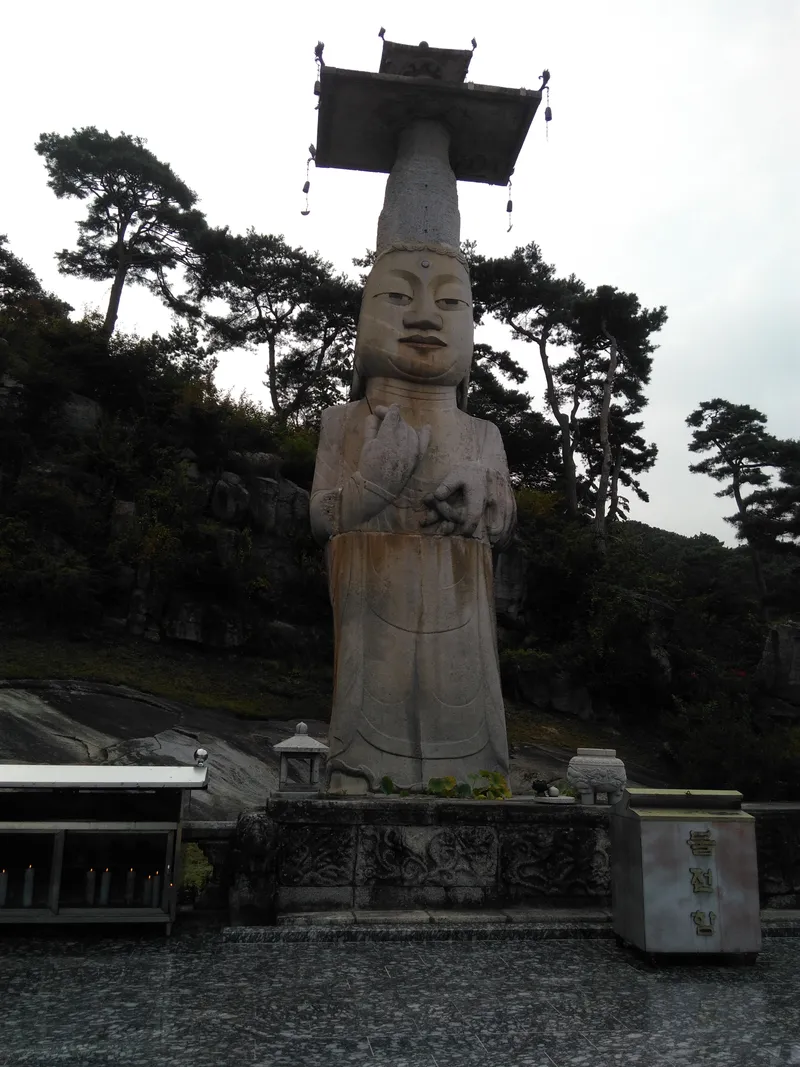
Where a stone Maitreya took thirty-seven years to carve and could not be stood up until someone watched two children playing in mud.
 Temple
Goransa
A temple rebuilt by Baekje’s descendants after the kingdom fell, named for the rare fern growing on the cliff behind it.
 Temple
Muryangsa, Mansusan
The temple where Kim Si-seup spent his last years and died.
 Historic Site
Hyeonchungsa
A shrine raised in 1706 to honour Admiral Yi Sun-sin, left to decay under colonial rule and rebuilt in 1932 by public subscription.
 Temple
Sudeoksa, Deoksungsan
A temple whose main hall is one of the oldest buildings in Korea whose date of construction is certainly known.
No places match your filters