Magoksa
Taehwasan Magoksa
Researched and translated with AI assistance. Every claim is linked to its source, but errors get through, so check the official site for opening times, fees and closures.About
In short
A thousand-year-old temple on Taehwasan said to have been founded by Jajang, where two main halls stand one behind the other up the slope.
Quick facts
- Address
- 966 Magoksa-ro, Sagok-myeon, Gongju-si, Chungcheongnam-do
- Spiritual entities
- Jajang (慈藏, 590–658)
About this place
Magoksa is on Taehwasan in Gongju, South Chungcheong, and is said to have been founded by Jajang. Jinul is said to have refounded it in the late Goryeo period, and it is now the head temple of the sixth diocese of the Jogye Order. It is one of the seven temples inscribed on the UNESCO World Heritage list in 2018 as "Sansa, Buddhist Mountain Monasteries in Korea". Its designated heritage includes the Daeungbojeon, the Daegwangbojeon, the Yeongsanjeon and a five-storey pagoda.
Origin and history
The Encyclopedia of Korean Culture records Magoksa as a temple founded by Jajang in Gongju, South Chungcheong. It is a thousand-year-old temple on Taehwasan, and Jinul is said to have refounded it in the late Goryeo period.
It is now the head temple of the Jogye Order’s sixth diocese. In 2018 Magoksa and six other mountain temples were inscribed on the UNESCO World Heritage list as "Sansa, Buddhist Mountain Monasteries in Korea".
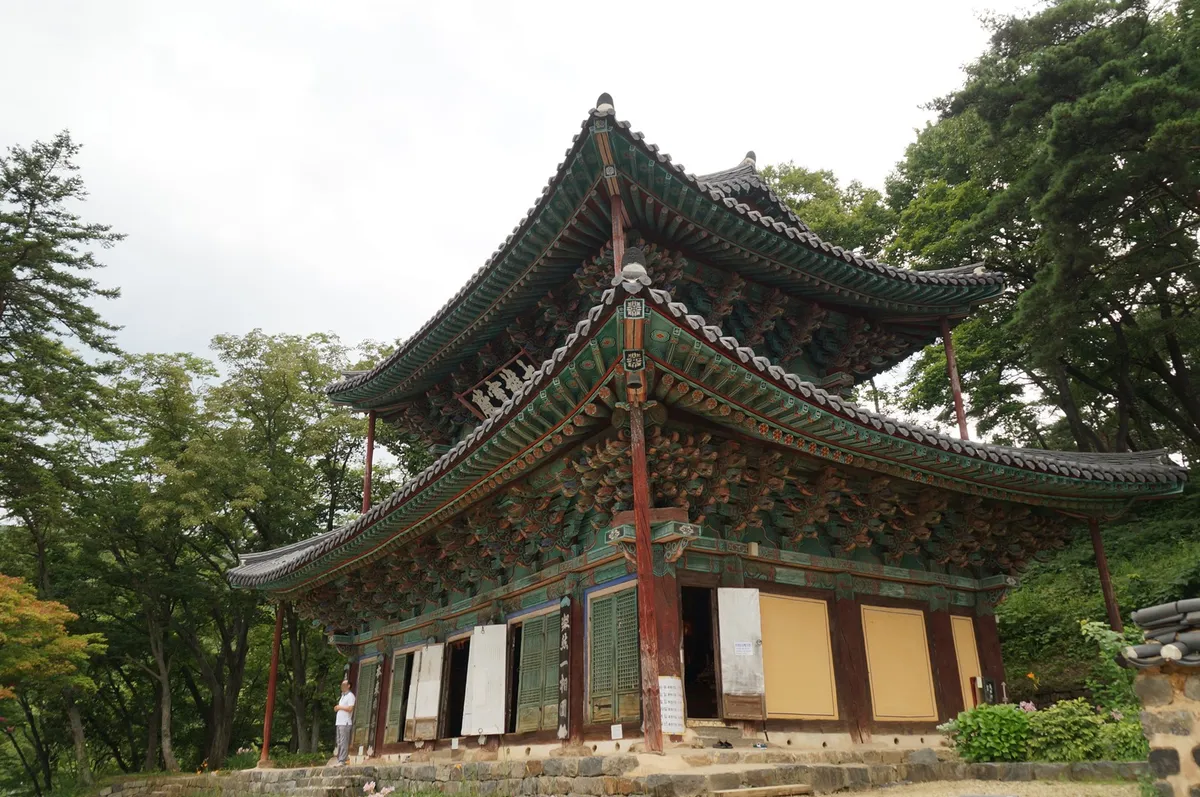
The Daeungbojeon is a two-storey building of the late Joseon period; the Daegwangbojeon stands in front of it, and together they form the temple’s central halls. The Yeongsanjeon and a late-Goryeo five-storey pagoda also survive.
What it is locally associated with
Founded by Jajang, refounded by Jinul
Said to have been founded by Jajang, and refounded by Jinul in the late Goryeo period.
folk traditionDaegwangbojeon and Daeungbojeon
They stand one behind the other up the slope as the temple’s central halls; the Daeungbojeon is a two-storey late-Joseon building.
documented historyUNESCO World Heritage, 2018
Inscribed with six other temples as "Sansa, Buddhist Mountain Monasteries in Korea".
documented history
What people came here to ask for, the state record does not say. It gives who founded and refounded the temple and which buildings survive, and stops. That is why this page carries no petition.
What it has instead is an arrangement. The Daegwangbojeon and the Daeungbojeon stand one behind the other up the slope, and that overlap is how the place is remembered in a single photograph. The 2018 inscription of seven mountain temples was itself a judgement about this kind of siting rather than about any one building.
Claims and evidence levels 4
- Magoksa is said to have been founded by Jajang, and to have been refounded by Jinul in the late Goryeo period. folk tradition
- It is the head temple of the sixth diocese of the Jogye Order. documented history
- The Daeungbojeon is a two-storey late-Joseon building and stands with the Daegwangbojeon as the temple’s central halls; the Yeongsanjeon and a late-Goryeo five-storey pagoda also survive. documented history
- In 2018 Magoksa was inscribed on the UNESCO World Heritage list with six other temples as "Sansa, Buddhist Mountain Monasteries in Korea". documented history
Related guides
- How to visit a Korean templeHands together and hands folded, how the bows work, and what to do at the threshold of a hall. Starting with what is different from visiting a Japanese shrine.
- The small hall behind the main one — sansingak and samseonggakUphill from the main hall of a Korean temple stands a smaller one, and inside it an old man with a tiger. This is where the indigenous religion sits, inside the Buddhist institution.
- Templestay — a night at a templeA programme that puts you inside a temple’s own timetable for a day or two. What you do, which type to book, and what to be ready for.
- Prayer sites and the one wishThe three great Gwaneum sites, the five relic halls, and the crowds before the entrance exam. Where the saying about one wish comes from, and where the record stops.
Sources
- 태화산 마곡사(泰華山 麻谷寺) — 한국민족문화대백과사전 — Academy of Korean Studies (accessed 2026-08-12)
- 태백산 천제단 — 국가유산포털 — Korea Heritage Service (accessed 2026-08-12)
Last updated:
Similar places
8 places
 Temple
Gapsa, Gyeryongsan
A Three Kingdoms temple with three separate accounts of its founding, and where Yeonggyu took ordination.
 Temple
Jungakdan, Sinwonsa
- Wish Fulfillment
The only survivor of the three royal mountain-god altars of Joseon stands in the grounds of Sinwonsa on Gyeryongsan.
 Temple
Donghaksa, Gyeryongsan
Where rites were held to summon the spirits of the six martyred ministers and of King Danjong, and where one of Korea’s foremost seminaries for nuns stands.
 Temple
Manggyeongsa, Taebaeksan
Built to house a stone image of Manjushri that its founder came here because he had heard it had appeared.
 Temple
Jeongamsa
- Protection & Safety
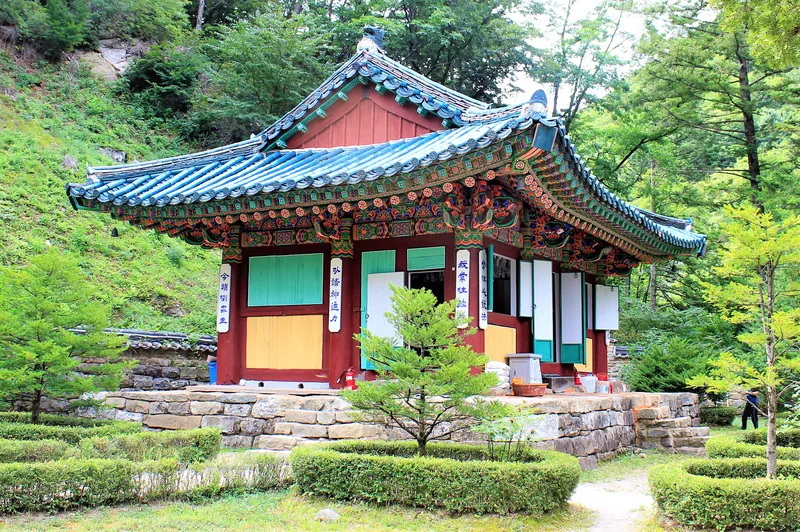
A relic sanctuary where Jajang is said to have enshrined the Buddha’s skull bone, a tooth and a hundred relics, with a National Treasure stupa on the slope behind.
 Temple
Woljeongsa, Odaesan
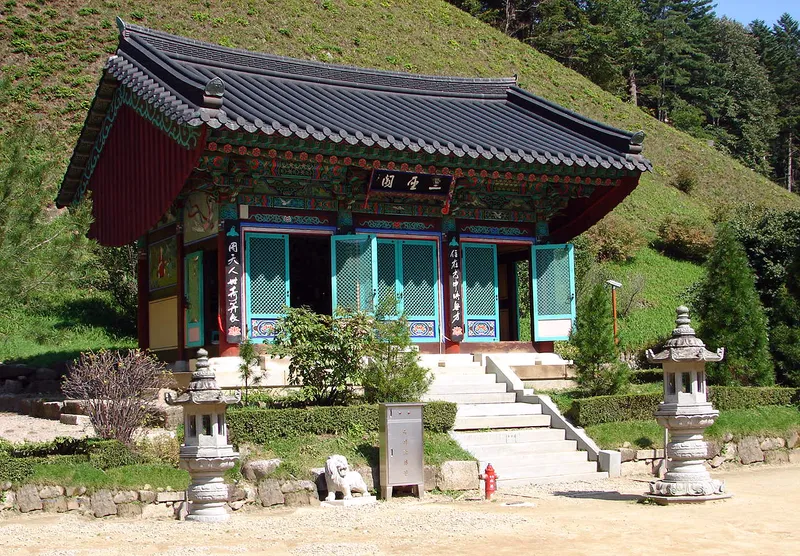
Head temple of the fourth Jogye district, begun where its founder tried to see Manjushri in the flesh and did not.
 Temple
Jeongmyeol-bogung, Odaesan
- Protection & Safety
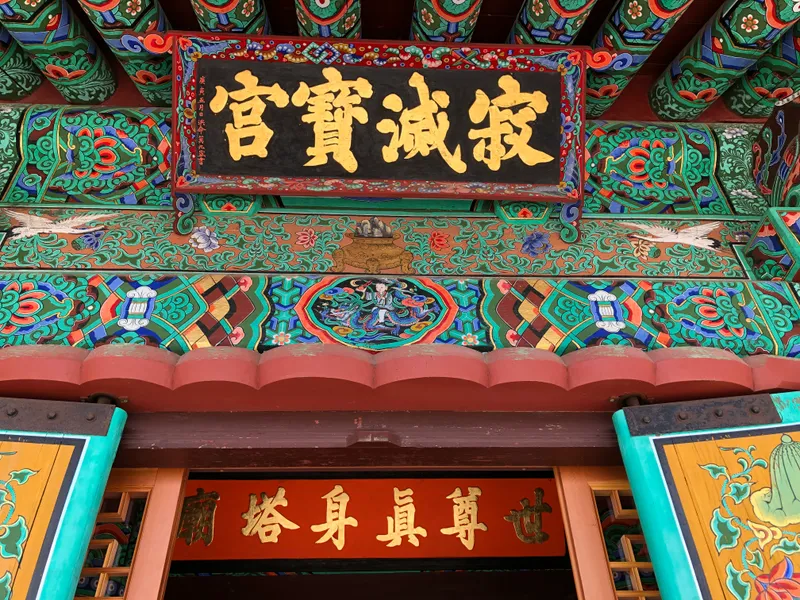
A relic hall on the middle terrace of Odaesan with no buddha image inside, because the Buddha’s own relics are enshrined there.
 Temple
Baekdamsa, Seoraksan
Built where a count of the pools from Cheongbong down to the temple came to a hundred, and named for that number.
No places match your filters