Cheongpyeongsa, Obongsan
Baegam Seonwon · Bohyeonwon · Munsuwon
Researched and translated with AI assistance. Every claim is linked to its source, but errors get through, so check the official site for opening times, fees and closures.About
In short
A temple whose Goryeo garden is the listed monument, and where a son rebuilding his father’s work renamed the mountain as well.
Quick facts
- Address
- 810 Obongsan-gil, Buksan-myeon, Chuncheon-si, Gangwon
About this place
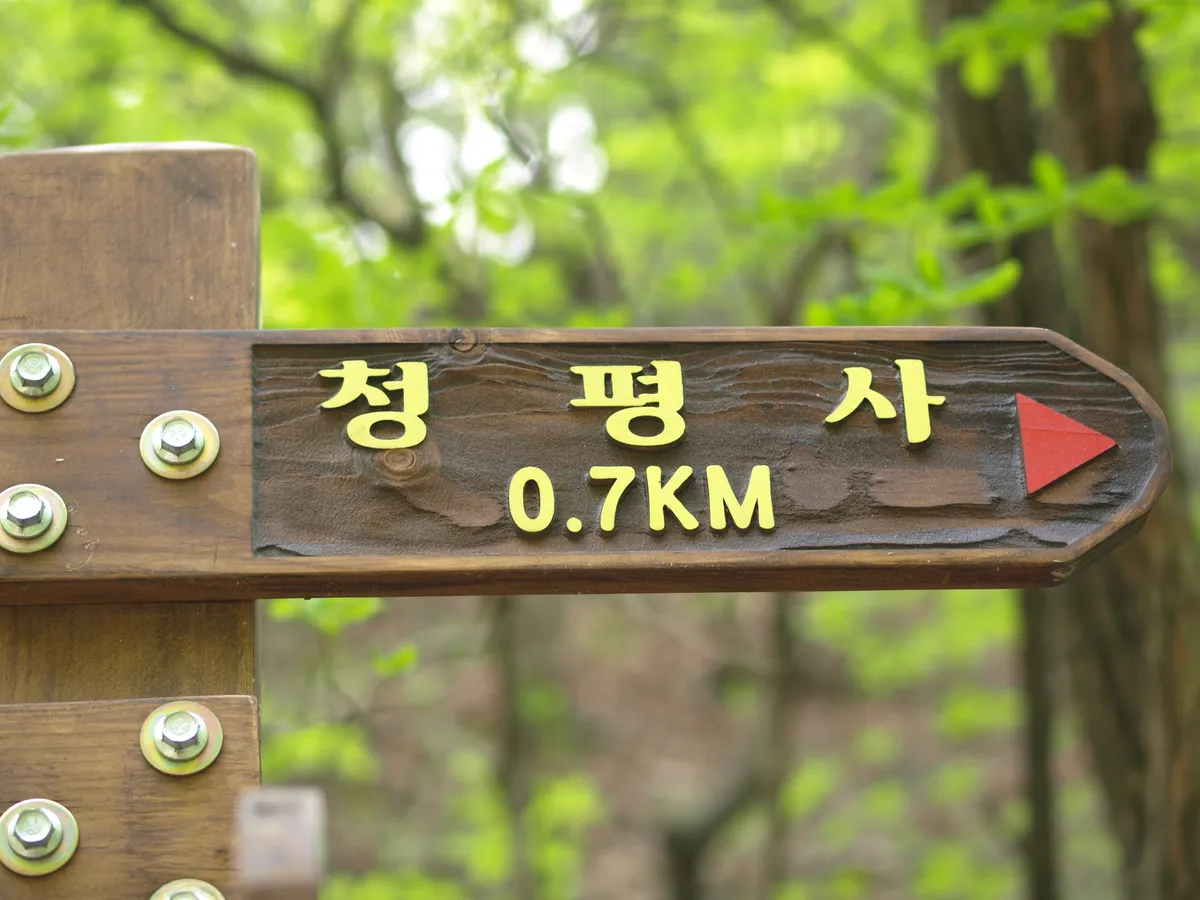
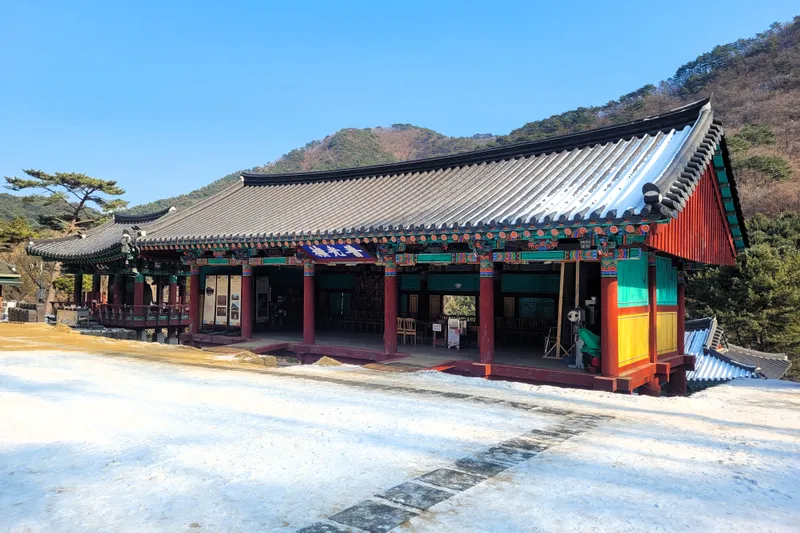
Cheongpyeongsa stands in Buksan-myeon, Chuncheon. In 973 the Tang meditation master Yeonghyeon founded it below Gyeongunsan under the name Baegam Seonwon. In 1068 Yi Ui, superintendent of Chunju circuit, rebuilt it as Bohyeonwon; his son Yi Ja-hyeon rebuilt it again in 1089, renamed it Munsuwon, added eight new hermitages, and gave the mountain the name Cheongpyeongsan. In the pond precinct, around the reflecting pond with its upper and lower basins, stand Cheongpyeongru, Cheongpyeong Sanbang, the site of Sehyangwon, a stone terrace, a stupa and the site of a water mill. The Goryeo meditation garden at Cheongpyeongsa in Chuncheon is designated a Scenic Site. A legend is handed down here of a Tang princess who was rid of the lovesick snake.
Origin and history
In 973 the Tang meditation master Yeonghyeon founded the temple below Gyeongunsan under the name Baegam Seonwon.
In 1068 Yi Ui, superintendent of Chunju circuit, rebuilt it as Bohyeonwon. His son Yi Ja-hyeon rebuilt it again in 1089, renamed it Munsuwon, added eight new hermitages, and gave the mountain the name Cheongpyeongsan.
In the pond precinct, around the reflecting pond with its upper and lower basins, stand Cheongpyeongru, Cheongpyeong Sanbang, the site of Sehyangwon, a stone terrace, a stupa and the site of a water mill. The Goryeo meditation garden at Cheongpyeongsa is designated a Scenic Site.
A legend of a Tang princess who was rid of the lovesick snake is handed down here. Long ago in Tang there lived a beautiful princess, and a master carpenter working on the palace saw her, fell sick with love and died; afterwards he was reborn as the lovesick snake, fastened on the princess and would not come off.
What it is locally associated with
The father’s temple, the son’s name
Yi Ui rebuilt it as Bohyeonwon in 1068; his son Yi Ja-hyeon rebuilt it as Munsuwon in 1089 and renamed the mountain Cheongpyeongsan.
documented historyA Goryeo garden as the monument
The precinct around the reflecting pond, with Cheongpyeongru, the Sehyangwon site, a stone terrace, a stupa and a water-mill site, is designated a Scenic Site.
documented historyThe princess and the lovesick snake
A carpenter who died of lovesickness was reborn as a snake that fastened on the princess; the temple keeps the tale of her being rid of it.
folk tradition
This temple changed its name three times in a little over a century: Baegam Seonwon in 973, Bohyeonwon in 1068, Munsuwon in 1089. The name it goes by now came later still.
The second and third names were given by a father and his son. Yi Ui rebuilt it and called it Bohyeonwon; his son Yi Ja-hyeon rebuilt it again and called it Munsuwon. And Yi Ja-hyeon did not stop at the temple’s name — he changed the mountain’s. Gyeongunsan became Cheongpyeongsan at that point. A rebuilding redrew the map.
What the state has designated here is not a building but a garden. The precinct around the reflecting pond with its upper and lower basins, with Cheongpyeongru, the Sehyangwon site, a stone terrace, a stupa and a water-mill site, is listed as a Scenic Site under the name of the Goryeo meditation garden. Where other temples on this site are designated through a hall or a pagoda, here it is an arrangement of water and ground.
The legend is about something that fastens on and will not come off. The master carpenter building the palace saw the princess, died of lovesickness, was reborn as the lovesick snake, and clung to her. What is handed down at this temple is the account of the princess who was rid of it.
Claims and evidence levels 2
- Founded in 973 as Baegam Seonwon, rebuilt as Bohyeonwon in 1068 and as Munsuwon in 1089, when the mountain was renamed Cheongpyeongsan. documented history
- The Goryeo meditation garden, centred on the reflecting pond, is designated a Scenic Site. documented history
Related guides
- How to visit a Korean templeHands together and hands folded, how the bows work, and what to do at the threshold of a hall. Starting with what is different from visiting a Japanese shrine.
- The small hall behind the main one — sansingak and samseonggakUphill from the main hall of a Korean temple stands a smaller one, and inside it an old man with a tiger. This is where the indigenous religion sits, inside the Buddhist institution.
- Templestay — a night at a templeA programme that puts you inside a temple’s own timetable for a day or two. What you do, which type to book, and what to be ready for.
- Prayer sites and the one wishThe three great Gwaneum sites, the five relic halls, and the crowds before the entrance exam. Where the saying about one wish comes from, and where the record stops.
Sources
- 오봉산 청평사(五峰山 淸平寺) — 한국민족문화대백과사전 (accessed 2026-08-16)
Last updated:
Similar places
8 places
 Temple
Yongmunsa, Yongmunsan
The temple whose courtyard ginkgo was granted an office by King Sejong of Joseon.
 Temple
Baekdamsa, Seoraksan
Built where a count of the pools from Cheongbong down to the temple came to a hundred, and named for that number.
 Temple
Bongjeongam
- Protection & Safety
A hermitage on Sosecheongbong in Seoraksan, one of the five relic sanctuaries, holding relics Jajang is said to have brought back.
 Temple
Bongseonsa, Unaksan
Rebuilt at eighty-nine kan by a queen, to guard the tomb of the king she had lost.
 Temple
Sinheungsa, Seoraksan
A temple that changed its name three times, and moved its ground each time it did.
 Historic Site
Hoeamsa Temple Site, Cheonbosan
The site of a temple of two hundred and sixty-six kan, modelled on Nalanda and long since abandoned.
 Temple
Sujongsa, Ungilsan
Named because what a king took for a bell in the night turned out to be dripping water in a cave.
 Temple
Guryongsa, Chiaksan
A temple whose founding legend has a single written charm dry up the pool where nine dragons lived.
No places match your filters