Baekdamsa, Seoraksan
Hangyesa
Researched and translated with AI assistance. Every claim is linked to its source, but errors get through, so check the official site for opening times, fees and closures.About
In short
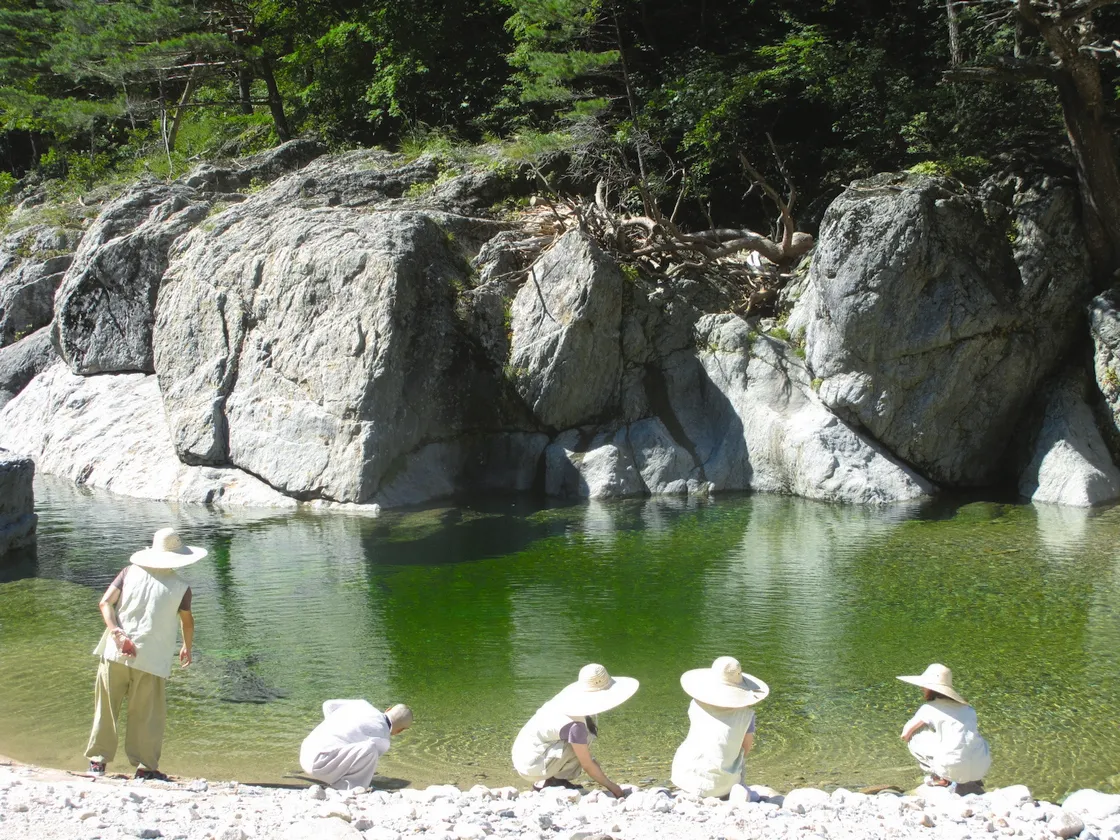
Built where a count of the pools from Cheongbong down to the temple came to a hundred, and named for that number.
Quick facts
- Address
- 746 Baekdam-ro, Buk-myeon, Inje-gun, Gangwon
- Spiritual entities
- Jajang (慈藏, 590–658)
About this place
Baekdamsa stands in Buk-myeon, Inje. Jajang is said to have founded it in 647 at Hangye-ri on Seoraksan under the name Hangyesa. Seven accidental fires followed, and each time the site was moved and the name changed; the name Baekdamsa was settled under King Jeongjo. Even after the temple moved to Hangye-ri it suffered five more fires, until one day a white-haired old man appeared in the abbot’s dream and told him to count the pools from Cheongbong down to the temple. The next day they counted, and there were a hundred, so the temple was built on its present site and named Baekdamsa, the hundred pools; after that, the account says, it prospered. In the modern period Han Yong-un stayed here and wrote On the Reform of Korean Buddhism, his commentary on the Ten Mysterious Discourses, and The Silence of the Beloved.
Origin and history
Jajang is said to have founded the temple in 647 at Hangye-ri on Seoraksan, naming it Hangyesa.
Seven accidental fires followed. Each time the site was moved and the name changed, and the name Baekdamsa was settled under King Jeongjo.
Even after the temple moved to Hangye-ri it suffered five fires. One day a white-haired old man appeared in the abbot’s dream and told him to count the pools from Cheongbong down to the temple. The next day they counted the pools from Cheongbong to the temple and there were a hundred, so the temple was built on its present site and named Baekdamsa; after that, the account says, it prospered.
In the modern period Baekdamsa became the place where Han Yong-un stayed and wrote On the Reform of Korean Buddhism, his commentary on the Ten Mysterious Discourses, and The Silence of the Beloved.
What it is locally associated with
A hundred pools
A white-haired old man in the abbot’s dream told him to count the pools from Cheongbong to the temple; they counted a hundred and built there.
folk traditionSeven fires, seven moves
Seven accidental fires struck, and each time the site was moved and the name changed; Baekdamsa was settled under King Jeongjo.
documented historyWhere The Silence of the Beloved was written
Han Yong-un stayed here and wrote On the Reform of Korean Buddhism, his commentary on the Ten Mysterious Discourses, and The Silence of the Beloved.
documented history
This temple’s name is a number. A hundred pools, arrived at by counting, and given to the place afterwards. The one who said to count was a white-haired old man in a dream; the one who counted was the abbot. Where to build was settled by a reckoning, and the figure that reckoning produced became the name.
Before the counting there was fire. Seven accidental fires, the record says, and a move and a new name after each. Sinheungsa in the same province changed its name three times. This one did it seven. It is the longest such list in Gangwon, where burning is the common passage.
After the name was fixed, the account adds, the temple prospered. Whether the fires stopped is not written; what is written is that the name was settled under King Jeongjo.
For a period in the modern age this temple was a place where writing was done. Han Yong-un stayed here and wrote On the Reform of Korean Buddhism, the commentary on the Ten Mysterious Discourses, and The Silence of the Beloved.
Claims and evidence levels 2
- The temple is said to stand where a count of the pools from Cheongbong down to the temple came to a hundred, following a dream instruction. folk tradition
- Seven accidental fires forced seven relocations and renamings, and the name Baekdamsa was settled under King Jeongjo. documented history
Related guides
- How to visit a Korean templeHands together and hands folded, how the bows work, and what to do at the threshold of a hall. Starting with what is different from visiting a Japanese shrine.
- The small hall behind the main one — sansingak and samseonggakUphill from the main hall of a Korean temple stands a smaller one, and inside it an old man with a tiger. This is where the indigenous religion sits, inside the Buddhist institution.
- Templestay — a night at a templeA programme that puts you inside a temple’s own timetable for a day or two. What you do, which type to book, and what to be ready for.
- Prayer sites and the one wishThe three great Gwaneum sites, the five relic halls, and the crowds before the entrance exam. Where the saying about one wish comes from, and where the record stops.
Sources
- 설악산 백담사(雪嶽山 百潭寺) — 한국민족문화대백과사전 (accessed 2026-08-16)
Last updated:
Similar places
8 places
 Temple
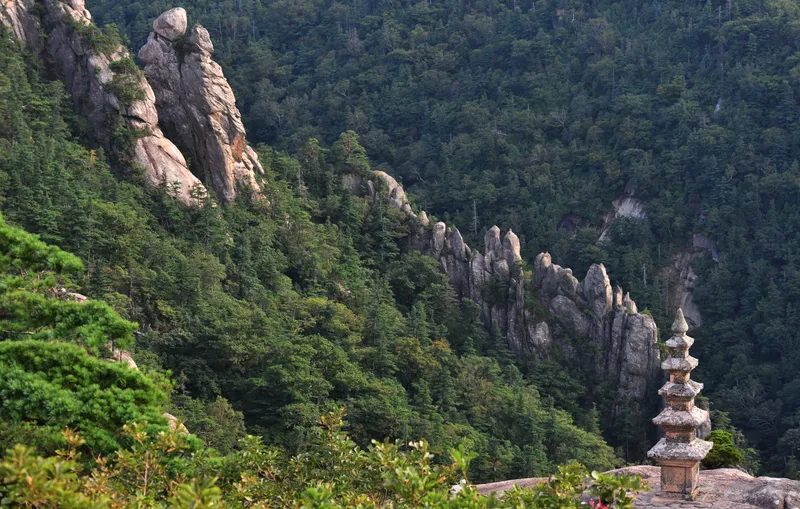
Bongjeongam
- Protection & Safety
A hermitage on Sosecheongbong in Seoraksan, one of the five relic sanctuaries, holding relics Jajang is said to have brought back.
 Temple
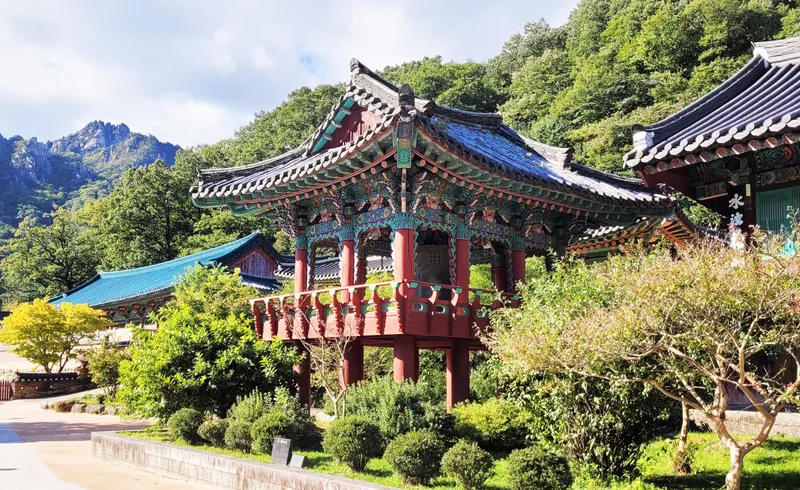
Sinheungsa, Seoraksan
A temple that changed its name three times, and moved its ground each time it did.
 Temple
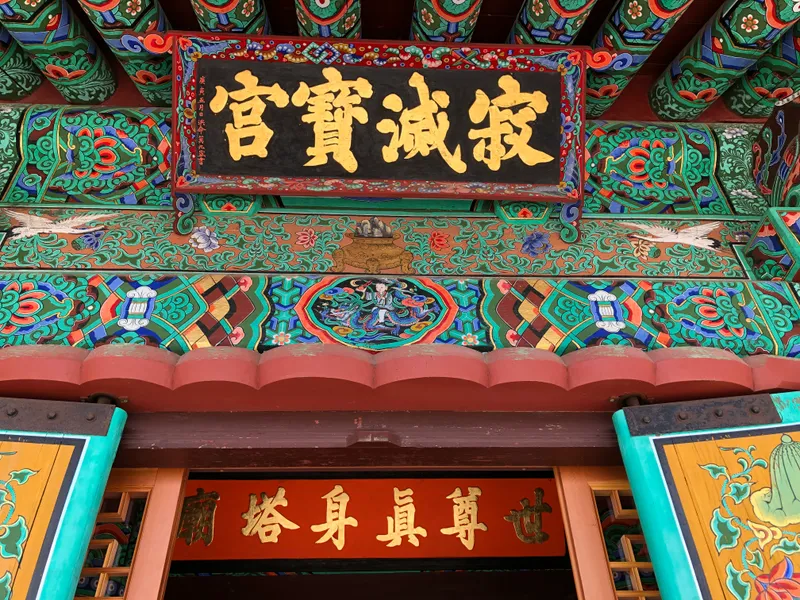
Jeongmyeol-bogung, Odaesan
- Protection & Safety
A relic hall on the middle terrace of Odaesan with no buddha image inside, because the Buddha’s own relics are enshrined there.
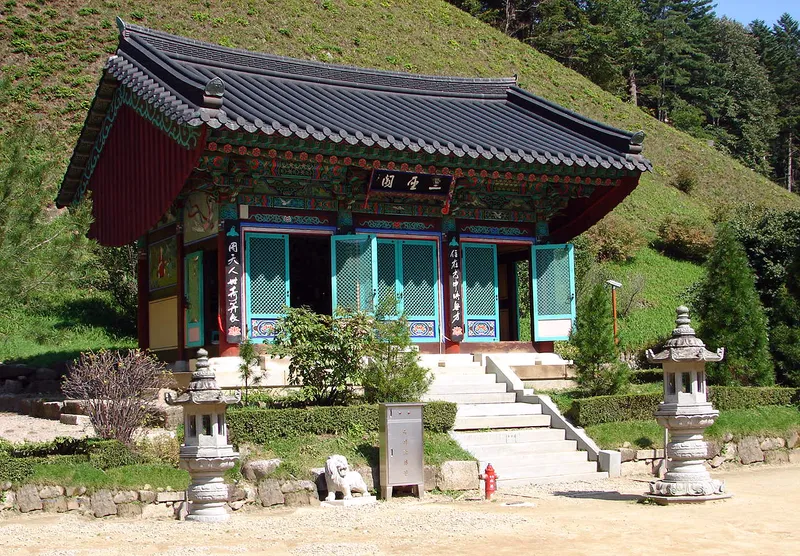 Temple
Woljeongsa, Odaesan
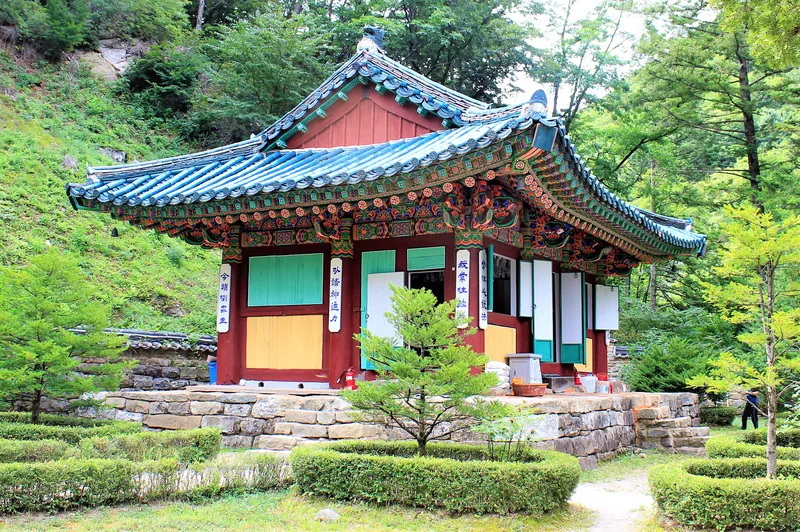
Head temple of the fourth Jogye district, begun where its founder tried to see Manjushri in the flesh and did not.
 Temple
Jeongamsa
- Protection & Safety
A relic sanctuary where Jajang is said to have enshrined the Buddha’s skull bone, a tooth and a hundred relics, with a National Treasure stupa on the slope behind.
 Temple
Manggyeongsa, Taebaeksan
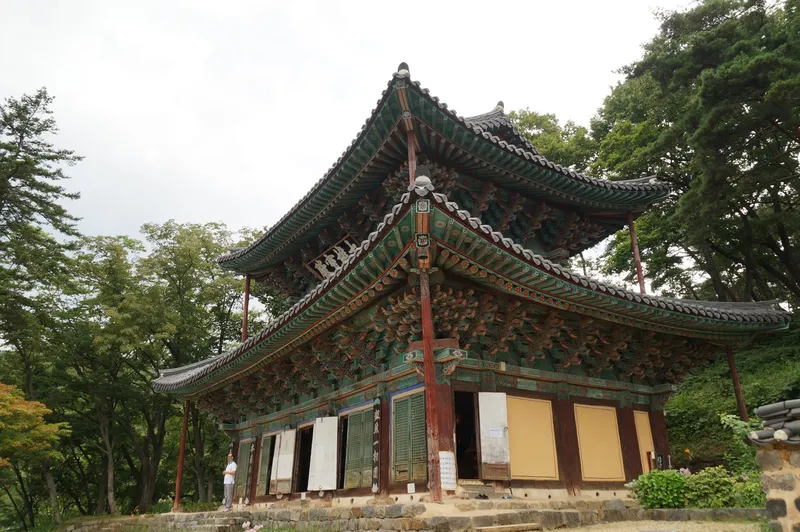
Built to house a stone image of Manjushri that its founder came here because he had heard it had appeared.
 Temple
Magoksa
A thousand-year-old temple on Taehwasan said to have been founded by Jajang, where two main halls stand one behind the other up the slope.
 Temple
Naksansa
Burned four times and rebuilt each time; the 2005 wildfire took even its bronze bell, a Treasure whose designation was then revoked.
No places match your filters