Daegyeonsa, Biseulsan
Researched and translated with AI assistance. Every claim is linked to its source, but errors get through, so check the official site for opening times, fees and closures.About
In short
A site that went to ruin in 1917 and became a temple again in 2014.
Quick facts
- Address
- 177 Iryeonseonsa-gil, Dalseong-gun, Daegu
About this place
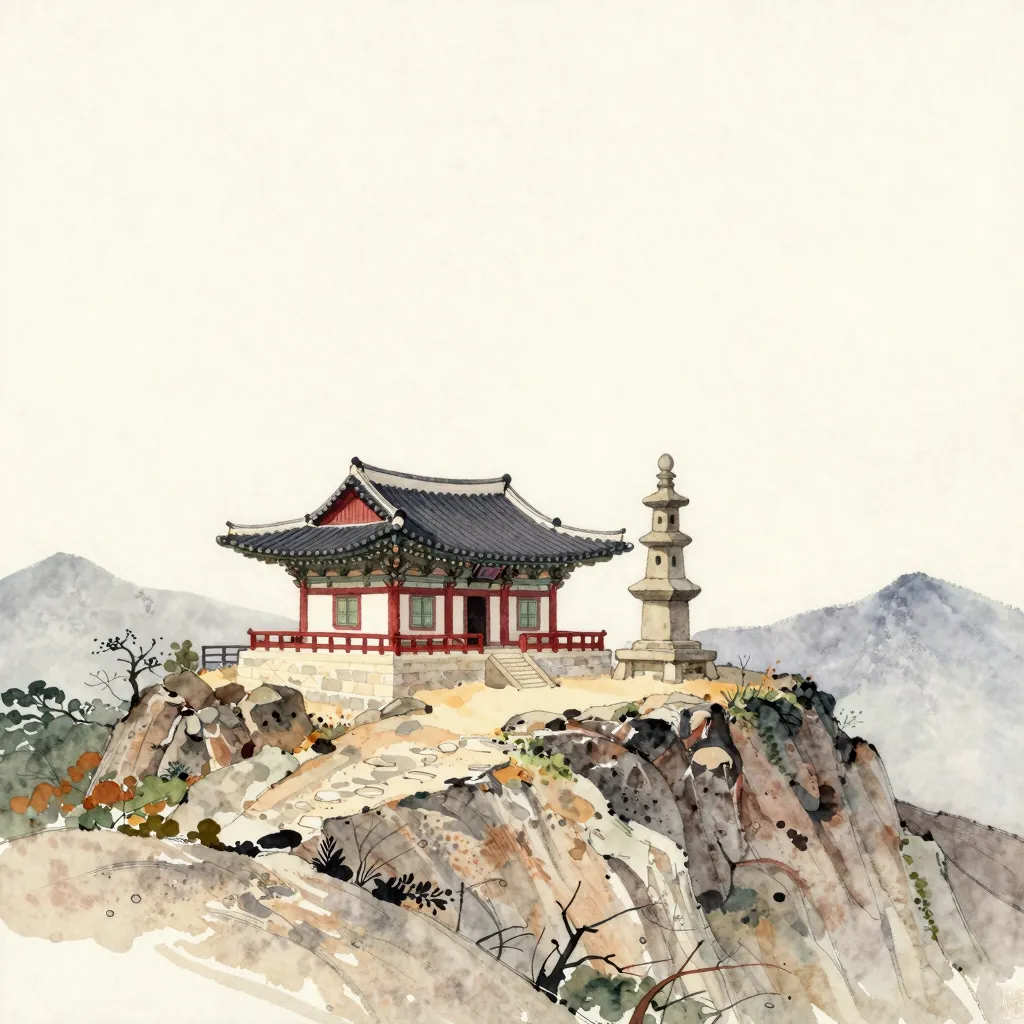
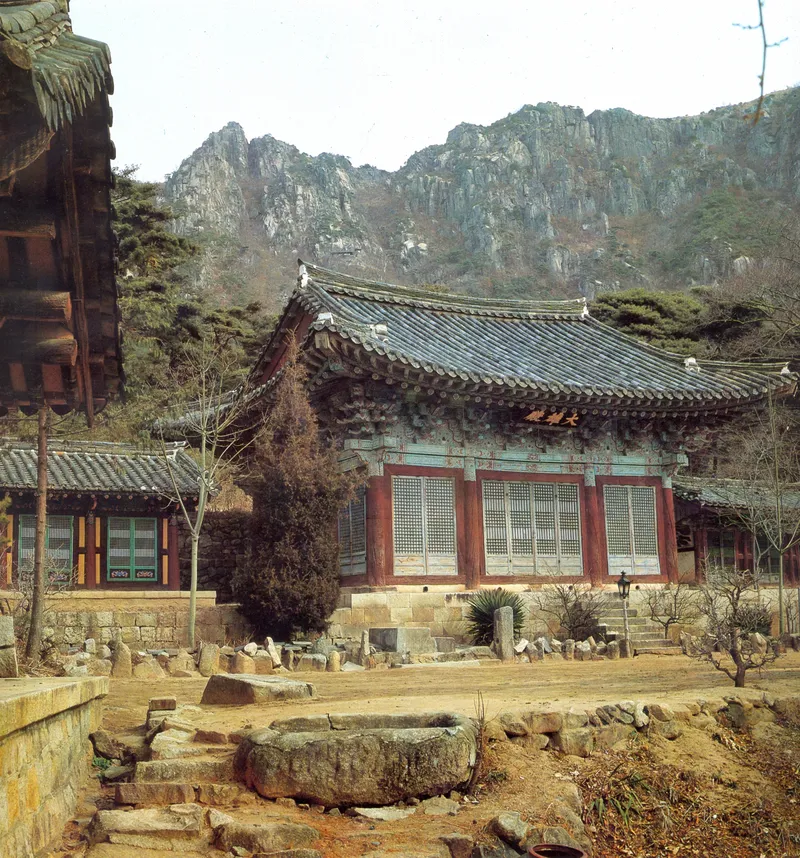
Daegyeonsa stands on Biseulsan in Yuga-eup, Dalseong-gun, Daegu. An account is handed down that the name was given because this place matched a temple site that had been seen in a great country. It is known as a temple where Iryeon served as first abbot; Iryeon began writing the Samguk Yusa from about 1277, over four years at Unmunsa in Cheongdo. Yi Jae-in restored the temple in 1900 to mark the investiture of Crown Prince Yeongchin, but it began to decay from 1908 and was a ruin again by 1917. Until recently only a three-storey stone pagoda, stone revetments, a well and a rock-carved Buddha remained on the site. On 1 March 2014 Donghwasa of Palgongsan rebuilt the main hall, the meditation hall, the residential quarters and the mountain-god hall, and the ruined site became a working temple again.
Origin and history
An account is handed down that the name was given because this place matched a temple site that had been seen in a great country.
It is known as a temple where Iryeon served as first abbot. Iryeon began writing the Samguk Yusa from about 1277, over four years at Unmunsa in Cheongdo.
Yi Jae-in restored the temple in 1900 to mark the investiture of Crown Prince Yeongchin, but it began to decay from 1908 and was a ruin again by 1917.
Until recently only a three-storey stone pagoda, stone revetments, a well and a rock-carved Buddha remained on the site. On 1 March 2014 Donghwasa of Palgongsan rebuilt the main hall, the meditation hall, the residential quarters and the mountain-god hall, and the ruined site became a working temple again.
What it is locally associated with
A ruined site made a temple again in 2014
After the ruin of 1917 only a three-storey pagoda, revetments, a well and a rock-carved Buddha remained, until Donghwasa rebuilt the halls on 1 March 2014.
documented historyA site recognised
The name is said to have been given because this place matched a temple site seen in a great country.
folk traditionIryeon as first abbot
Iryeon is known as this temple’s first abbot; he began the Samguk Yusa from about 1277 at Unmunsa in Cheongdo.
documented history
This ground was lost once and came back. Restored in 1900, decaying from 1908, a ruin by 1917, and after that only a three-storey pagoda, stone revetments, a well and a rock-carved Buddha. It became a temple again on 1 March 2014.
This site holds many temples rebuilt after fire. But here nothing burned; people left, the ground stood empty for most of a century, and then it came back. That is also why what remained is set down as a list — pagoda, revetments, well, carved Buddha.
The name too is about recognition. It was called Daegyeonsa, the account says, because this place matched a temple site that had been seen in a great country: a site seen elsewhere and known again here.
Iryeon is recorded as this temple’s first abbot. But the Samguk Yusa was begun from about 1277 at Unmunsa in Cheongdo, so the book was not written on this ground.
Claims and evidence levels 2
- Restored in 1900, the temple decayed from 1908 and was a ruin by 1917; the halls were rebuilt on 1 March 2014. documented history
- Iryeon is recorded as its first abbot, though he began the Samguk Yusa at Unmunsa in Cheongdo from about 1277. documented history
Related guides
- How to visit a Korean templeHands together and hands folded, how the bows work, and what to do at the threshold of a hall. Starting with what is different from visiting a Japanese shrine.
- The small hall behind the main one — sansingak and samseonggakUphill from the main hall of a Korean temple stands a smaller one, and inside it an old man with a tiger. This is where the indigenous religion sits, inside the Buddhist institution.
- Templestay — a night at a templeA programme that puts you inside a temple’s own timetable for a day or two. What you do, which type to book, and what to be ready for.
- Prayer sites and the one wishThe three great Gwaneum sites, the five relic halls, and the crowds before the entrance exam. Where the saying about one wish comes from, and where the record stops.
Sources
- 비슬산 대견사(琵瑟山 大見寺) — 한국민족문화대백과사전 (accessed 2026-08-16)
Last updated:
Similar places
8 places
 Temple
Yongyeonsa, Biseulsan
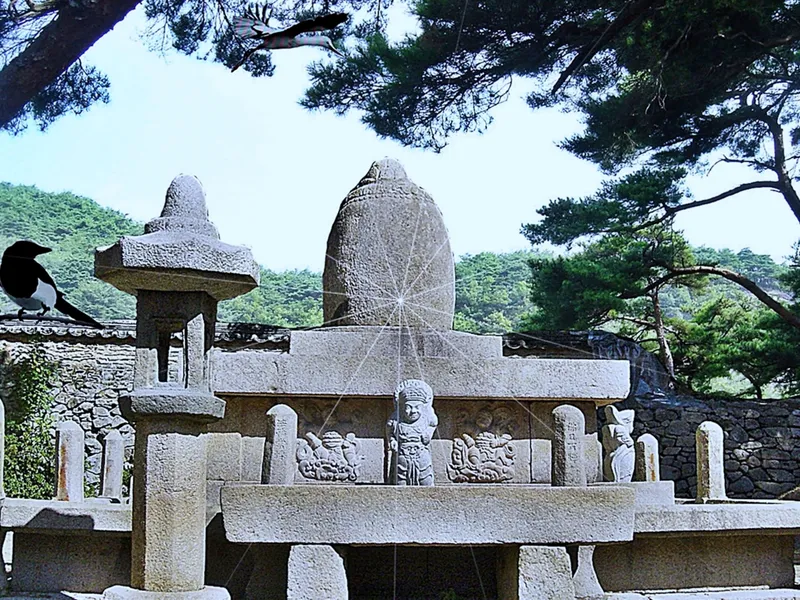
Where a portion of Tongdosa’s Buddha relics, evacuated during the Imjin War, was taken in on the journey back.
 Temple
Namjijangsa, Choejeongsan
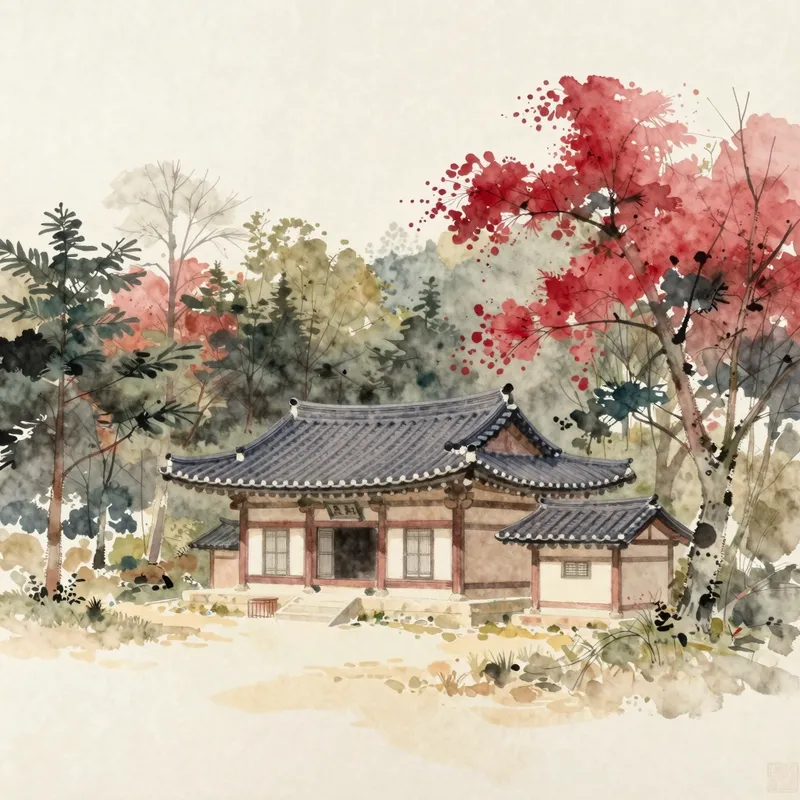
Called south because it stands opposite Bukjijangsa on Palgongsan.
 Temple
Eunjeoksa, Apsan
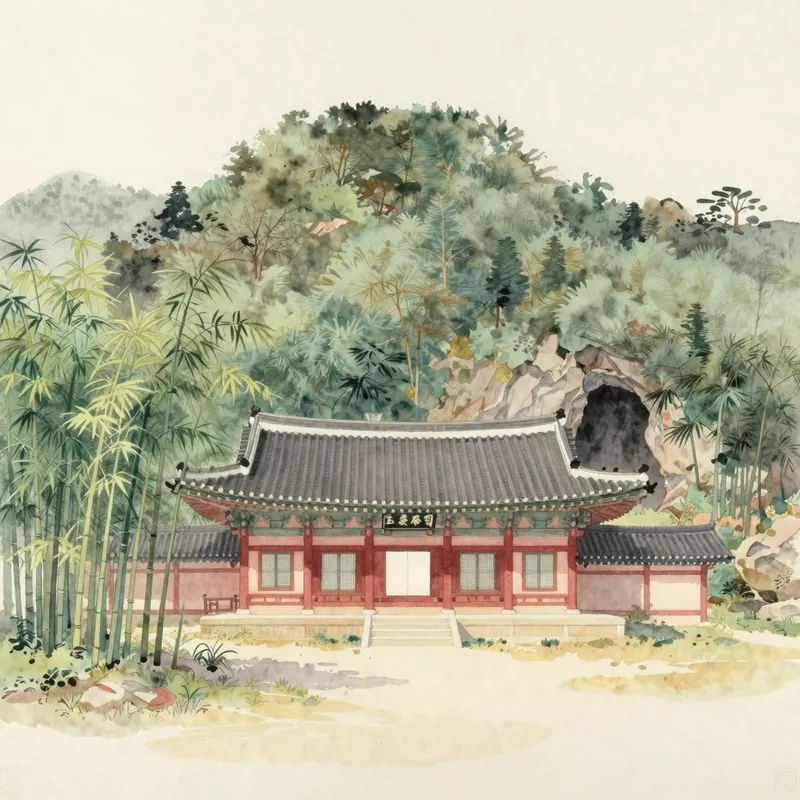
Built at the cave where Wang Geon hid for three days, and named with the characters for hiding and for traces.
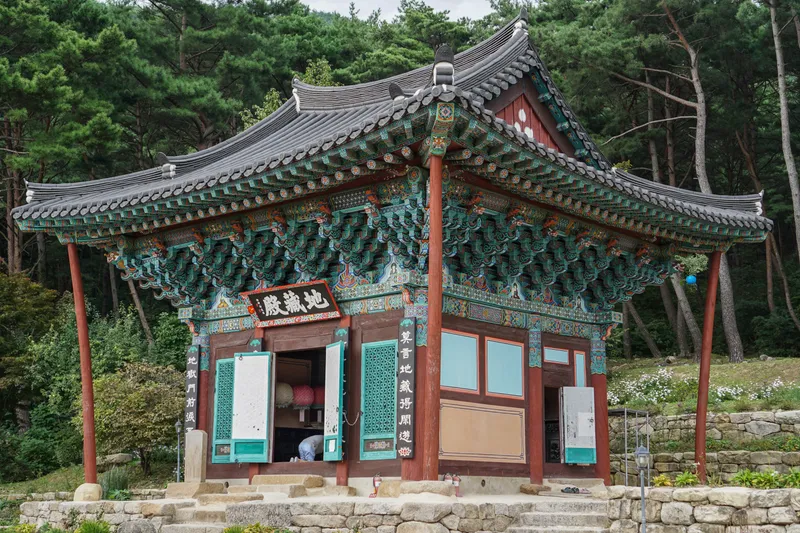 Temple
Bukjijangsa, Palgongsan
A temple where a building’s true name lay in its own ridge-beam record for more than two hundred and fifty years before a repair uncovered it.
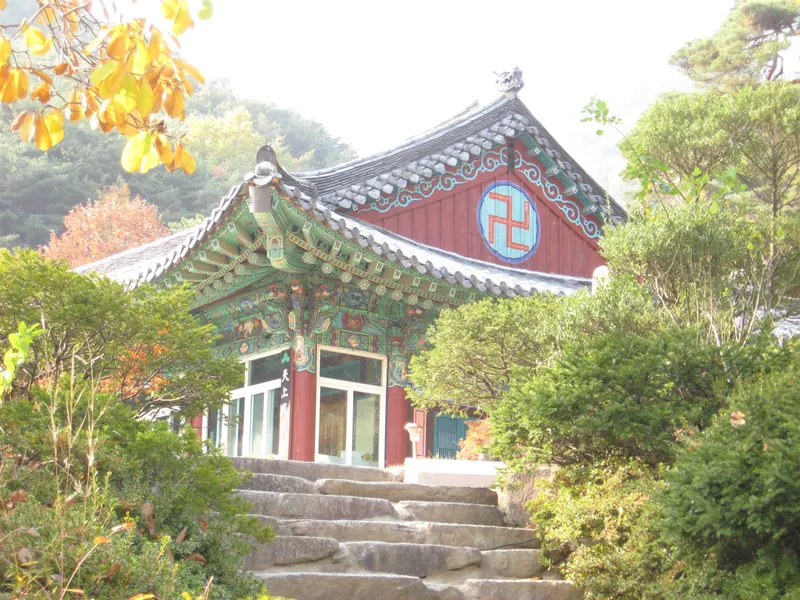 Temple
Pagyesa, Palgongsan
The temple where a king’s robe came out of an Avalokitesvara statue.
 Temple
Buinsa, Palgongsan
Where the woodblocks of the first Tripitaka, brought here for safety, were entirely destroyed in the Mongol invasion of 1232.
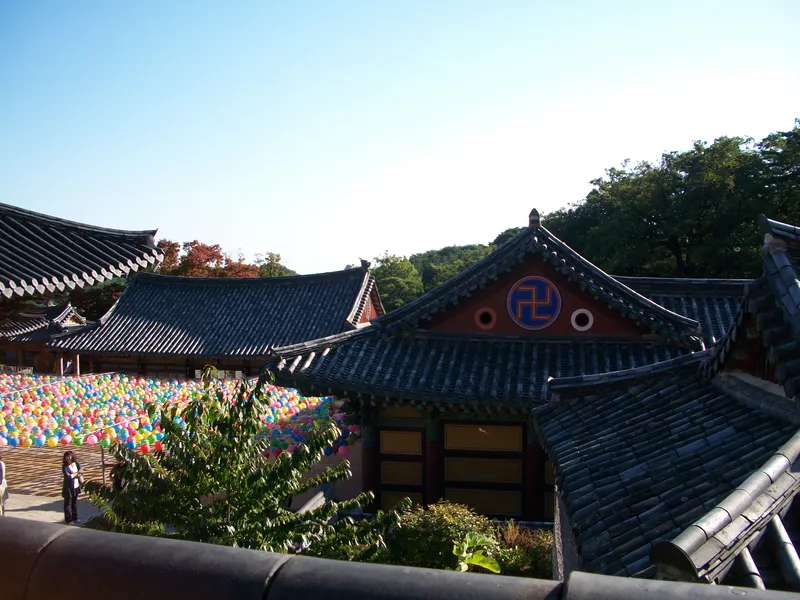 Temple
Donghwasa
A temple on Palgongsan founded by Simji, renamed Donghwasa because paulownia bloomed all around it.
 Temple
Gwallyongsa, Gwallyongsan
Nine dragons went up, and one sighting named both the temple and the mountain.
No places match your filters