Unjusa
Cheonbulsan Unjusa
Researched and translated with AI assistance. Every claim is linked to its source, but errors get through, so check the official site for opening times, fees and closures.About
In short
The temple where Doseon is said to have raised a thousand buddhas and pagodas in a day and a night, to stop the country from listing.
Quick facts
- Address
- 91-44 Cheontae-ro, Doam-myeon, Hwasun-gun, Jeollanam-do
About this place
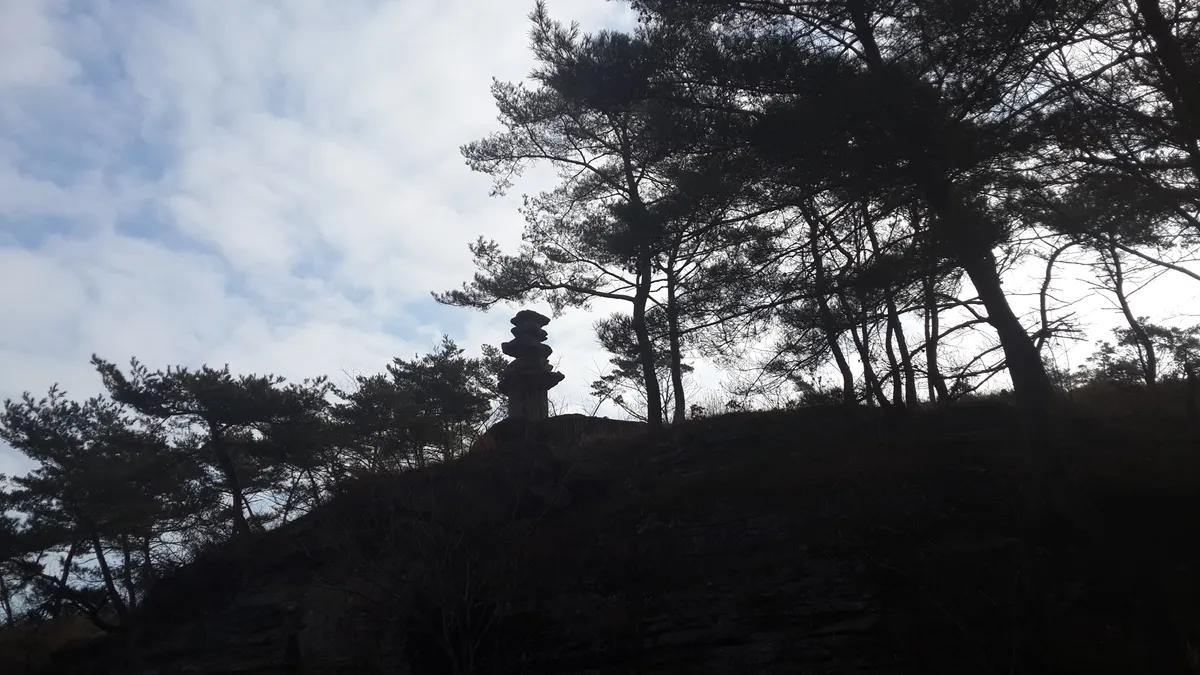
Unjusa lies on Cheonbulsan in Doam, Hwasun, South Jeolla, and is said to have been founded by the Unified Silla monk Doseon. The story goes that Doseon read the country’s terrain as a ship, and fearing it would list because Honam — the hull — had fewer mountains than Yeongnam, raised a thousand buddhas and a thousand pagodas here in a single day and night by the force of his practice. Twenty-one stone pagodas and eighty stone buddhas remain. The grounds were designated a Historic Site in 1985.
Origin and history
The Encyclopedia of Korean Culture describes Unjusa as a temple on Cheonbulsan in Doam, Hwasun, said to have been founded by Doseon, a monk of Unified Silla.
The name Unjusa is said to come from geomancy, from land shaped like a moving ship.
Twenty-one stone pagodas and eighty stone buddhas remain today, along with other fragments of images and pagodas. On 15 April 1985 the grounds around the temple were designated a Historic Site.
What it is locally associated with
To steady a listing ship
Doseon is said to have read the country as a ship and, fearing it would tip toward mountain-poor Honam, raised a thousand buddhas and pagodas.
folk traditionTwenty-one and eighty
Twenty-one stone pagodas and eighty stone buddhas remain today, with other fragments of images and pagodas.
documented historyLand shaped like a moving ship
The name Unjusa is said to come from geomancy — land in the shape of a ship under way.
folk tradition
Ask what was being protected here and the answer is not a person. It is the land.
The story runs that Doseon read the country’s terrain as a ship. Honam, which answers to the hull, had fewer mountains than Yeongnam, and fearing the ship would tip to one side he raised a thousand buddhas and a thousand pagodas here in a single day and night by the force of his practice. The temple’s name is said to come from the same reading: land shaped like a moving ship.
The encyclopedia sets this down as legend. What is actually still standing is twenty-one pagodas and eighty stone buddhas. The distance between a thousand and eighty is also, walking this valley, the thing you can see.
Claims and evidence levels 4
- Unjusa stands on Cheonbulsan in Doam, Hwasun, and is recorded as having been founded, by tradition, by the Unified Silla monk Doseon. documented history
- It is said that Doseon read the country’s terrain as a ship and, fearing it would list because Honam had fewer mountains than Yeongnam, raised a thousand buddhas and a thousand pagodas here in a single day and night. folk tradition
- The name Unjusa is said to derive from geomancy, from land shaped like a ship under way. folk tradition
- Twenty-one stone pagodas and eighty stone buddhas remain today, and the grounds were designated a Historic Site on 15 April 1985. documented history
Related guides
- How to visit a Korean templeHands together and hands folded, how the bows work, and what to do at the threshold of a hall. Starting with what is different from visiting a Japanese shrine.
- The small hall behind the main one — sansingak and samseonggakUphill from the main hall of a Korean temple stands a smaller one, and inside it an old man with a tiger. This is where the indigenous religion sits, inside the Buddhist institution.
- Templestay — a night at a templeA programme that puts you inside a temple’s own timetable for a day or two. What you do, which type to book, and what to be ready for.
- Prayer sites and the one wishThe three great Gwaneum sites, the five relic halls, and the crowds before the entrance exam. Where the saying about one wish comes from, and where the record stops.
Sources
- 천불산 운주사(千佛山 雲住寺) — 한국민족문화대백과사전 — Academy of Korean Studies (accessed 2026-08-12)
Last updated:
Similar places
8 places
 Temple
Tapsa, Maisan
- Protection & Safety
A temple among stone towers raised by one man over a lifetime, of which about eighty of the original hundred and eight still stand.
 Temple
Ssangbongsa, Gyedangsan
The only building that carried the form of a three-storey wooden pagoda, lost to a candle.
 Temple
Haeinsa
- Protection & Safety
The temple holding the Tripitaka Koreana, cut out of a national wish to repel the Mongols, and the hall that has kept it.
 Shrine
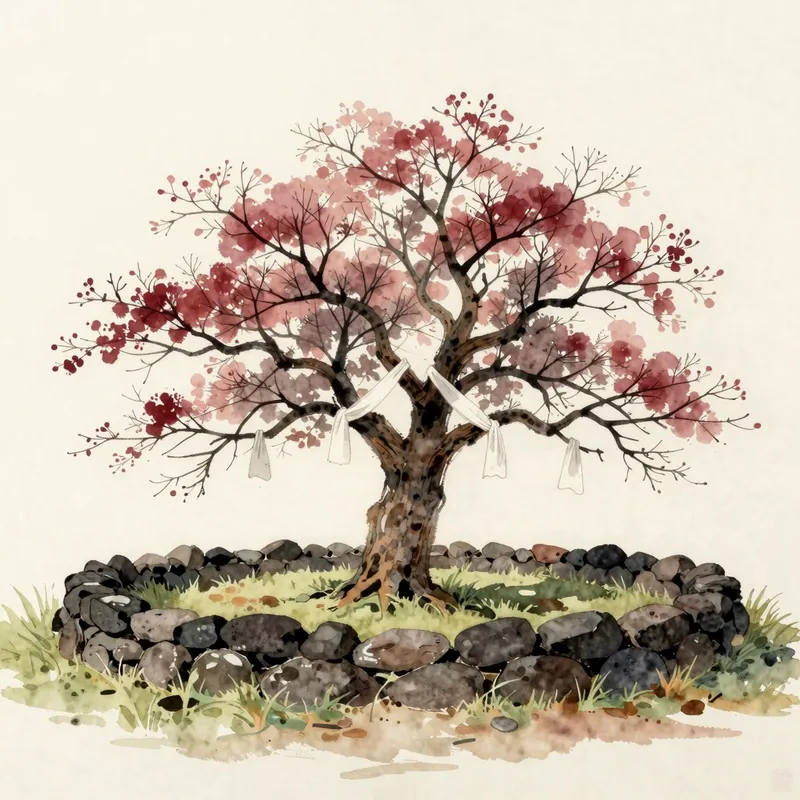
Songdang Bonhyangdang
- Protection & Safety
The shrine of the parent gods of Jeju’s village guardian deities, whose children, the myth says, scattered across the island and became its shrine gods.
 Temple
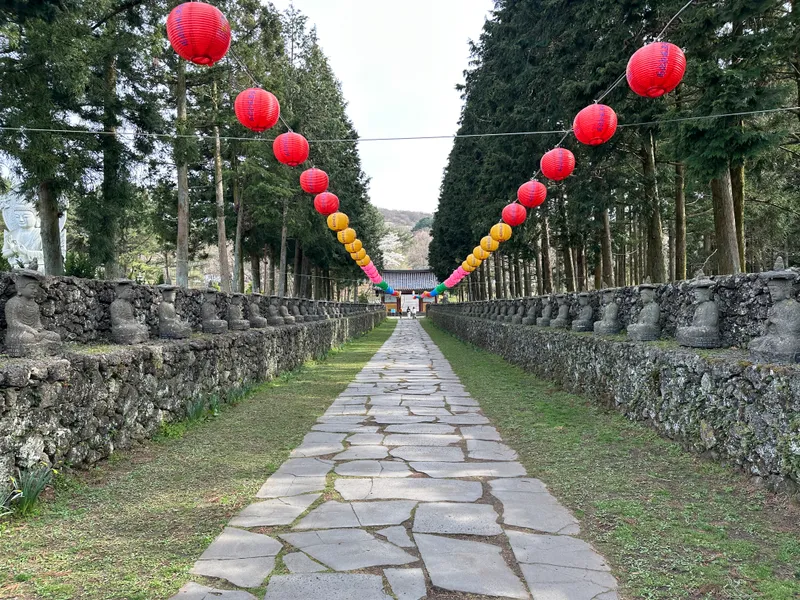
Gwaneumsa, Hallasan
- Protection & Safety
The head temple of the Jogye Order’s 23rd district, on the slope of Hallasan, founded in the spring of 1909 by the nun Bongnyeogwan.
 Temple
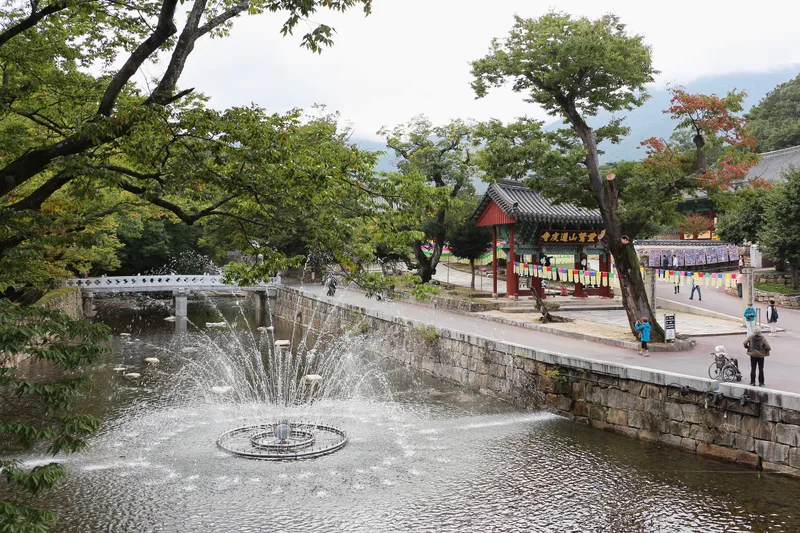
Tongdosa
- Protection & Safety
The first of the five relic sanctuaries, whose main hall enshrines no buddha because it faces the relics behind it.
 Temple
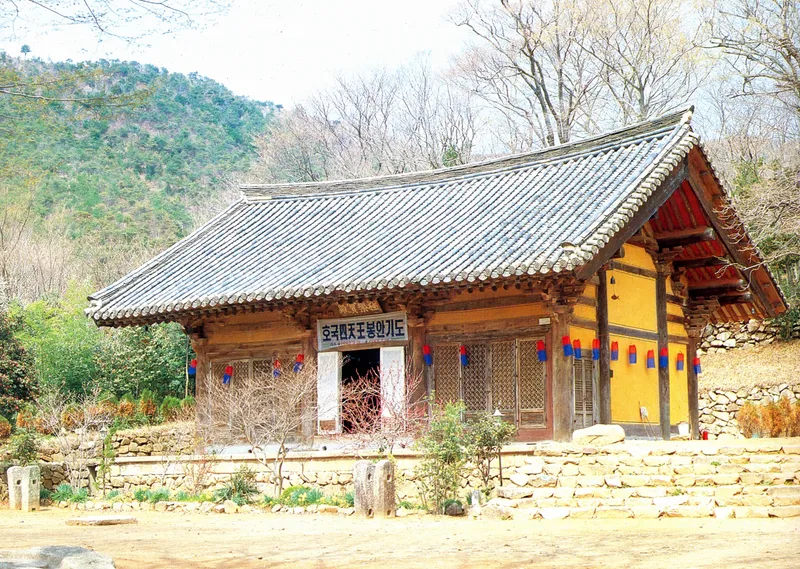
Muwisa, Wolchulsan
A temple where the wall painting records the year it was painted.
 Temple
Dogapsa, Wolchulsan
Rebuilt at nine hundred and sixty-six kan by a monk who had left home at this very temple.
No places match your filters