Dogapsa, Wolchulsan
Researched and translated with AI assistance. Every claim is linked to its source, but errors get through, so check the official site for opening times, fees and closures.About
In short
Rebuilt at nine hundred and sixty-six kan by a monk who had left home at this very temple.
Quick facts
- Address
- 306 Dogapsa-ro, Gunseo-myeon, Yeongam-gun, Jeollanam-do
About this place
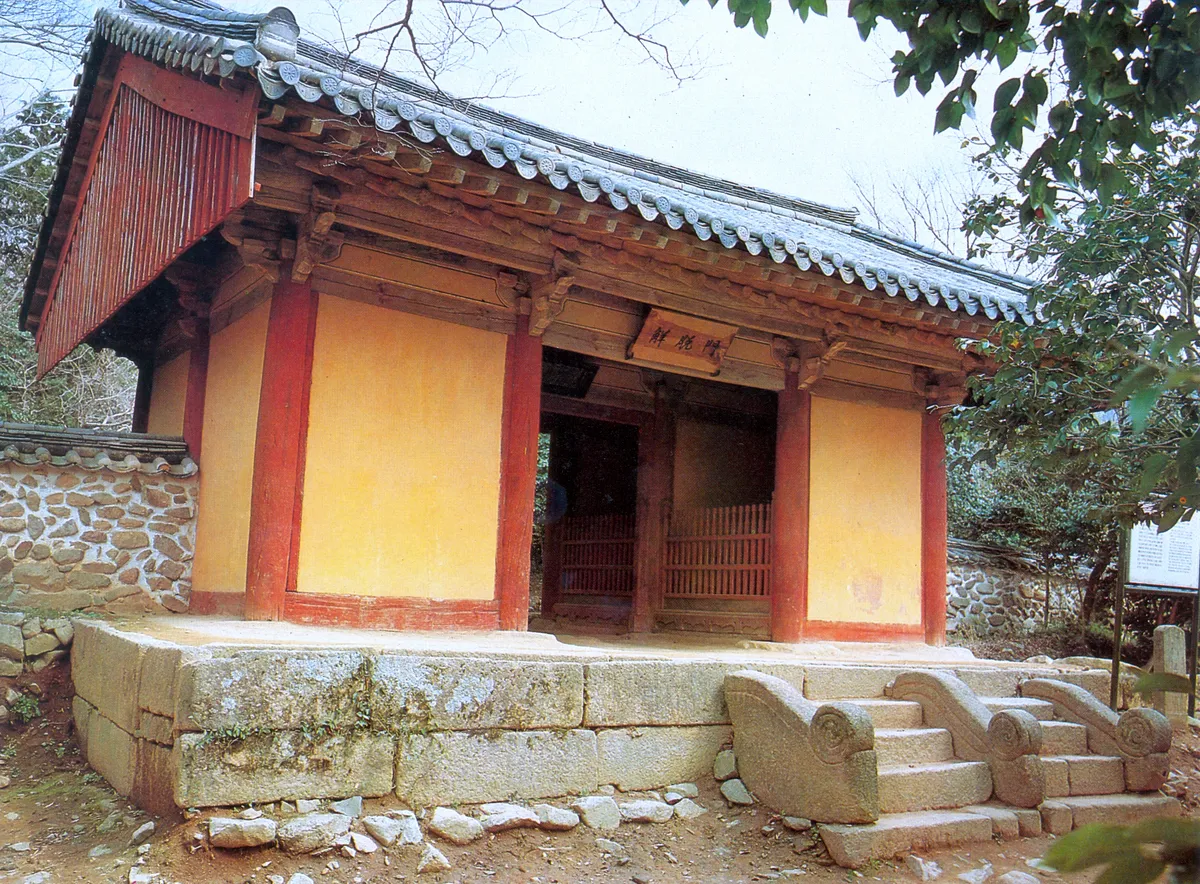
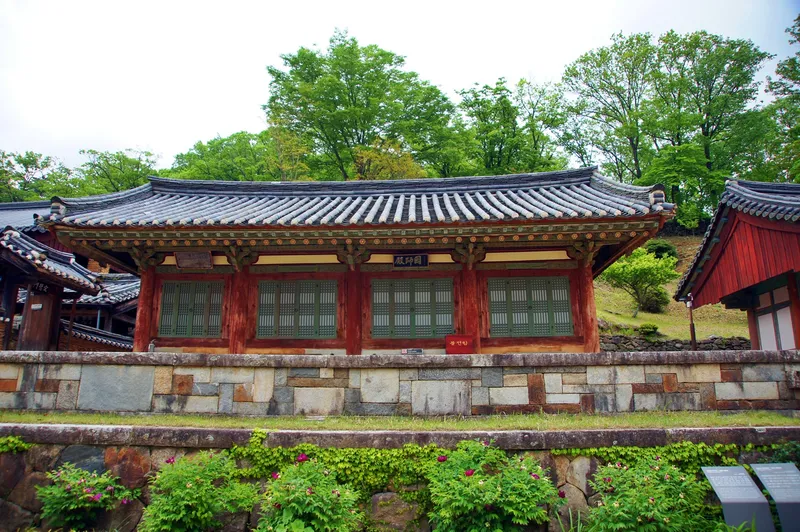
Dogapsa stands on Wolchulsan in Gunseo-myeon, Yeongam-gun, Jeollanam-do. Doseon, the great master of geomancy at the end of the Unified Silla period, founded it, though it is said that a temple called Munsusa stood here before. In 1456, in early Joseon, the eminent monk Sinmi and Sumi, who had left home for the monastic life at Dogapsa, rebuilt it, and it became a great temple running to nine hundred and sixty-six kan. The surviving Haetalmun was rebuilt in 1473. The stele of the national master Doseon and the Seon master Sumi is unusual in setting the deeds of two men on a single stone; work on it began in 1636 and was completed in 1653.
Origin and history
Doseon, the great master of geomancy at the end of the Unified Silla period, founded the temple, though it is said that a temple called Munsusa stood here before.
In 1456, in early Joseon, the eminent monk Sinmi and Sumi, who had left home for the monastic life at Dogapsa, rebuilt it, and it became a great temple running to nine hundred and sixty-six kan. The surviving Haetalmun was rebuilt in 1473.
The stele of the national master Doseon and the Seon master Sumi is unusual in setting the deeds of two men on a single stone. Work on it began in 1636 and was completed in 1653.
What it is locally associated with
A rebuilding of nine hundred and sixty-six kan
In 1456 the eminent monk Sinmi and Sumi, who had left home for the monastic life at Dogapsa, rebuilt it into a great temple running to nine hundred and sixty-six kan.
documented historyTwo men on one stele
The stele of the national master Doseon and the Seon master Sumi is unusual in setting the deeds of two men on a single stone; it was begun in 1636 and completed in 1653.
documented historyMunsusa, which stood here first
Doseon founded the temple, though it is said that a temple called Munsusa stood on the ground before.
folk tradition
One of the men who rebuilt this temple had left home for the monastic life inside it. In 1456 Sinmi and Sumi, who had ordained at Dogapsa, rebuilt the place at a scale of nine hundred and sixty-six kan. That is the largest bay-count recorded anywhere on this site: Hoeamsa in Yangju stood at two hundred and sixty-six, Jikjisa in Gimcheon at three hundred and fifty-two in its main rooms alone, Silleuksa in Yeoju at more than two hundred, Bongseonsa in Namyangju at eighty-nine.
One stone carries two men. The stele of the national master Doseon and the Seon master Sumi puts the deeds of both on a single monument, and the record itself calls the arrangement unusual. Nearly seven centuries separate the founder from the rebuilder. The stele was begun in 1636 and finished in 1653.
Doseon, the founder, is also the man handed down as building Bogwangsa in Paju by royal command. And Muwisa in Gangjin stands on the same Wolchulsan. Both are on this site.
There was a temple here before this one. It is said that a temple called Munsusa stood on the ground first.
Claims and evidence levels 2
- Sinmi and Sumi rebuilt Dogapsa in 1456 to a scale of nine hundred and sixty-six kan, Sumi having ordained at the temple himself. documented history
- The stele carrying the deeds of both Doseon and Sumi was begun in 1636 and completed in 1653. documented history
Related guides
- How to visit a Korean templeHands together and hands folded, how the bows work, and what to do at the threshold of a hall. Starting with what is different from visiting a Japanese shrine.
- The small hall behind the main one — sansingak and samseonggakUphill from the main hall of a Korean temple stands a smaller one, and inside it an old man with a tiger. This is where the indigenous religion sits, inside the Buddhist institution.
- Templestay — a night at a templeA programme that puts you inside a temple’s own timetable for a day or two. What you do, which type to book, and what to be ready for.
- Prayer sites and the one wishThe three great Gwaneum sites, the five relic halls, and the crowds before the entrance exam. Where the saying about one wish comes from, and where the record stops.
Sources
- 월출산 도갑사(月出山 道岬寺) — 한국민족문화대백과사전 (accessed 2026-08-16)
Last updated:
Similar places
8 places
 Temple
Muwisa, Wolchulsan
A temple where the wall painting records the year it was painted.
 Temple
Baengnyeonsa, Mandeoksan
Where an association was formed that stood level with the one at Songgwangsa.
 Temple
Unjusa
- Protection & Safety
The temple where Doseon is said to have raised a thousand buddhas and pagodas in a day and a night, to stop the country from listing.
 Temple
Daeheungsa, Duryunsan
The temple that came to receive state rites because it held the bowl and robe of the master Seosan.
 Temple
Ssangbongsa, Gyedangsan
The only building that carried the form of a three-storey wooden pagoda, lost to a candle.
 Temple
Mihwangsa, Dalmasan
Built where an ox last stopped, and named for the sound the ox made.
 Temple
Bulgapsa, Moaksan
A temple said to be Baekje’s first — a claim its own encyclopaedia declines to accept.
 Temple
Songgwangsa
The temple called the Sangha Jewel because so many great masters came from it, completing the trio with Tongdosa and Haeinsa.
No places match your filters