Daeheungsa, Duryunsan
Daedunsa
Researched and translated with AI assistance. Every claim is linked to its source, but errors get through, so check the official site for opening times, fees and closures.About
In short
The temple that came to receive state rites because it held the bowl and robe of the master Seosan.
Quick facts
- Address
- 400 Daeheungsa-gil, Samsan-myeon, Haenam-gun, Jeollanam-do
About this place
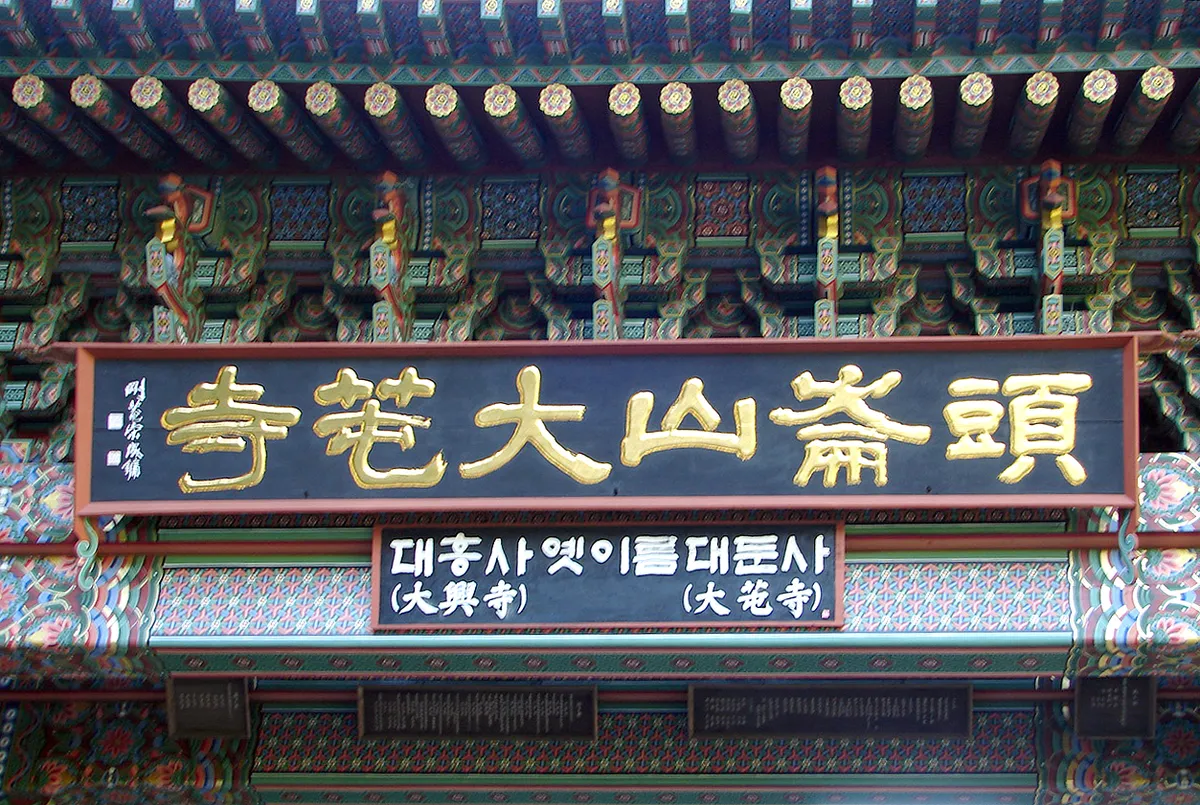
Daeheungsa stands on Duryunsan in Samsan-myeon, Haenam-gun, Jeollanam-do, and is the head temple of the twenty-second district of the Jogye Order. In 1655 Heobaek Myeongjo brought the jade almsbowl of the master Seosan from Myohyangsan and handed it to this temple. In 1788 a plea was made that the name Pyochung be bestowed; King Jeongjo granted the temple the name Pyochungsa, and in the fourth month of the following year, 1789, sent a rites officer to conduct the offerings. The Daedunsaji was compiled in about 1818, in four volumes and two books, by Wanho Yunu, Aam Hyejang and Choui Uisun among others, under the scholarly influence of Dasan Jeong Yak-yong, who was then living in exile. Among its hermitages are Bungmireugam, Nammireugam and Iljiam.
Origin and history
In 1655 Heobaek Myeongjo brought the jade almsbowl of the master Seosan from Myohyangsan and handed it to this temple.
In 1788 a plea was made that the name Pyochung be bestowed. King Jeongjo granted the temple the name Pyochungsa, and in the fourth month of the following year, 1789, sent a rites officer to conduct the offerings.
The Daedunsaji was compiled in about 1818, in four volumes and two books, by Wanho Yunu, Aam Hyejang and Choui Uisun among others, under the scholarly influence of Dasan Jeong Yak-yong, who was then living in exile.
Among its hermitages are Bungmireugam, Nammireugam and Iljiam.
What it is locally associated with
The name Pyochung and state rites
When the name Pyochung was asked for in 1788, King Jeongjo granted the temple the name Pyochungsa and, in the fourth month of the following year, sent a rites officer to conduct the offerings.
documented historyA jade bowl from Myohyangsan
In 1655 Heobaek Myeongjo brought the jade almsbowl of the master Seosan from Myohyangsan and handed it to this temple.
documented historyThe making of the Daedunsaji
It was compiled in about 1818 in four volumes and two books by Wanho Yunu, Aam Hyejang and Choui Uisun among others, under the scholarly influence of Jeong Yak-yong in exile.
documented history
What brought state rites to this temple was one man’s name. In 1788 the name Pyochung was asked for, King Jeongjo granted it, and in the fourth month of the next year a rites officer was sent to make the offerings. A shrine inside a temple became a site of state ceremony.
A shrine of the same name stands in Gyeongsang. Pyochungsa in Miryang is the temple that took over the name of the shrine honouring the great master Samyeong. The master Seosan, honoured here, was Samyeong’s teacher — so teacher and pupil each received the same name, Pyochung.
One object travelled a long way. In 1655 Heobaek Myeongjo brought the jade almsbowl of the master Seosan from Myohyangsan and handed it to this temple.
One of the temples attached to this one is Muwisa in Gangjin. The Amitabha triad wall painting in its Geungnakbojeon is dated to 1476 by the inscriptions at its lower left and right.
There is a thread of tea and of writing here as well. The Daedunsaji was put together in about 1818, in four volumes and two books, by Wanho Yunu, Aam Hyejang and Choui Uisun and others, under the scholarly influence of Jeong Yak-yong in exile. Jeong Yak-yong and Choui are both recorded among those who came to Sujongsa in Namyangju, Gyeonggi.
Claims and evidence levels 2
- King Jeongjo granted the temple the name Pyochungsa in 1788 and sent a rites officer to make offerings from 1789. documented history
- The jade almsbowl of the master Seosan was brought here from Myohyangsan in 1655. documented history
Related guides
- How to visit a Korean templeHands together and hands folded, how the bows work, and what to do at the threshold of a hall. Starting with what is different from visiting a Japanese shrine.
- The small hall behind the main one — sansingak and samseonggakUphill from the main hall of a Korean temple stands a smaller one, and inside it an old man with a tiger. This is where the indigenous religion sits, inside the Buddhist institution.
- Templestay — a night at a templeA programme that puts you inside a temple’s own timetable for a day or two. What you do, which type to book, and what to be ready for.
- Prayer sites and the one wishThe three great Gwaneum sites, the five relic halls, and the crowds before the entrance exam. Where the saying about one wish comes from, and where the record stops.
Sources
- 두륜산 대흥사(頭輪山 大興寺) — 한국민족문화대백과사전 (accessed 2026-08-16)
Last updated:
Similar places
8 places
 Temple
Mihwangsa, Dalmasan
Built where an ox last stopped, and named for the sound the ox made.
 Temple
Baengnyeonsa, Mandeoksan
Where an association was formed that stood level with the one at Songgwangsa.
 Temple
Muwisa, Wolchulsan
A temple where the wall painting records the year it was painted.
 Temple
Dogapsa, Wolchulsan
Rebuilt at nine hundred and sixty-six kan by a monk who had left home at this very temple.
 Temple
Unjusa
- Protection & Safety
The temple where Doseon is said to have raised a thousand buddhas and pagodas in a day and a night, to stop the country from listing.
 Temple
Ssangbongsa, Gyedangsan
The only building that carried the form of a three-storey wooden pagoda, lost to a candle.
 Temple
Bulgapsa, Moaksan
A temple said to be Baekje’s first — a claim its own encyclopaedia declines to accept.
 Temple
Songgwangsa
The temple called the Sangha Jewel because so many great masters came from it, completing the trio with Tongdosa and Haeinsa.
No places match your filters