Taebaeksan Cheonjedan
Cheonwangdan
Researched and translated with AI assistance. Every claim is linked to its source, but errors get through, so check the official site for opening times, fees and closures.About
In short
A stone altar for heaven rites on the summit, where a rite is offered each National Foundation Day and where the state has sacrificed since Silla.
Quick facts
- Address
- 4834-31 Taebaeksan-ro, Sodo-dong, Taebaek-si, Gangwon
About this place
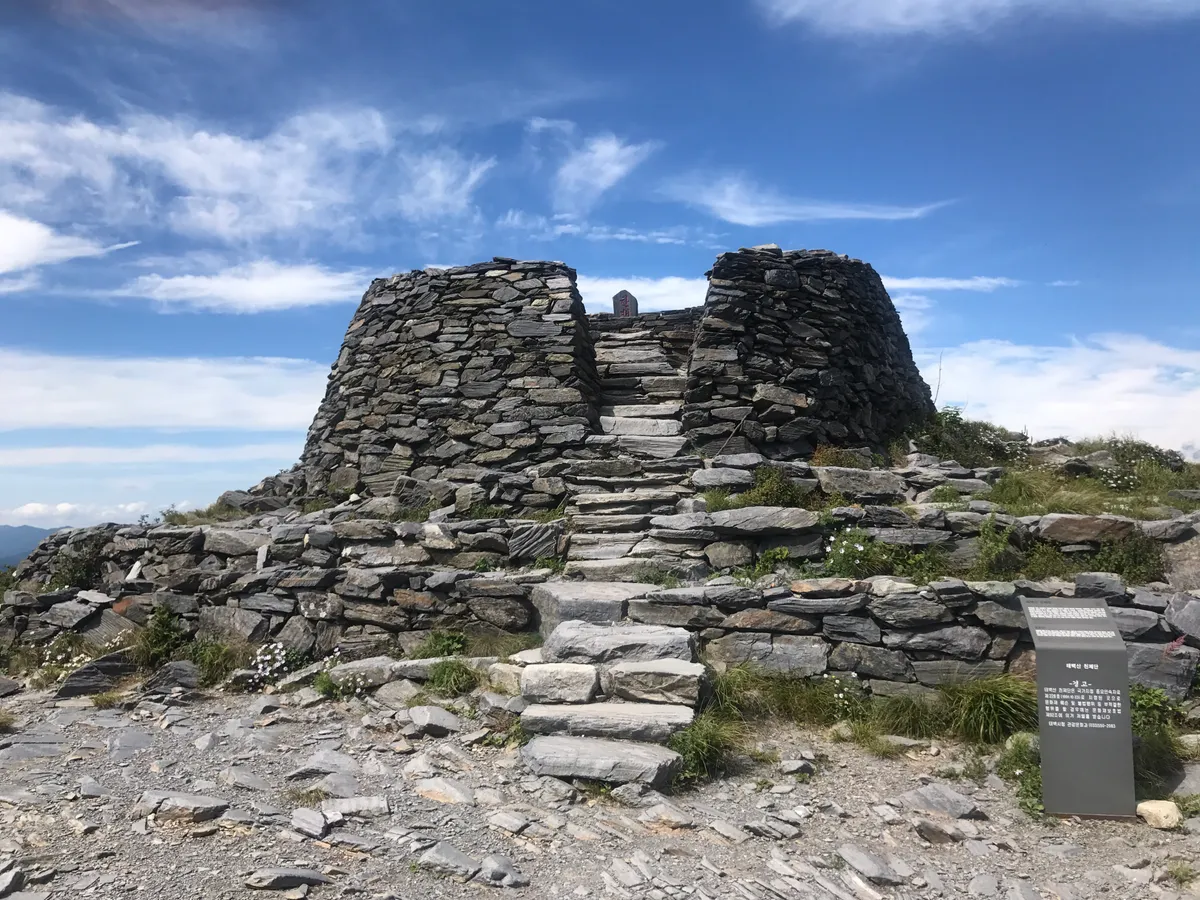
The Cheonjedan stands on the summit of Taebaeksan in Taebaek, Gangwon, and was designated National Folklore Cultural Heritage in 1991. The Cheonwangdan at the peak has the Janggundan behind it to the north and a lower altar below the southern slope. The Cheonwangdan is an oval stone platform 2.4 metres high and 27.5 metres around. A rite is offered every 3 October, National Foundation Day.
Origin and history
The Encyclopedia of Korean Culture records that the altar was designated National Folklore Cultural Heritage in 1991. The Cheonwangdan at the summit has the Janggundan behind it to the north, and a lower altar below the slope to the south.
The Cheonwangdan is a great oval stone platform: 2.4 metres high, 27.5 metres in circumference, 7.36 metres across and 8.26 metres front to back.
Taebaeksan was early counted the northern peak among Silla’s three mountains and five peaks, held as a guardian mountain, and a record of state sacrifice there survives in the rites section of the Samguk Sagi.
What it is locally associated with
Three altars
The Cheonwangdan at the summit, the Janggundan behind it to the north, and a lower altar below the southern slope.
documented history2.4 metres high, 27.5 around
The Cheonwangdan is a great oval platform of stacked stone.
documented historyThe rite on 3 October
Performed each National Foundation Day and called the heaven rite, or the heaven-king rite.
local customThe northern peak of Silla
A record of state sacrifice here survives in the rites section of the Samguk Sagi.
documented history
What this altar is for, the record does not say. What survives is who sacrificed, when, and in what form. A rite is performed every 3 October, National Foundation Day, and is called the heaven rite or the heaven-king rite.
This site files the place under "other" for the same reason it does Chamseongdan on Ganghwa: a rite offered to heaven cannot be rewritten into any of the existing petitions.
One thing more is worth recording. The encyclopedia notes that the Taebaeksan area is still regarded as a sacred mountain and as a training ground for becoming a shaman. It is a place where people become mudang and where they train — which is also to say that it is not a preserved ruin.
Claims and evidence levels 5
- The Cheonjedan on the summit of Taebaeksan was designated National Folklore Cultural Heritage in 1991. documented history
- The Cheonwangdan stands at the summit with the Janggundan north behind it and a lower altar below the southern slope; the Cheonwangdan is 2.4 m high and 27.5 m in circumference. documented history
- A rite called the heaven rite or heaven-king rite is performed at the altar every 3 October, National Foundation Day. local custom
- Taebaeksan was counted the northern peak among Silla’s three mountains and five peaks, and the rites section of the Samguk Sagi records state sacrifice there. documented history
- The Encyclopedia of Korean Culture records that the area is still regarded as a sacred mountain and a training ground for becoming a shaman. documented history
Related guides
- Musok and gut — Korea’s living folk religionWho the mudang are and what a gut is. And what to do if you walk in on one.
- Prayer sites and the one wishThe three great Gwaneum sites, the five relic halls, and the crowds before the entrance exam. Where the saying about one wish comes from, and where the record stops.
Sources
- 태백산 천제단(太白山 天祭壇) — 한국민족문화대백과사전 — Academy of Korean Studies (accessed 2026-08-12)
- 태백산 천제단 — 국가유산포털 — Korea Heritage Service (accessed 2026-08-12)
Last updated:
Similar places
8 places
 Temple
Manggyeongsa, Taebaeksan
Built to house a stone image of Manjushri that its founder came here because he had heard it had appeared.
 Temple
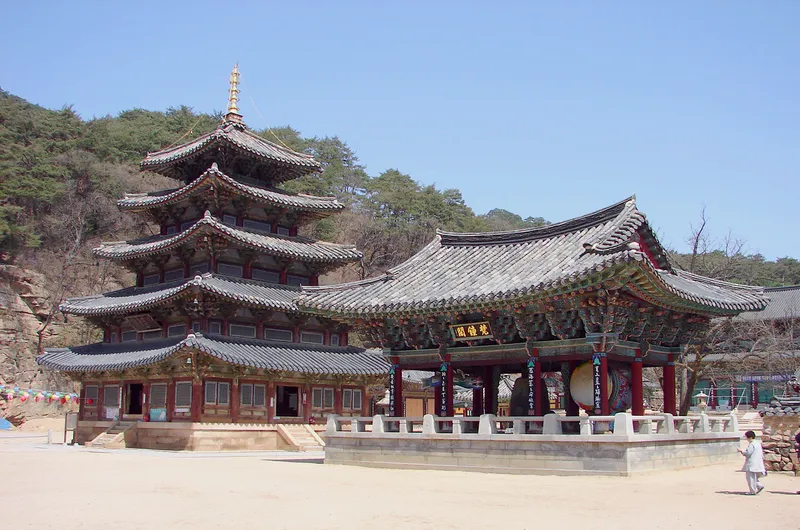
Beopjusa
- Miscellaneous
Founded in 553 and grown into the centre of Maitreya devotion, holding the only wooden pagoda in Korea.
 Temple
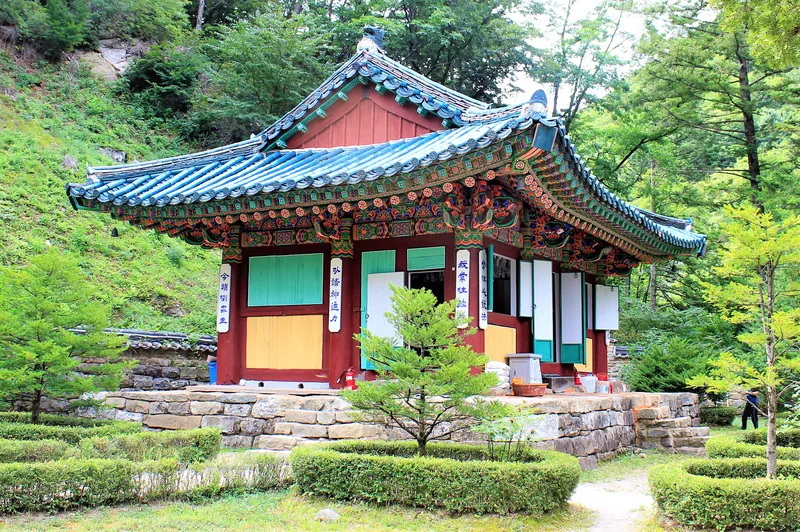
Jeongamsa
- Protection & Safety
A relic sanctuary where Jajang is said to have enshrined the Buddha’s skull bone, a tooth and a hundred relics, with a National Treasure stupa on the slope behind.
 Temple
Buseoksa, Bonghwangsan
Built where a woman turned dragon turned rock, and hung in the air until five hundred bandits left.
 Historic Site
Chamseongdan, Manisan
- Miscellaneous
A stone altar said to have been raised by Dangun for rites to heaven, used for state sacrifices under Goryeo and Joseon, and the site of a rite held every National Foundation Day.
 Temple
Guinsa
The head temple of the Cheontae Order, founded in 1945, with a five-storey concrete hall that seats ten thousand.
 Shrine
Haesindang
- Protection & Safety
A village shrine raised to settle the grievance of a young woman drowned at sea, where carved wooden phalluses have been offered.
 Temple
Bongjeongsa, Cheondeungsan
The temple where the oldest wooden building in Korea stands.
No places match your filters