Sapporo Sorei Jinja
Shinonome-shi
Researched and translated with AI assistance. Every claim is linked to its source, but errors get through, so check the official site for opening times, fees and closures.About
In short
Begins in 1871 with a spirit shrine built at the entrance to a communal burial ground.
Quick facts
- Address
- 5-8-1 Minami-jo-nishi, Chuo-ku, Sapporo, Hokkaido
- Spiritual entities
- Amaterasu Ōmikami (天照大御神) · Ōkuninushi (大国主命)
About this place
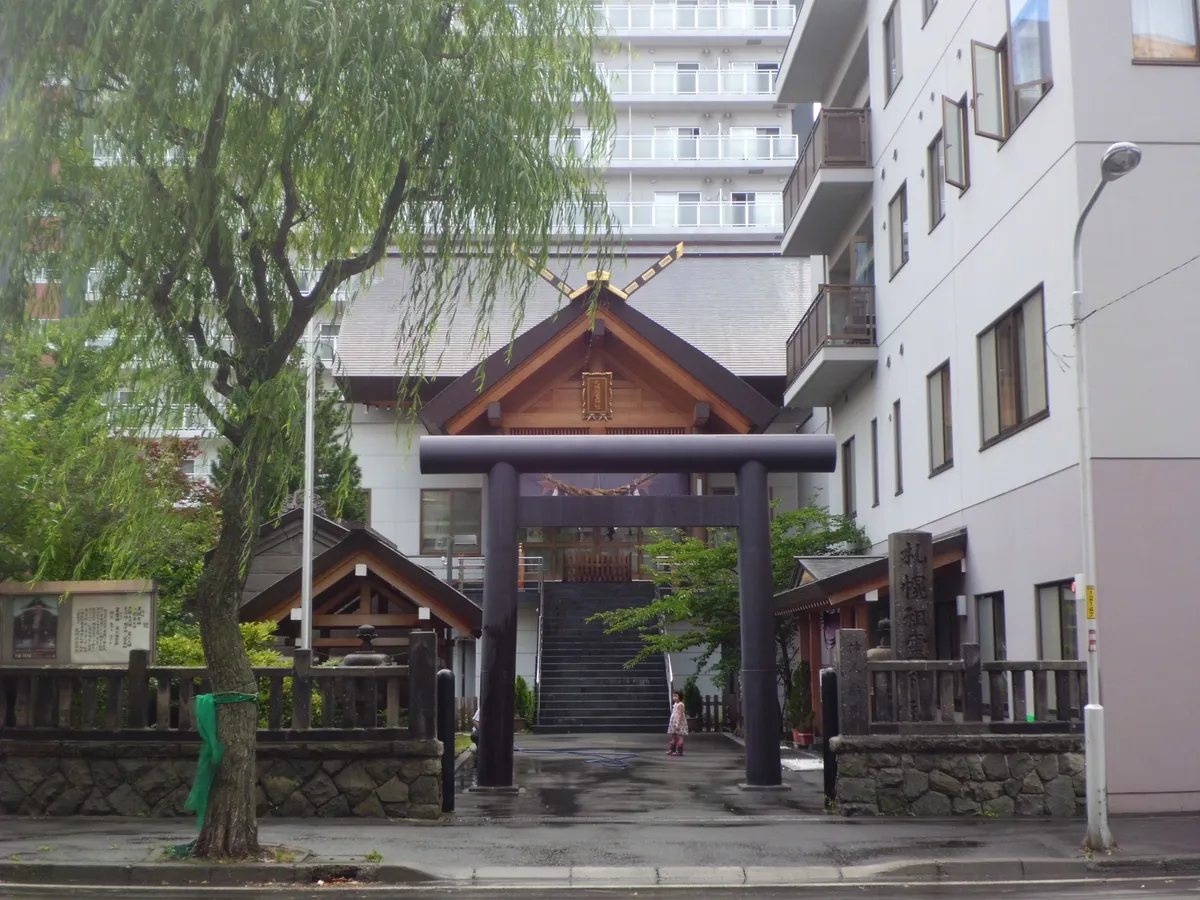
Sapporo Sorei Jinja stands in Chuo-ku, Sapporo. Its deities are Amaterasu-sume-okami, the eight million gods of heaven and earth, the ancestral spirits of the parishioners, the three heavenly ancestral deities, Okuninushi, the tutelary deity of the soil, and the imperial ancestral spirits. In 1871, encouraged by Kuroda Kiyotaka and others of the Colonisation Commission, a spirit shrine was built at the entrance to the Akeno communal burial ground for the ancestral rites of adherents of Shinto. In 1877 Wakabayashi Yoshitomo, a negi of Sapporo Jinja, became its first priest; in 1885 a divided spirit of the deity was received from Sapporo Jinja and the main hall of the ancestral shrine was completed. It is also called Shinonome-shi. It stands today as the rite hall for the reburial and conversion into Shinto of the colonial militia and settlers. In 1911 a new hall was completed, the previous one having burned in an accidental fire the year before. A cloister was added in 1919 along with stone walls and fencing, and a stone torii was completed in 1926. Religious-corporation authorisation came in 1953; the hall was extended at the ninetieth-anniversary rite in 1961, and a parishioners’ hall was built in 1968. At the centenary rite in 1971 a commemorative volume was distributed. The annual festival is 23 September. No benefit that may be prayed for is stated.
Origin and history
In 1871, encouraged by Kuroda Kiyotaka and others of the Colonisation Commission, a spirit shrine was built at the entrance to the Akeno communal burial ground for the ancestral rites of adherents of Shinto.
In 1877 Wakabayashi Yoshitomo, a negi of Sapporo Jinja, became its first priest; in 1885 a divided spirit of the deity was received from Sapporo Jinja and the main hall of the ancestral shrine was completed. It is also called Shinonome-shi. It stands today as the rite hall for the reburial and conversion into Shinto of the colonial militia and settlers.
In 1911 a new hall was completed, the previous one having burned in an accidental fire the year before. A cloister was added in 1919 along with stone walls and fencing, and a stone torii was completed in 1926.
Religious-corporation authorisation came in 1953; the hall was extended at the ninetieth-anniversary rite in 1961, and a parishioners’ hall was built in 1968. A commemorative volume was distributed at the centenary in 1971, the worship hall and spirit hall were rebuilt in 1976, and a steel torii was raised at the 110th-anniversary rite in 1981. At the 130th-anniversary rite in 2001 the hall was repaired inside and out.
What it is locally associated with
At the gate of a burial ground
In 1871, encouraged by Kuroda Kiyotaka and others of the Colonisation Commission, a spirit shrine was built at the entrance to the Akeno communal burial ground.
documented historyA hall for reburial and conversion
It stands today as the rite hall for the reburial and conversion into Shinto of the colonial militia and settlers, the shrine records.
documented historyA priest, then a god, from Sapporo Jinja
In 1877 a negi of Sapporo Jinja became its first priest, and in 1885 a divided spirit of the deity was received from the same shrine.
documented history
The ground this shrine was built on was not a settlement but the gate of a burial place. A spirit shrine built at the entrance to the Akeno communal burial ground, in 1871. Sapporo’s other shrines sit beside fields or inside militia villages. This one sits at the edge of where people were buried.
Its use is written down as well: it stands today as the rite hall for the reburial and conversion into Shinto of the colonial militia and settlers. A place for changing how the dead were buried, and what the living professed. No other entry on this list records its purpose in those terms.
The founding was urged from the official side. Encouraged by Kuroda Kiyotaka and others of the Colonisation Commission, the shrine writes. Elsewhere in Sapporo shrines are raised by militia settlers, by immigrants, by a founding council; here the encouragement is recorded as coming from the administration.
Its tie to Sapporo Jinja runs two ways. A priest came first, in 1877, and a divided spirit followed in 1885. Sapporo Mura Jinja, Naebo Jinja, Shiroishi Jinja and Maruyama Nishimachi Jinja in the same city also descend from Sapporo Jinja, but this is the one that took the priest before the god.
The list of deities holds something not found elsewhere here: the ancestral spirits of the parishioners themselves, named among those enshrined.
Claims and evidence levels 2
- A spirit shrine was built at the entrance to the Akeno communal burial ground in 1871, encouraged by Kuroda Kiyotaka and others of the Colonisation Commission. documented history
- A negi of Sapporo Jinja became its first priest in 1877, and a divided spirit was received from that shrine in 1885. documented history
Related guides
- How to visit a shrine or temple in JapanThe country-wide basics: purifying at the water basin, the two-bows-two-claps-one-bow form at shrines, and what temples do instead.
- What a "power spot" actually isA modern Japanese coinage, not a traditional religious category. Where the word came from, what it does and does not claim, and why this site uses it anyway.
- Shrine or temple?A shrine is Shinto and a temple is Buddhist, and you can usually tell at the gate. Why the line is cleaner on paper than on the ground, and what a government order in 1868 has to do with it.
- Omamori, ema, omikuji and goshuinThe four things you are most likely to receive, write, draw or be given at a shrine or temple, what each is actually for, and the one of them people most often get wrong.
Sources
- 札幌祖霊神社 — 北海道神社庁札幌支部 (accessed 2026-08-16)
Last updated:
Similar places
8 places
 Shrine
Kotoni Jinja
Founded by the 240 households of Hokkaido’s first farmer-soldiers, who gave their old domain’s founder a god’s name and built the shrine under it.
 Shrine
Reppupu Jinja
Named after its village, and in 1893 given three divided deities from Miyoshi Jinja in Sapporo.
 Shrine
Shinkawa Kotai Jinja
A shrine whose history records that seven promoters and thirty-seven parishioners served at its enshrinement rite in 1908.
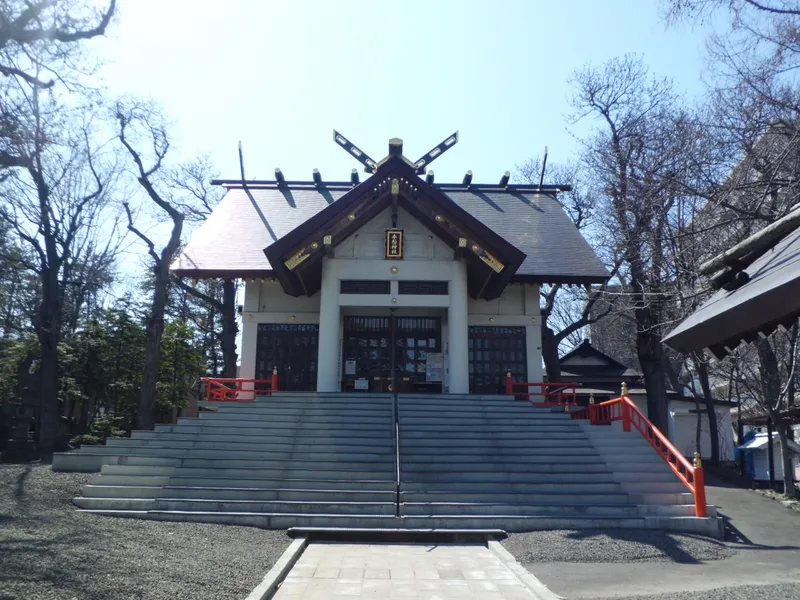 Shrine
Teine Jinja
Began when 250 households, unable to reach Sapporo Jinja in winter or at harvest, petitioned for a place to worship it from a distance — and later became a shrine itself.
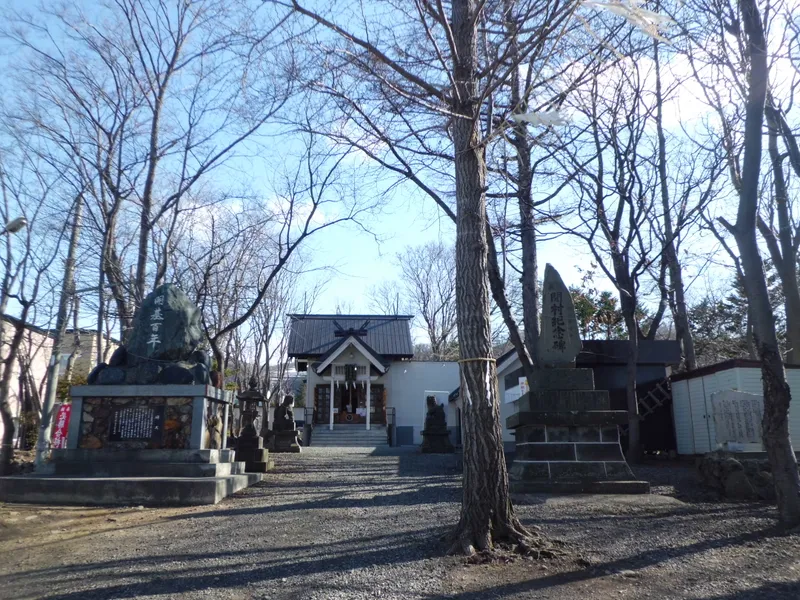 Shrine
Hoshioki Jinja
Begins in 1887, when settlers gathered from Hiroshima, Yamaguchi, Toyama and Aomori raised a small wooden shrine as something to hold in common through hardship and ease alike.
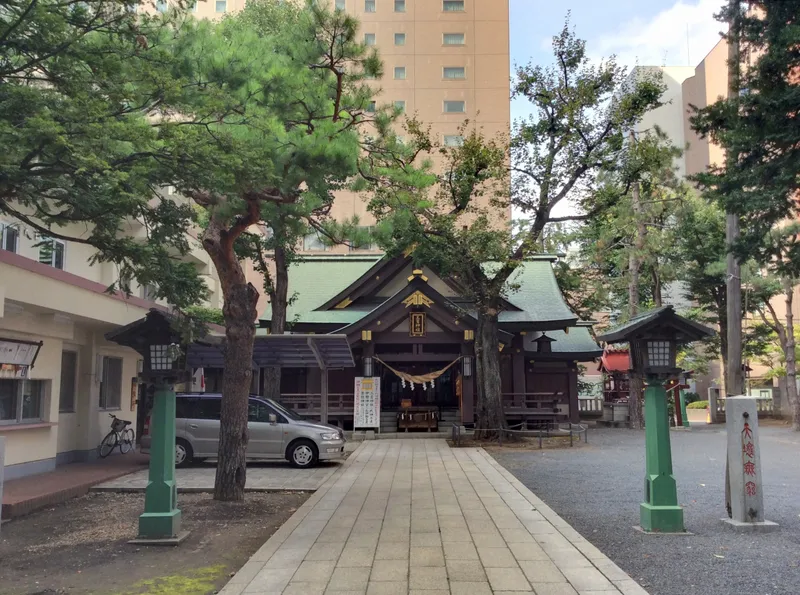 Shrine
Sapporo Miyoshi Jinja
Begins in 1878 when Kimura Tōkichi, a man from Akita, enshrined a divided spirit of his home province’s Miyoshi Shrine on the east bank of the Toyohira river.
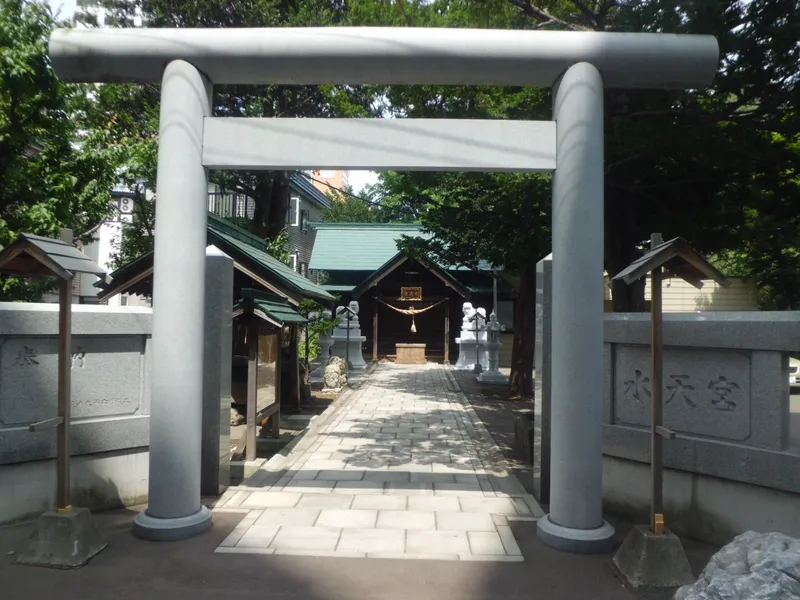 Shrine
Sapporo Suitengu
Begins in 1884 when Mizuno Genshirō, a former retainer of the Kurume domain, carried a divided spirit north from the head shrine of Suitengu at Kurume in Kyushu; it is Japan’s thirty-ninth branch shrine.
 Shrine
Sapporo Fushimi Inari Jinja
- Career & Work
- Money & Prosperity
Begins in 1884 with a divided spirit brought from Fushimi Inari Taisha in Kyoto, and holds its deity to be the progenitor of food, clothing and shelter, and guardian of harvests, industry and trade.
No places match your filters