Beophwasa
Beophwasa Temple Site
Researched and translated with AI assistance. Every claim is linked to its source, but errors get through, so check the official site for opening times, fees and closures.About
In short
The site of a large temple that flourished on Jeju from the twelfth to the fifteenth century, burned in the early eighteenth and rebuilt in 1987.
Quick facts
- Address
- 15-28 Hawonbuk-ro 35beon-gil, Seogwipo-si, Jeju
About this place
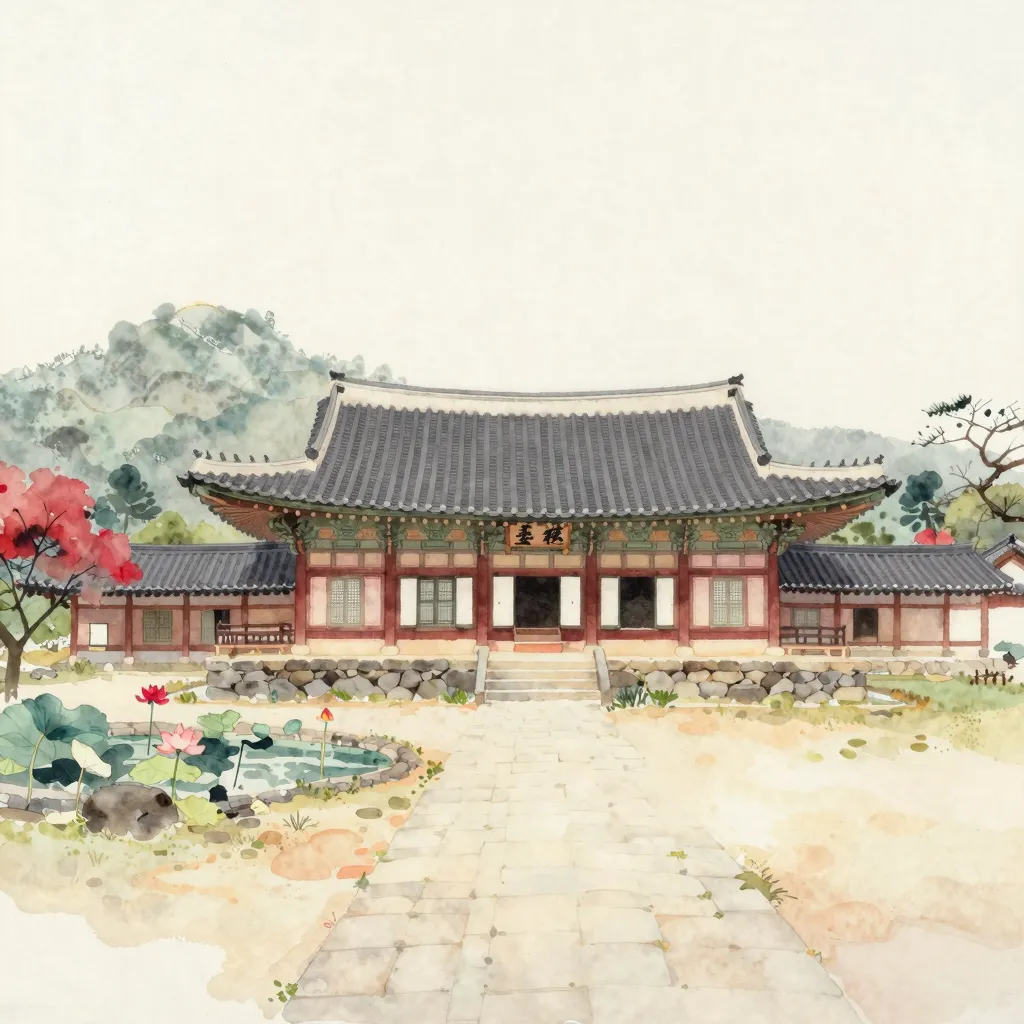
Beophwasa stands in Hawon-dong, Seogwipo, on the site of a temple that flourished on Jeju from the twelfth to the fifteenth century. The base stones of the platform are laid in two tiers and the facing-stone technique is unusual; the ceramics and roof-tile fragments recovered here suggest a construction date around the tenth to twelfth century. On the site of the present hall, foundations were found of what appears to have been the golden hall — a large building of five bays by four, about a hundred pyeong in area. It was a very large temple for its time and is an important site as one of the three great temples of Jeju. In the early eighteenth century, when Yi Hyeong-sang, governor of Jeju, burned down three temples on the island, this one burned completely; the buildings standing now were raised in 1987. The site is designated a monument of Jeju Province.
Origin and history
Beophwasa was a temple that flourished on Jeju from the twelfth to the fifteenth century. The base stones of its platform are laid in two tiers and the facing-stone technique is unusual; the ceramics and roof-tile fragments recovered here suggest it was built around the tenth to twelfth century.
On the site of the present hall, foundations were found of what appears to have been the golden hall. It was a large building of five bays by four, about a hundred pyeong in area — a very large temple for its time, and an important site as one of the three great temples of Jeju.
In the early eighteenth century, when Yi Hyeong-sang, governor of Jeju, burned down three temples on the island, this one burned completely. The buildings standing now were raised in 1987.
What it is locally associated with
A golden hall of about a hundred pyeong
Foundations of what appears to have been the golden hall, five bays by four and about a hundred pyeong, were found on the site of the present hall.
documented historyBurned in the abolition
The temple burned completely in the early eighteenth century when Governor Yi Hyeong-sang burned down three temples on Jeju.
documented historyRebuilt in 1987
The buildings standing on the site today were raised in 1987.
documented history
What survives of this temple is not a story but a set of measurements. The foundations taken for the golden hall run five bays by four and about a hundred pyeong; the platform’s base stones are in two tiers, the facing-stone technique is unusual, and the ceramics and tile fragments point to the tenth to twelfth century. With no founding legend and no account of efficacy, it is what came out of the ground that gives the dates.
How it ended is plain. It burned in the early eighteenth century when Governor Yi Hyeong-sang burned three temples on Jeju. Gwaneumsa, also on Jeju, writes the same governor into its own account — but that record says five hundred temple buildings and this one says three temples. The figures do not agree, and each is left here as its own source has it.
What stands now was raised in 1987. Between the temple said to have flourished from the twelfth century to the fifteenth and the buildings on the ground today lies a gap of close to three hundred years.
Claims and evidence levels 2
- Excavated foundations show a golden hall of five bays by four, about a hundred pyeong, at a temple that flourished from the twelfth to the fifteenth century. documented history
- The temple burned completely in the early eighteenth century when Governor Yi Hyeong-sang burned three temples on Jeju, and was rebuilt in 1987. documented history
Related guides
- How to visit a Korean templeHands together and hands folded, how the bows work, and what to do at the threshold of a hall. Starting with what is different from visiting a Japanese shrine.
- The small hall behind the main one — sansingak and samseonggakUphill from the main hall of a Korean temple stands a smaller one, and inside it an old man with a tiger. This is where the indigenous religion sits, inside the Buddhist institution.
- Templestay — a night at a templeA programme that puts you inside a temple’s own timetable for a day or two. What you do, which type to book, and what to be ready for.
- Prayer sites and the one wishThe three great Gwaneum sites, the five relic halls, and the crowds before the entrance exam. Where the saying about one wish comes from, and where the record stops.
Sources
- 제주 법화사지(濟州 法華寺址) — 한국민족문화대백과사전 (accessed 2026-08-16)
Last updated:
Similar places
8 places
 Temple
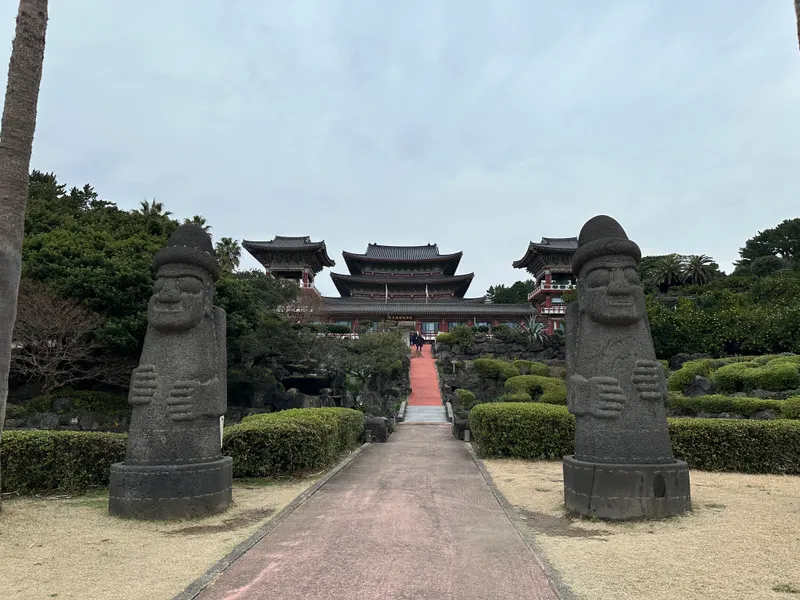
Yakcheonsa
- Health & Healing
A temple in Daepo-dong, Seogwipo, whose name means the temple where medicinal spring water flows.
 Cave
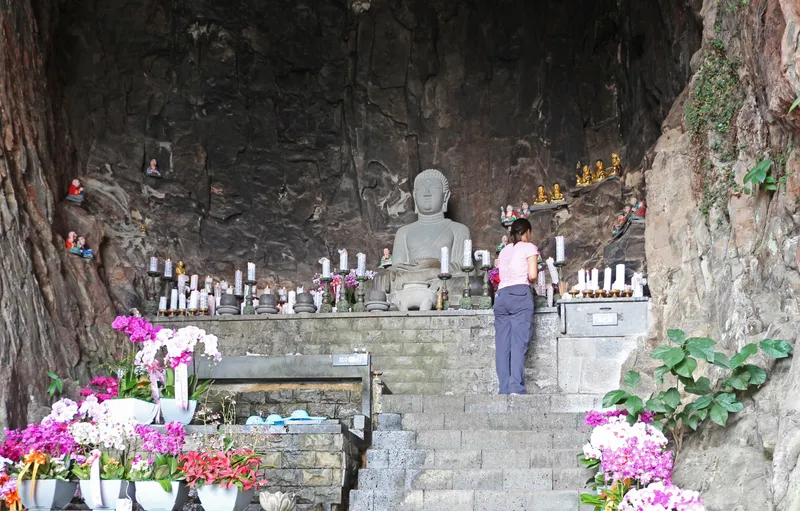
CaveSanbanggulsa
A Buddha image set in a cave in the south cliff of Sanbangsan, where the water falling from the ceiling is called a goddess’s tears.
 Temple
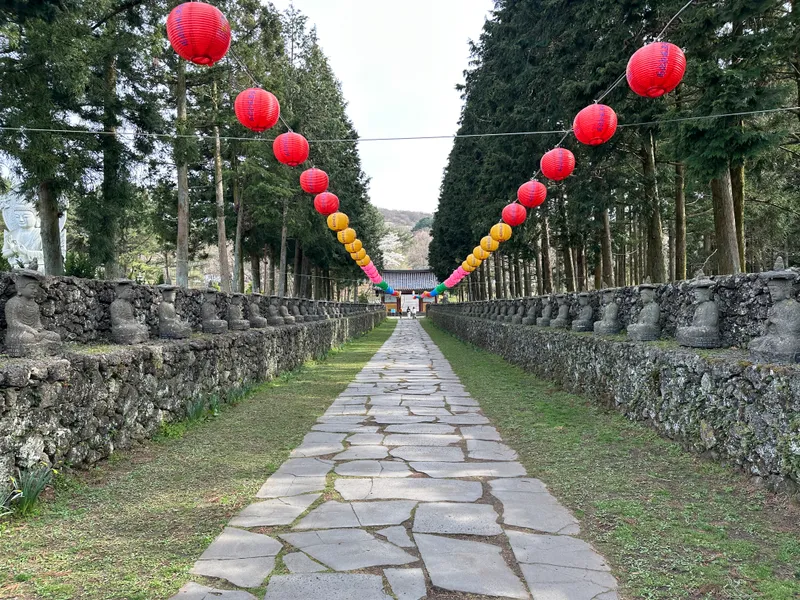
Gwaneumsa, Hallasan
- Protection & Safety
The head temple of the Jogye Order’s 23rd district, on the slope of Hallasan, founded in the spring of 1909 by the nun Bongnyeogwan.
 Historic Site
Sancheondan
The altar to which Hallasan’s mountain-god rite was moved down from the summit, after islanders froze to death on the way to it.
 Shrine
Waheul Bonhyangdang
A shrine holding the eleventh son of the Songdang deity together with a goddess who, estranged from him, sits apart in one corner.
 Temple
Bultapsa
- Fertility & Children
A temple on the site of Wondangsa, which Empress Gi is said to have built and sent an envoy to pray at, in order to obtain a son.
 Shrine
Songdang Bonhyangdang
- Protection & Safety
The shrine of the parent gods of Jeju’s village guardian deities, whose children, the myth says, scattered across the island and became its shrine gods.
 Shrine
Gwenegitdang
The shrine of the sixth son of Songdang Bonhyangdang, where a whole pig has been offered each year.
No places match your filters