Sancheondan
Hallasan Mountain God Altar
Researched and translated with AI assistance. Every claim is linked to its source, but errors get through, so check the official site for opening times, fees and closures.About
In short
The altar to which Hallasan’s mountain-god rite was moved down from the summit, after islanders froze to death on the way to it.
Quick facts
- Address
- 375-1 Ara 1(il)-dong, Jeju-si, Jeju
About this place
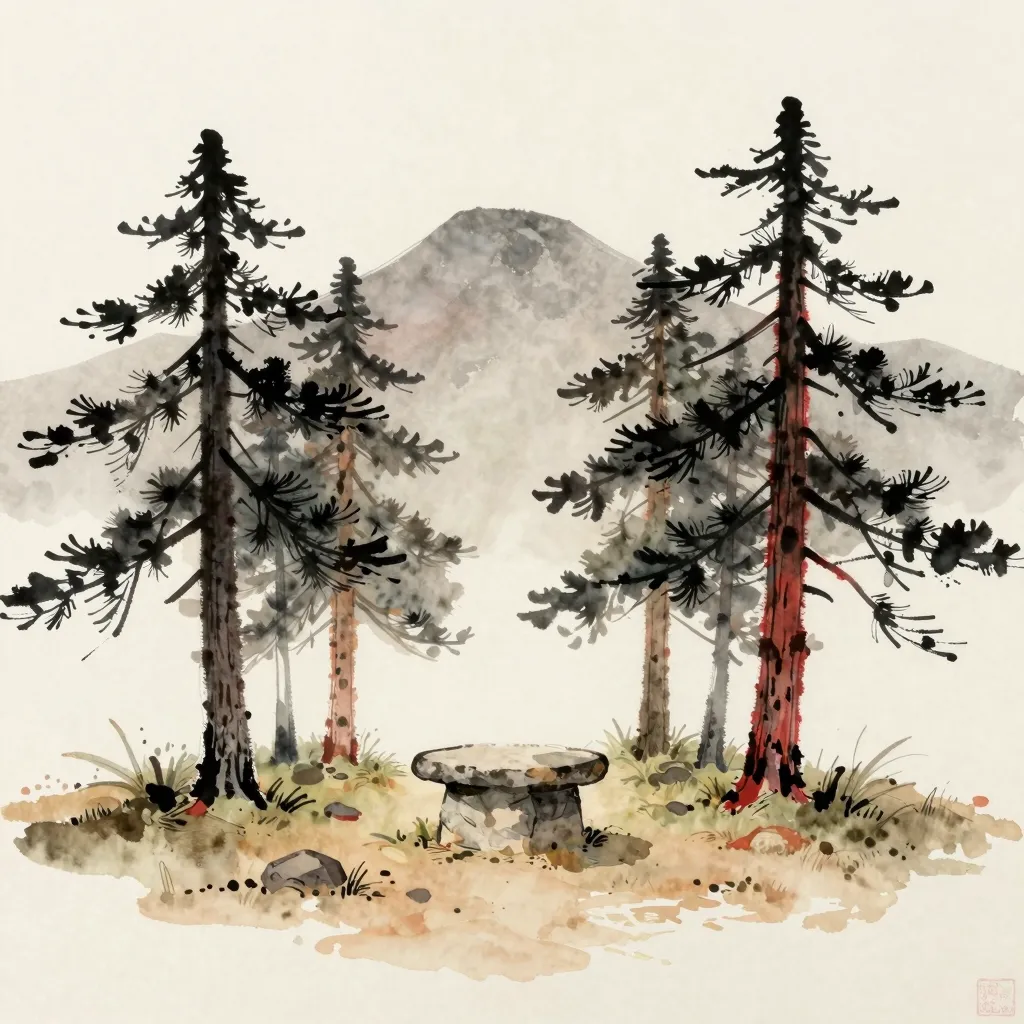
Sancheondan, the altar for the Hallasan mountain-god rite, stands in Ara 1-dong, Jeju City, ringed by black pines. On Jeju the mountain-god rite had been held at the summit of Hallasan since Goryeo times, but when the weather turned during the rite in the second month the hardship on the islanders was severe, and there were cases of people freezing to death. In 1470 Yi Yak-dong, then governor of Jeju, had an altar built here so that the rite could be held at this place, to spare the islanders the ordeal; from then on the mountain-god rite was held here on the first jeong day of the second month. In earlier times the heaven rite was performed up at Baengnokdam, but when the way was hard and the weather cold an altar was made here and the rite performed at it, which is said to be how the place got its name. The black pine group was designated a natural monument on 31 January 1964.
Origin and history
On Jeju the mountain-god rite had been held at the summit of Hallasan since Goryeo times. But when the weather turned during the rite in the second month, the hardship on the islanders was severe, and there were cases of people freezing to death.
In 1470 Yi Yak-dong, then governor of Jeju, had an altar built at Sancheondan so that the mountain-god rite could be held there, in order to spare the islanders the ordeal. From then on the rite was held here on the first jeong day of the second month each year.
In earlier times the heaven rite was performed up at Baengnokdam; when the way was hard and the weather cold, an altar was made here and the rite performed at it, which is said to be how the name Sancheondan arose.
The black pines standing on and around 375-1 Ara-dong and five neighbouring lots were designated a natural monument on 31 January 1964.
What it is locally associated with
The rite moved down, 1470
After islanders froze to death at the second-month rite, Governor Yi Yak-dong had an altar built here to spare them the ordeal.
documented historyThe first jeong day of the second month
From then on the mountain-god rite was held at this altar on the first jeong day of the second month each year.
documented historyThe black pines
The pines standing around the altar were designated a natural monument on 31 January 1964.
documented history
This altar stands here not for a reason of belief but because people died. The mountain-god rite belonged at the top of Hallasan, and when the second month’s weather turned savage those who had climbed froze. When Yi Yak-dong built an altar below the mountain in 1470 and moved the rite to it, he did so to spare the islanders the ordeal. Where the rite was held was settled by an official’s judgement, and what that judgement rested on was people dying of cold.
Places that stand in for somewhere unreachable are already on this site. Okitsugu Yohaisho in Fukuoka is a hall for bowing across the water toward an island no visitor may enter, and Yamaguchi Jinja and Soma Jinja in Sapporo were both raised to face somewhere too far to go. But those look toward the distant place. This one brought the rite itself down.
The name came out of the same circumstance. The heaven rite used to be carried up to Baengnokdam; when the way was hard and the cold severe, an altar was made here instead, and the place has been called Sancheondan since.
What keeps the ground now are the pines. The trees designated a natural monument on 31 January 1964 stand around the altar.
Claims and evidence levels 2
- In 1470 Governor Yi Yak-dong had an altar built here so the Hallasan mountain-god rite could be held below the summit, after islanders froze to death at the rite. documented history
- The black pine group at the altar was designated a natural monument on 31 January 1964. documented history
Sources
- 제주 산천단 곰솔군(濟州 山川壇 곰솔群) — 한국민족문화대백과사전 (accessed 2026-08-16)
- 한라산신제 — 한국민속대백과사전 (accessed 2026-08-16)
Last updated:
Similar places
8 places
 Temple
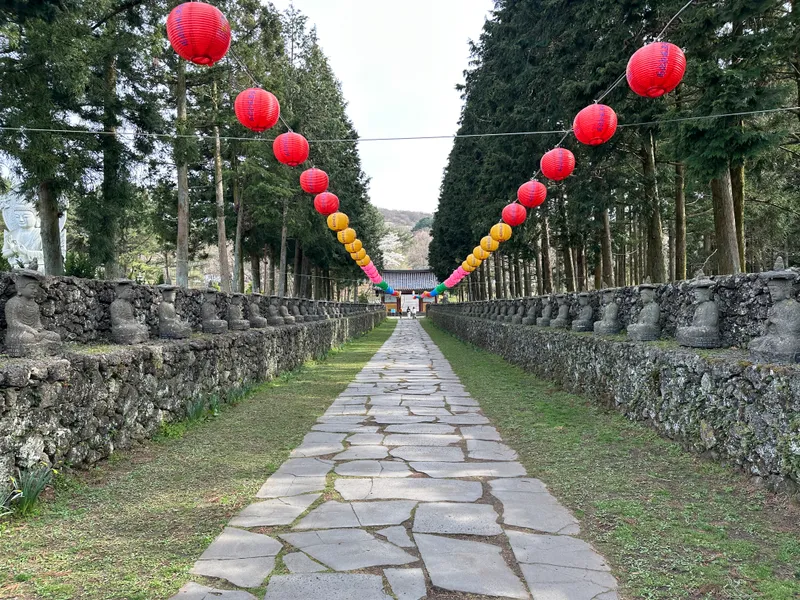
Gwaneumsa, Hallasan
- Protection & Safety
The head temple of the Jogye Order’s 23rd district, on the slope of Hallasan, founded in the spring of 1909 by the nun Bongnyeogwan.
 Shrine
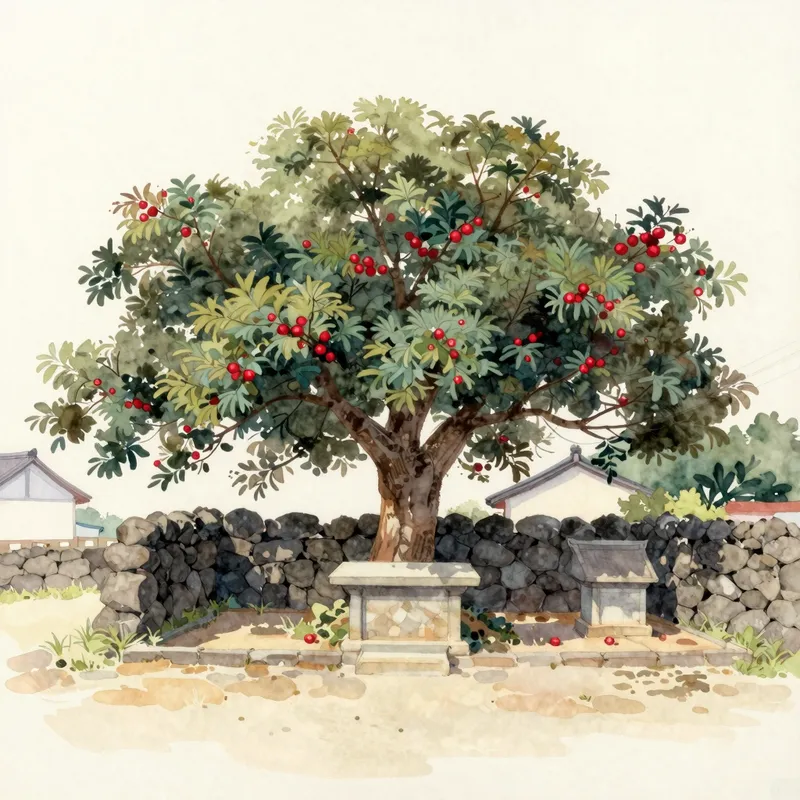
Waheul Bonhyangdang
A shrine holding the eleventh son of the Songdang deity together with a goddess who, estranged from him, sits apart in one corner.
 Temple
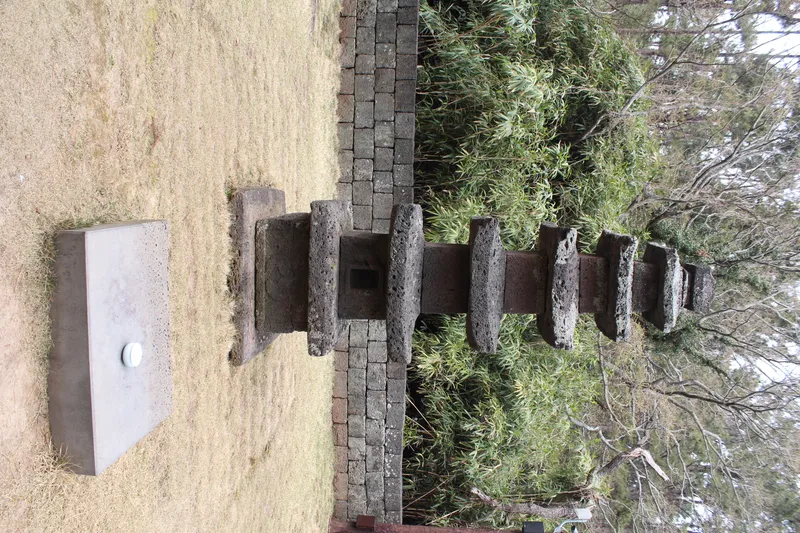
Bultapsa
- Fertility & Children
A temple on the site of Wondangsa, which Empress Gi is said to have built and sent an envoy to pray at, in order to obtain a son.
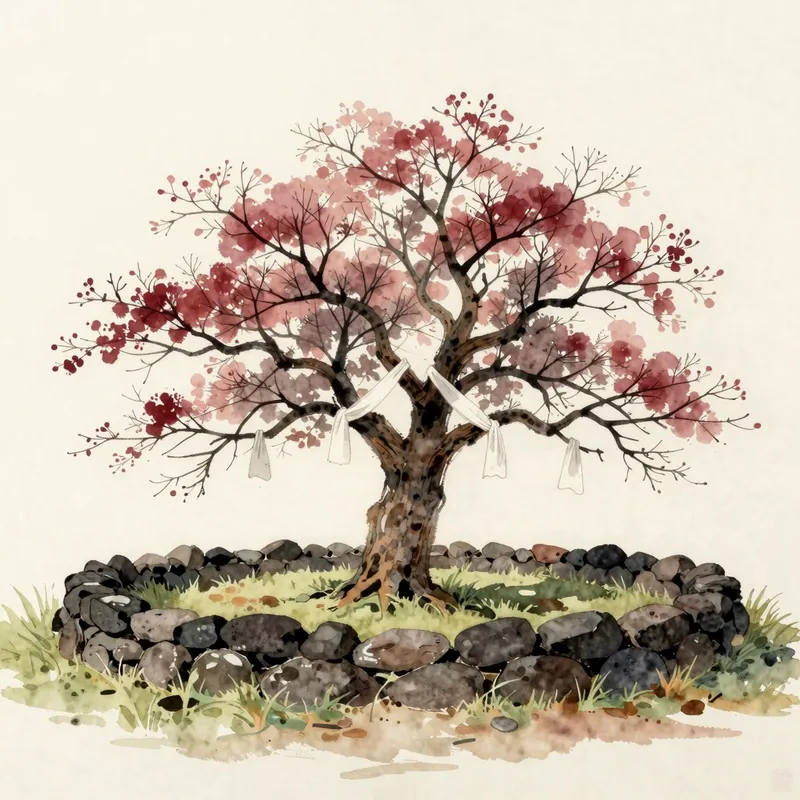 Shrine
Songdang Bonhyangdang
- Protection & Safety
The shrine of the parent gods of Jeju’s village guardian deities, whose children, the myth says, scattered across the island and became its shrine gods.
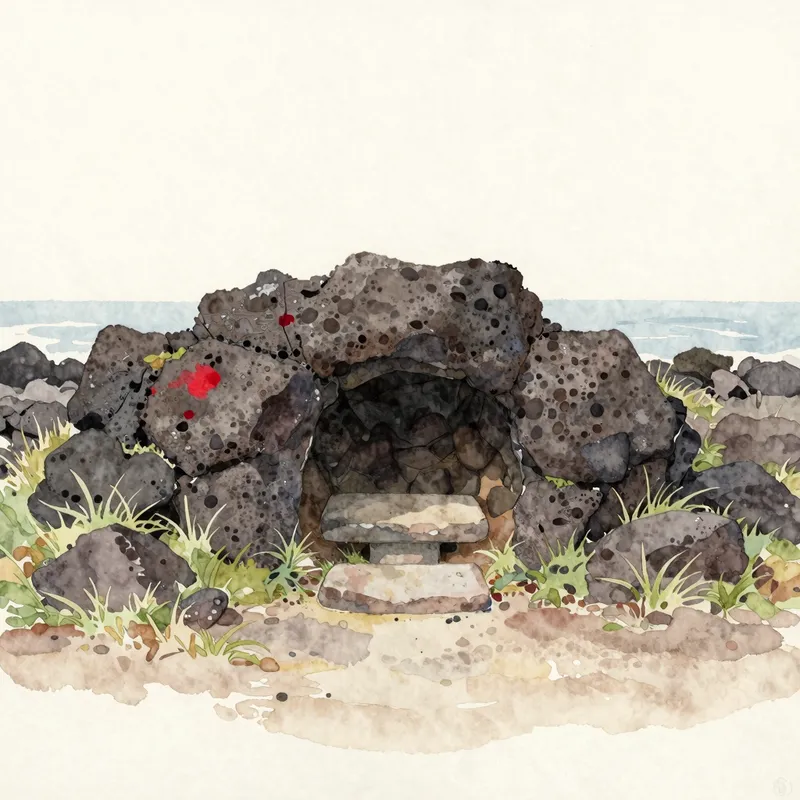 Shrine
Gwenegitdang
The shrine of the sixth son of Songdang Bonhyangdang, where a whole pig has been offered each year.
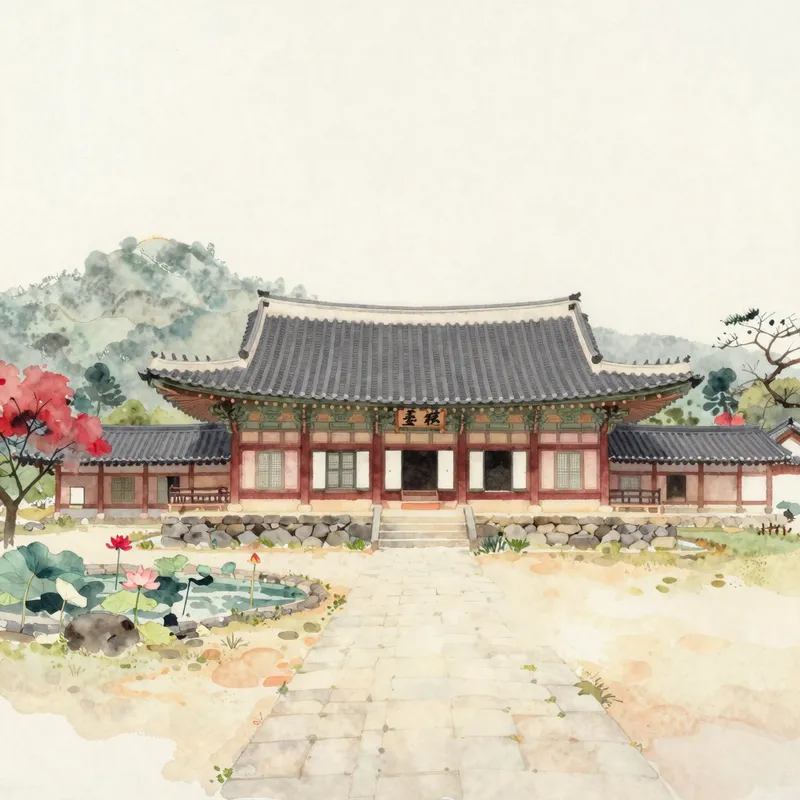 Temple
Beophwasa
The site of a large temple that flourished on Jeju from the twelfth to the fifteenth century, burned in the early eighteenth and rebuilt in 1987.
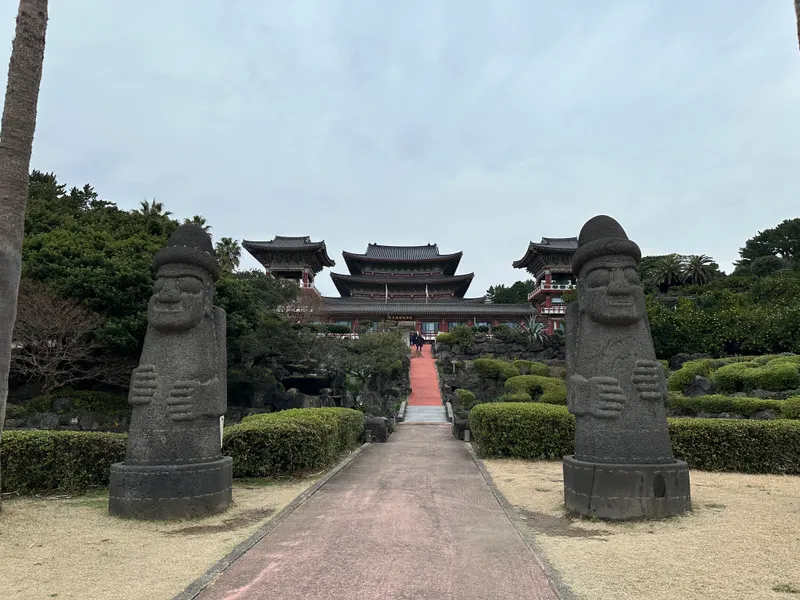 Temple
Yakcheonsa
- Health & Healing
A temple in Daepo-dong, Seogwipo, whose name means the temple where medicinal spring water flows.
 Cave
CaveSanbanggulsa
A Buddha image set in a cave in the south cliff of Sanbangsan, where the water falling from the ceiling is called a goddess’s tears.
No places match your filters