Sanbanggulsa
Researched and translated with AI assistance. Every claim is linked to its source, but errors get through, so check the official site for opening times, fees and closures.About
In short
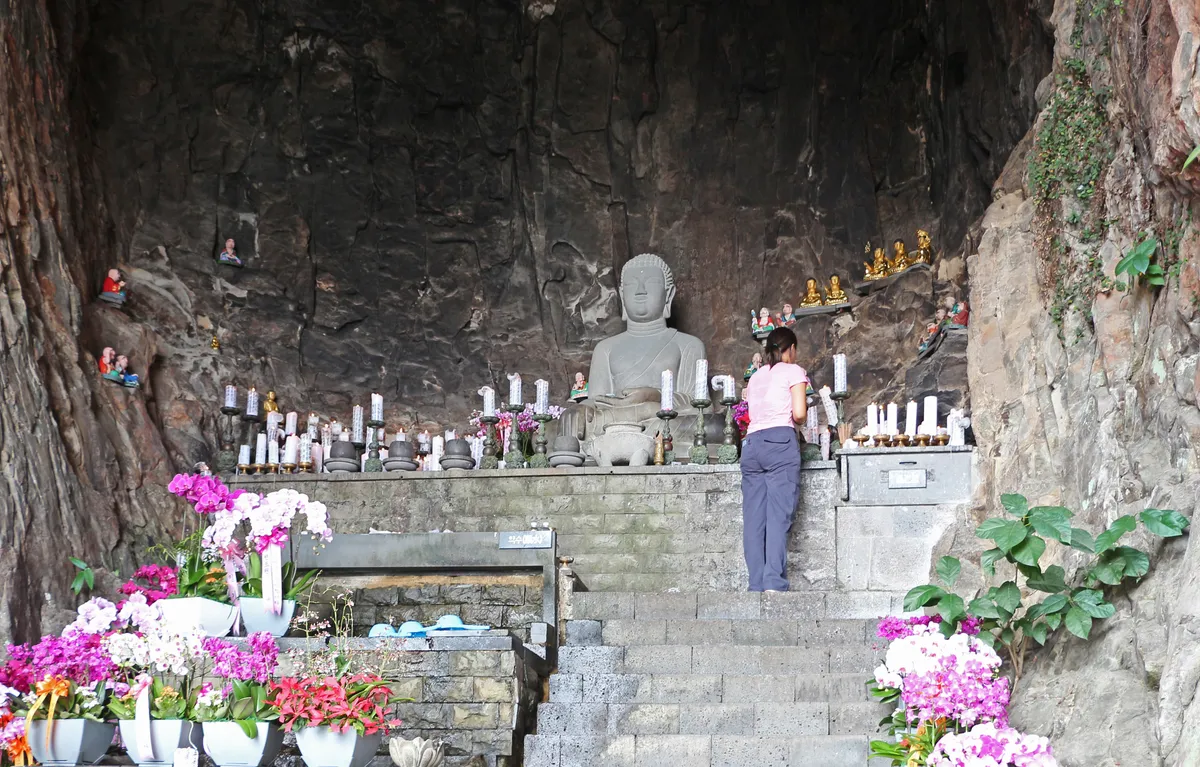
A Buddha image set in a cave in the south cliff of Sanbangsan, where the water falling from the ceiling is called a goddess’s tears.
Quick facts
- Address
- 218-12 Sanbang-ro, Seogwipo-si, Jeju
About this place
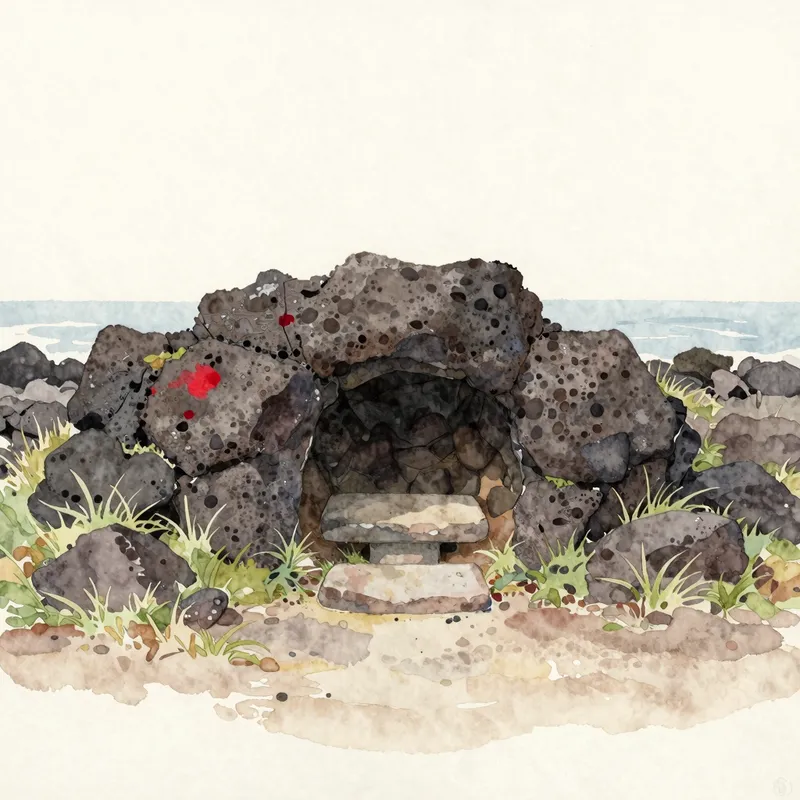
Sanbanggulsa is on Sanbangsan in Sagye-ri, Andeok-myeon, Seogwipo. The mountain takes its name from the Sanbang cave in its southern rock face; its summit stands at 395 metres, and it measures 1,314 metres in length and 3,780 metres around. At about 150 metres above sea level lies Sanbanggulsa, a cave some five metres wide and high and ten metres deep, with a Buddha image inside and spring water falling from the ceiling. That water is said to be the tears of Sanbangdeok, a goddess who was worn down by the human world until she turned to rock. Sanbangsan was first set among the scenes as “Sanbang” in the Ten Views of Tamna by Governor Yi Ik-tae, and carried on into the Ten Views of Yeongju as Sanbanggulsa, and it is counted among the landscapes that represent Jeju. Sanbangsan is designated a Scenic Site.
Origin and history
Sanbangsan takes its name from the Sanbang cave in its southern rock face. Its summit stands at 395 metres; it is 1,314 metres long and 3,780 metres around.
At about 150 metres above sea level lies Sanbanggulsa. The cave is some five metres wide and high and ten metres deep, with a Buddha image enshrined inside and spring water falling from the ceiling. That water is said to be the tears of Sanbangdeok, a goddess who was worn down by the human world until she turned to rock. By the legend, Sanbangdeok was the goddess of the cave that the mountain bore, and of surpassing beauty.
Two accounts are handed down of how the mountain came to be. In one, Seolmundae Halmang pulled the peak off Baengnokdam on Hallasan and threw it here. In the other, a hunter on Hallasan loosed an arrow at a white deer, struck the Jade Emperor by mistake, and the angered emperor pulled off the summit of Hallasan and threw it to the west.
Sanbangsan was first set among the scenes as “Sanbang” in Governor Yi Ik-tae’s Ten Views of Tamna, and carried on into the Ten Views of Yeongju as Sanbanggulsa, counted among the landscapes that stand for Jeju.
What it is locally associated with
The tears of Sanbangdeok
The water falling from the cave ceiling is said to be the tears of a goddess who was worn down by the human world until she turned to rock.
folk traditionA mountain taken out of Hallasan
Seolmundae Halmang is said to have thrown the peak of Baengnokdam here; another account has the Jade Emperor pulling off Hallasan’s summit in anger.
folk traditionOne of the Ten Views of Yeongju
First set among the scenes as Sanbang in the Ten Views of Tamna, it carried on into the Ten Views of Yeongju as Sanbanggulsa.
documented history
The water that falls in this cave has a name. It is called spring water, and it is called the tears of Sanbangdeok. Sanbangdeok is a goddess who was worn down by the human world until she turned to rock, and the account has that rock weeping now. This site holds many places where water rises, but this is the one where the water itself is explained as somebody’s feeling.
The mountain’s own story begins with something missing, too. Seolmundae Halmang is said to have pulled the peak off Baengnokdam and thrown it; or the Jade Emperor, angered, pulled off the summit of Hallasan and threw it west. Either way this mountain is a piece that came out of Hallasan, and Baengnokdam is the hollow it left. Both accounts are handed down, and neither is chosen here.
Its standing as a view is a matter of record. It entered Governor Yi Ik-tae’s Ten Views of Tamna as Sanbang, and carried on into the Ten Views of Yeongju as Sanbanggulsa. When the cave began to be counted worth seeing can be checked in writing.
Claims and evidence levels 2
- The water falling inside the cave is said to be the tears of Sanbangdeok, a goddess who turned to rock. folk tradition
- The cave entered the scenic canon as Sanbang in Governor Yi Ik-tae’s Ten Views of Tamna and became Sanbanggulsa among the Ten Views of Yeongju. documented history
Sources
- 산방산(山房山) — 한국민족문화대백과사전 (accessed 2026-08-16)
Last updated:
Similar places
8 places
 Temple
Yakcheonsa
- Health & Healing
A temple in Daepo-dong, Seogwipo, whose name means the temple where medicinal spring water flows.
 Temple
Beophwasa
The site of a large temple that flourished on Jeju from the twelfth to the fifteenth century, burned in the early eighteenth and rebuilt in 1987.
 Temple
Gwaneumsa, Hallasan
- Protection & Safety
The head temple of the Jogye Order’s 23rd district, on the slope of Hallasan, founded in the spring of 1909 by the nun Bongnyeogwan.
 Historic Site
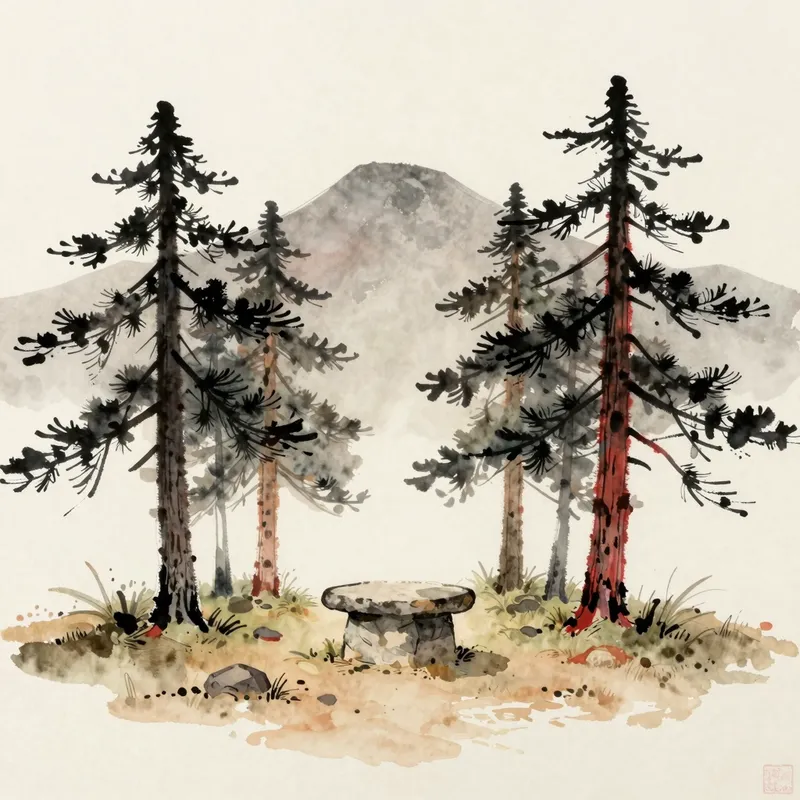
Sancheondan
The altar to which Hallasan’s mountain-god rite was moved down from the summit, after islanders froze to death on the way to it.
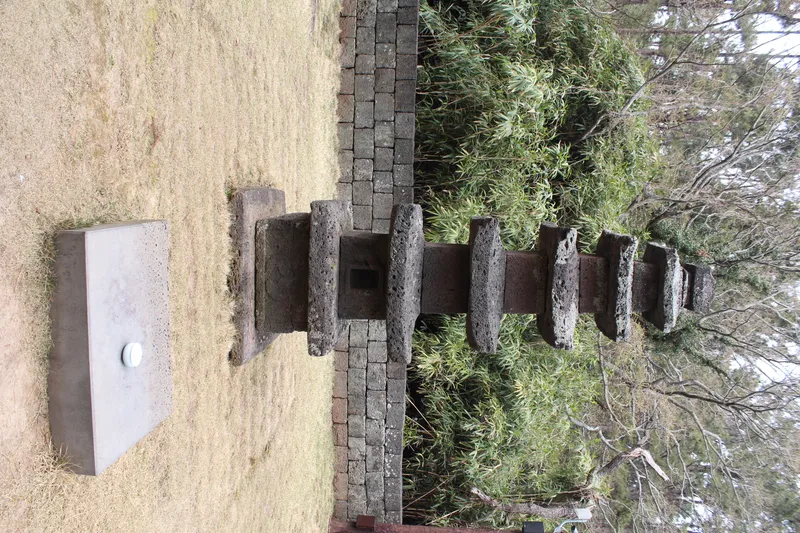 Temple
Bultapsa
- Fertility & Children
A temple on the site of Wondangsa, which Empress Gi is said to have built and sent an envoy to pray at, in order to obtain a son.
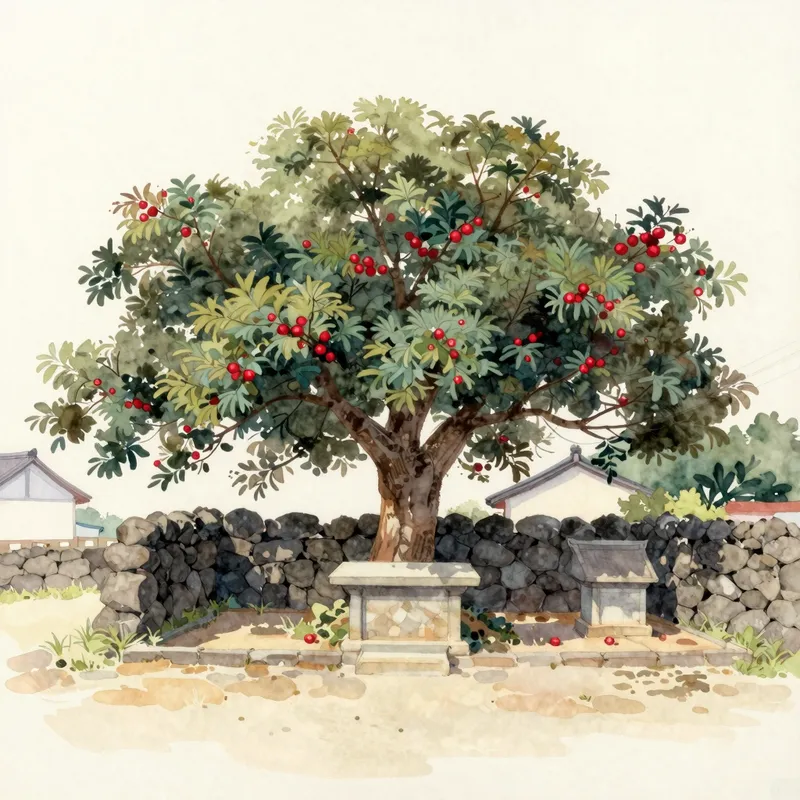 Shrine
Waheul Bonhyangdang
A shrine holding the eleventh son of the Songdang deity together with a goddess who, estranged from him, sits apart in one corner.
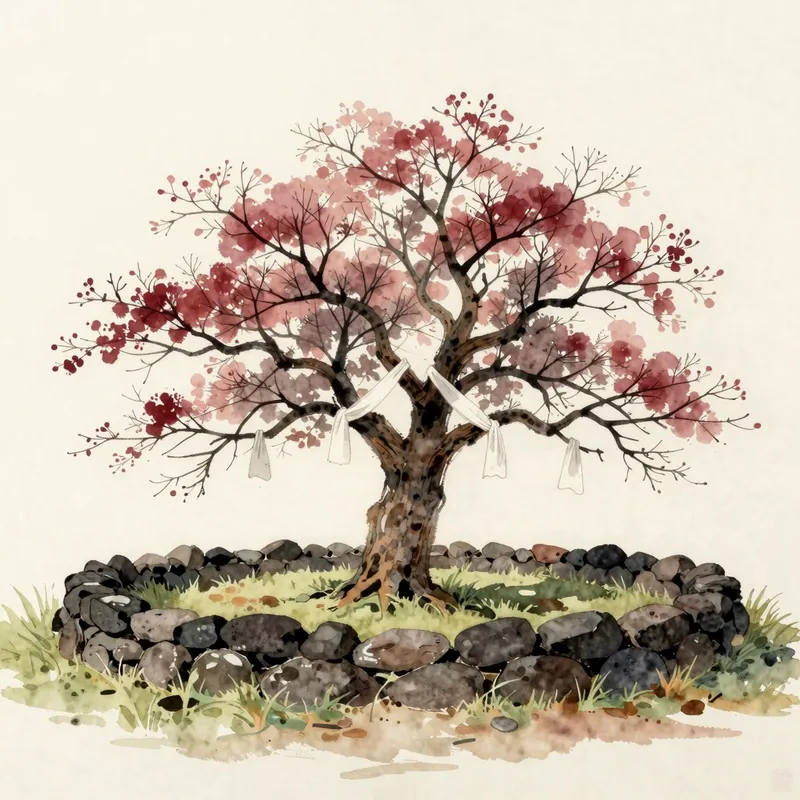 Shrine
Songdang Bonhyangdang
- Protection & Safety
The shrine of the parent gods of Jeju’s village guardian deities, whose children, the myth says, scattered across the island and became its shrine gods.
 Shrine
Gwenegitdang
The shrine of the sixth son of Songdang Bonhyangdang, where a whole pig has been offered each year.
No places match your filters