Gwenegitdang
Gwenegidang
Researched and translated with AI assistance. Every claim is linked to its source, but errors get through, so check the official site for opening times, fees and closures.About
In short
The shrine of the sixth son of Songdang Bonhyangdang, where a whole pig has been offered each year.
Quick facts
- Address
- 1901 Gimnyeong-ri, Gujwa-eup, Jeju-si, Jeju
About this place
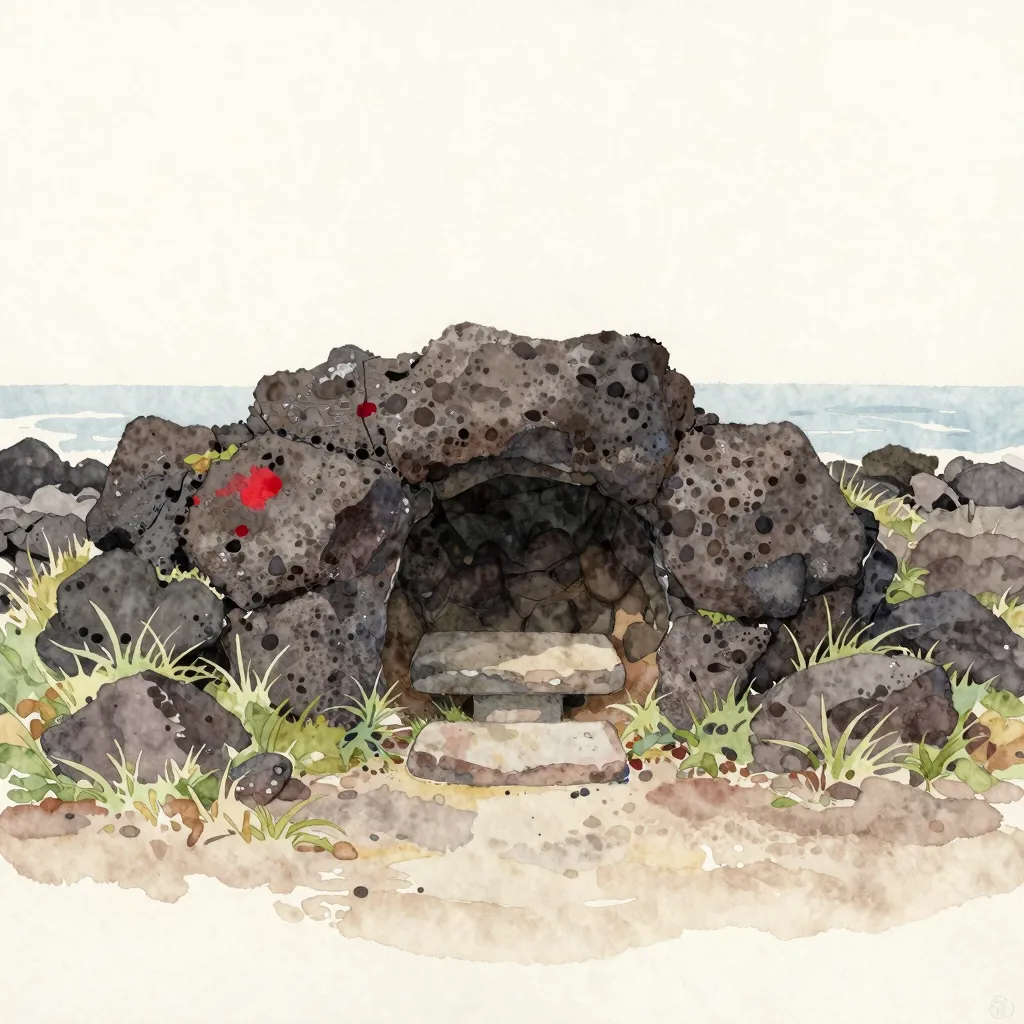
Gwenegitdang stands at the south of Gimnyeong-ri, Gujwa-eup, Jeju City. According to its bonpuri, Socheonguk, who sprang up from the Gobuni spring at Alsondang on Jeju, and Baekjuddo, who sprang up on the white sands of the land of Gangnam Cheonja, became husband and wife and lived at Songdang-ri; they bore five sons, and while she was carrying the sixth a number of things happened. The sixth son, Gwenegit Hanjip, took roe deer and deer and held a rite for his father’s spirit, then went to Banggwang Oreum, sent his soldiers back, and came down to Gimnyeong-ri looking for a place to settle. The deity here is a hero god who receives a whole pig, and so a pig rite has been held each year in which one pig is slaughtered and offered. When his taste was asked, the answer given was that the people were poor and could not slaughter an ox, and that each household would slaughter a pig for him instead; from that promise, it is said, the shrine became one that holds the pig rite every year.
Origin and history
According to the bonpuri, Socheonguk, who sprang up from the Gobuni spring at Alsondang on Jeju, and Baekjuddo, who sprang up on the white sands of the land of Gangnam Cheonja, became husband and wife and lived at Songdang-ri. They bore five sons, and while she was carrying the sixth a number of things happened.
The sixth son, Gwenegit Hanjip, took roe deer and deer and held a rite for his father’s spirit, then went to Banggwang Oreum, sent his soldiers back, and came down to Gimnyeong-ri looking for a place to settle.
The deity here is a hero god who receives a whole pig. When his taste was asked, the answer given was that the people were poor and could not slaughter an ox, and that each household would slaughter a pig for him instead; from that promise, it is said, the shrine became one that holds the pig rite each year, offering one pig.
What it is locally associated with
Where the sixth son came down
Gwenegit Hanjip held a rite for his father’s spirit, sent his soldiers back at Banggwang Oreum, and came down to Gimnyeong-ri to find a place to settle.
folk traditionA whole pig
The deity here is a hero god who receives a whole pig, and a rite offering one has been held each year.
folk traditionBecause no ox could be spared
Asked what he liked, the answer was that the people were poor and could not slaughter an ox, and each household would slaughter a pig instead.
folk tradition
The god of this shrine did not come from somewhere — he is somebody’s son. He is the sixth son of Socheonguk and Baekjuddo, and his parents’ shrine is Songdang Bonhyangdang, also on Jeju. Waheul Bonhyangdang in Jocheon-eup is the shrine of the eleventh son, so three shrines of one family stand on this site. The grouping is not this site’s; it is the myth’s.
His seat was settled on foot as well. He held a rite for his father’s spirit, sent his soldiers back at Banggwang Oreum, and came down to Gimnyeong-ri looking for a place to sit. It is an account of a god choosing his own ground.
The offering has the clearest history of all. Asked what he liked to eat, the answer came back that the people were poor and could not slaughter an ox, and that each household would slaughter a pig instead. What was to be offered was settled by what could be afforded, and that circumstance became the rite’s own name: the pig rite.
Claims and evidence levels 2
- The bonpuri makes the deity here the sixth son of Socheonguk and Baekjuddo of Songdang-ri, who came down to Gimnyeong-ri to settle. folk tradition
- A pig rite has been held each year because the village undertook to offer pigs rather than an ox it could not afford. folk tradition
Related guides
- Musok and gut — Korea’s living folk religionWho the mudang are and what a gut is. And what to do if you walk in on one.
Sources
- 궤네깃당(귀네깃堂) — 한국민족문화대백과사전 (accessed 2026-08-16)
Last updated:
Similar places
8 places
 Shrine
Songdang Bonhyangdang
- Protection & Safety
The shrine of the parent gods of Jeju’s village guardian deities, whose children, the myth says, scattered across the island and became its shrine gods.
 Shrine
Waheul Bonhyangdang
A shrine holding the eleventh son of the Songdang deity together with a goddess who, estranged from him, sits apart in one corner.
 Temple
Bultapsa
- Fertility & Children
A temple on the site of Wondangsa, which Empress Gi is said to have built and sent an envoy to pray at, in order to obtain a son.
 Historic Site
Sancheondan
The altar to which Hallasan’s mountain-god rite was moved down from the summit, after islanders froze to death on the way to it.
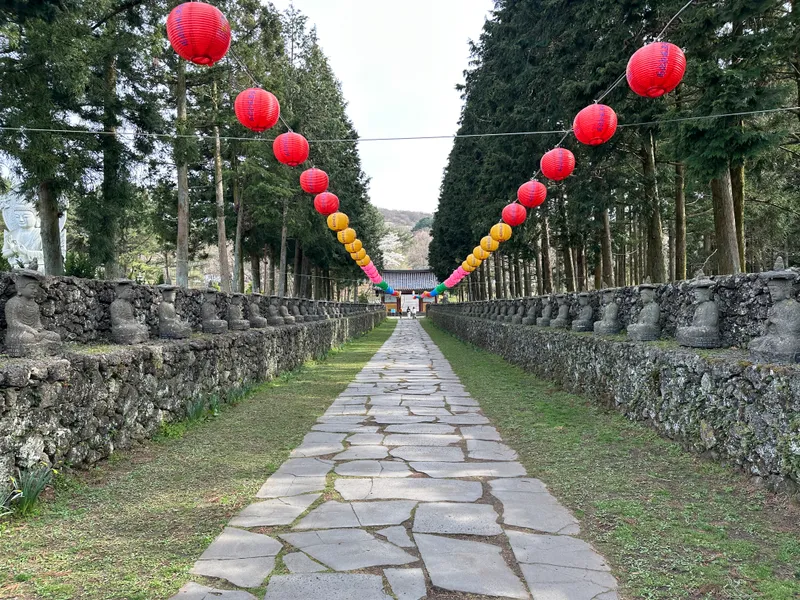 Temple
Gwaneumsa, Hallasan
- Protection & Safety
The head temple of the Jogye Order’s 23rd district, on the slope of Hallasan, founded in the spring of 1909 by the nun Bongnyeogwan.
 Temple
Beophwasa
The site of a large temple that flourished on Jeju from the twelfth to the fifteenth century, burned in the early eighteenth and rebuilt in 1987.
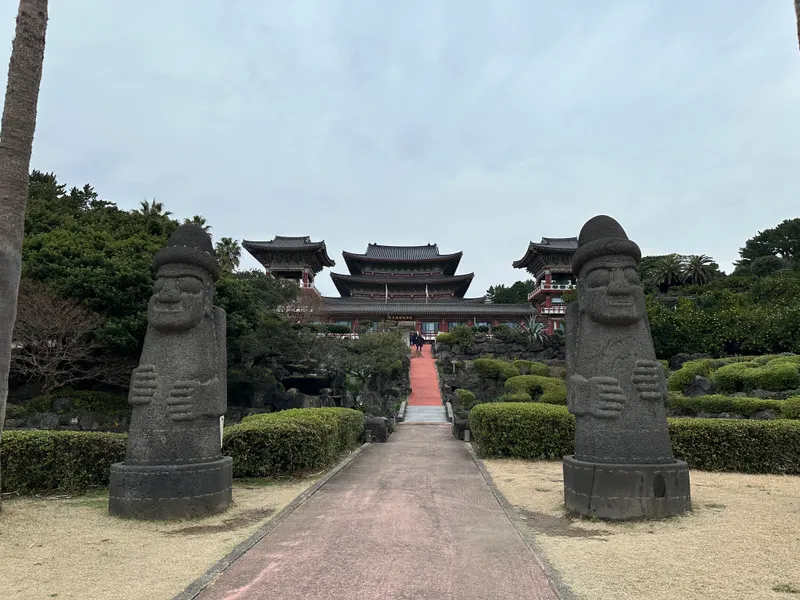 Temple
Yakcheonsa
- Health & Healing
A temple in Daepo-dong, Seogwipo, whose name means the temple where medicinal spring water flows.
 Cave
CaveSanbanggulsa
A Buddha image set in a cave in the south cliff of Sanbangsan, where the water falling from the ceiling is called a goddess’s tears.
No places match your filters