Oonamuchi Shrine
Ongasama
Researched and translated with AI assistance. Every claim is linked to its source, but errors get through, so check the official site for opening times, fees and closures.About
In short
Said to be the oldest shrine in the country, transmitted as the place where Empress Jingu built a shrine and offered swords and halberds when her troops would not assemble.
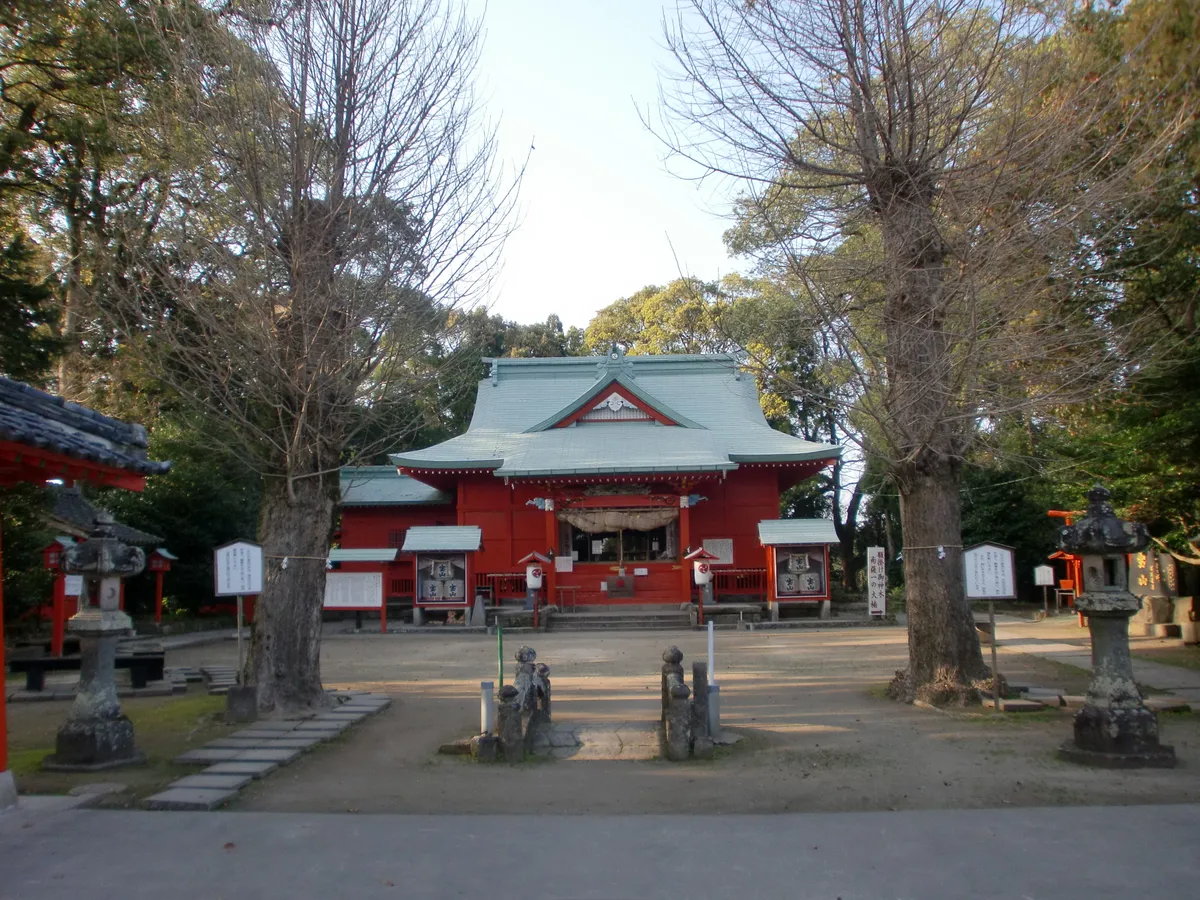
Quick facts
- Address
- 697-3 Iyonaga, Chikuzen, Asakura, Fukuoka
About this place
Oonamuchi Shrine is in Chikuzen, Asakura, Fukuoka, and is said to be the oldest shrine in the country. Its history is dated to the ninth year of the fourteenth sovereign, Emperor Chuai, around the year 200. After Empress Jingu subdued the chieftain Hajiro Kumawashi, who held power around Notori in what is now Akizuki in Asakura, she raised troops for the campaign against Silla; and when they would not assemble and she was at a loss, she built a great shrine — written also as Omiwa — and offered swords and halberds there. In 806 the court granted it sixty-two tribute households, and the Engishiki of 927 lists it as one of the eleven shrines of Chikuzen province. The present main hall was rebuilt in 1687.
Origin and history
Its history is dated to the ninth year of Emperor Chuai, around the year 200. After Empress Jingu subdued the chieftain Hajiro Kumawashi, who held power around Notori in what is now Akizuki, she raised troops for the campaign against Silla; and when they would not assemble and she was at a loss, she built a great shrine — written also as Omiwa — and offered swords and halberds there.
In 806 the court granted it sixty-two tribute households. The Engishiki of 927 lists it as one of the eleven shrines of Chikuzen province.
The present main hall was rebuilt in 1687.
What it is locally associated with
The troops would not assemble
When troops raised for the campaign against Silla would not assemble, Empress Jingu built a great shrine and offered swords and halberds there.
folk traditionSaid to be the oldest shrine in the country
The shrine is said to be the oldest in the country, and the Engishiki of 927 lists it among the eleven shrines of Chikuzen province.
folk traditionA hall rebuilt in 1687
In 806 the court granted it sixty-two tribute households, and the present main hall was rebuilt in 1687.
documented history
This shrine was built to solve a problem. The troops would not assemble and she was at a loss, so a shrine was built and swords and halberds offered. The purpose is stated plainly, and so is the fact that it worked. On this list Tatsuta Taisha in Nara was built exactly as a dream directed during failed harvests and plague, and records that the crops then flourished and the plague withdrew. Shrines that write down the outcome as well as the intention are not common.
This shrine calls itself the oldest shrine in the country. But three claims of a similar shape are already on this list, and two are in this same prefecture. Sumiyoshi Shrine in Hakata says it is the first of the country’s 2,129 Sumiyoshi shrines; Arahito Shrine in Nakagawa says it is the root and the oldest of those to the Sumiyoshi three; and Sumiyoshi Taisha in Osaka is here too. This page does not decide which is oldest. It records that each says so.
The documented treatment is specific. In 806 the court granted it sixty-two tribute households, and the Engishiki of 927 names it among the eleven shrines of Chikuzen. The present hall was rebuilt in 1687.
The history page states neither the enshrined deities nor any benefit, and this page states neither.
Claims and evidence levels 2
- The shrine transmits that Empress Jingu built it and offered swords and halberds when troops for the Silla campaign would not assemble. folk tradition
- In 806 the court granted it sixty-two tribute households, and the Engishiki of 927 lists it among the eleven shrines of Chikuzen province. documented history
Related guides
- How to visit a shrine or temple in JapanThe country-wide basics: purifying at the water basin, the two-bows-two-claps-one-bow form at shrines, and what temples do instead.
- What a "power spot" actually isA modern Japanese coinage, not a traditional religious category. Where the word came from, what it does and does not claim, and why this site uses it anyway.
- Shrine or temple?A shrine is Shinto and a temple is Buddhist, and you can usually tell at the gate. Why the line is cleaner on paper than on the ground, and what a government order in 1868 has to do with it.
- Omamori, ema, omikuji and goshuinThe four things you are most likely to receive, write, draw or be given at a shrine or temple, what each is actually for, and the one of them people most often get wrong.
Sources
- 大己貴神社の歴史 — Oonamuchi Shrine (accessed 2026-08-15)
Last updated:
Similar places
8 places
 Shrine
Homangu Kamado Shrine
- Love & Romance
- Protection & Safety
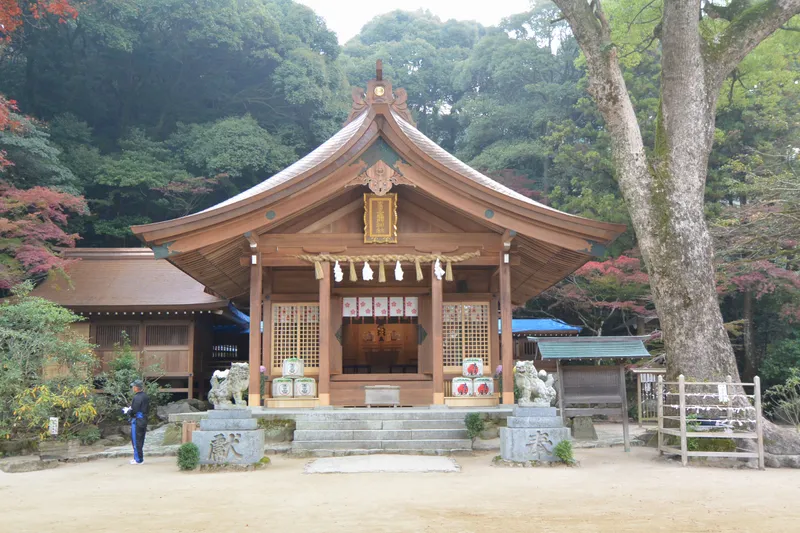
Ritual began on Mount Homan because it stands at the demon gate of the Dazaifu government office, and the shrine derives its matchmaking virtue from the characters in its deity’s own name.
 Shrine
Dazaifu Tenmangu
- Career & Work
- Exams & Study
- Fertility & Children
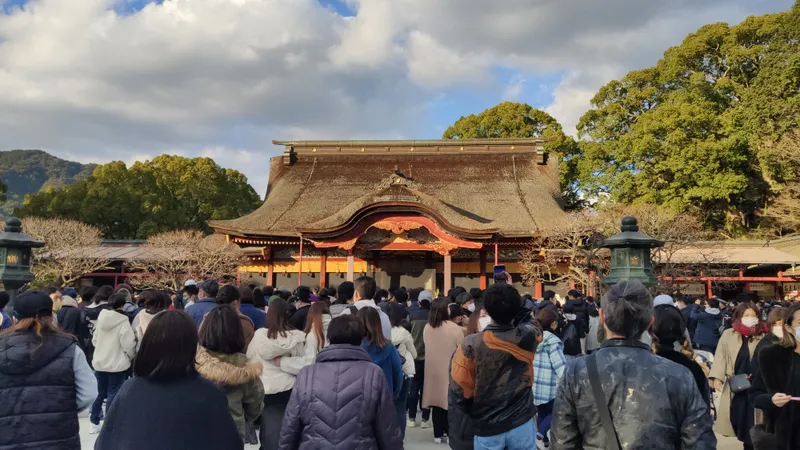
The shrine stands over Sugawara no Michizane’s grave, on the spot where the ox drawing his funeral cart lay down and would not move; prayers here begin with passing an entrance examination.
 Temple
Kanzeon-ji
A temple whose history begins around 670, holding one of the three ordination platforms of the realm and the oldest temple bell designated a national treasure in Japan.
 Shrine
Umi Hachimangu
- Family & Home
- Fertility & Children
Empress Jingu gave birth to Emperor Ojin here, holding on to the branch of a pagoda tree, and the town’s name comes from that delivery.
 Shrine
Suitengu
- Fertility & Children
- Protection & Safety
The head shrine of all the Suitengu in Japan, enshrining Amenominakanushi together with Emperor Antoku, Kenreimon’in and Nii-no-Ama of the Taira, and known for safe birth and protection from drowning.
 Temple
Nanzo-in
A reclining Buddha among the largest in the world in bronze, built as the place to house relics of three Buddhas presented from Myanmar.
 Shrine
Nouso Hachimangu
- Exams & Study
- Family & Home
- Money & Prosperity
It began when Empress Jingu, on her way back from the campaign in the three Han, chose the grove of Nouso as sacred ground; the word people spoke at the parting gave the town of Iizuka its name.
 Shrine
Arahito Shrine
- Career & Work
- Money & Prosperity
A shrine that calls itself the root and the oldest of the two thousand-odd shrines to the three Sumiyoshi deities, revered as the deity of fortune in work.
No places match your filters