Kanzeon-ji
Researched and translated with AI assistance. Every claim is linked to its source, but errors get through, so check the official site for opening times, fees and closures.About
In short
A temple whose history begins around 670, holding one of the three ordination platforms of the realm and the oldest temple bell designated a national treasure in Japan.
Quick facts
- Address
- 5-6-1 Kanzeonji, Dazaifu, Fukuoka
About this place
Kanzeon-ji is in Dazaifu, Fukuoka. The temple gives its beginning as around the year 670 and names Emperor Tenji. The monk Genbo was later dispatched to the temple, and an ordination platform was established here, making it one of the three ordination platforms of the realm. Kukai’s name also appears in its chronology. In Hideyoshi’s time it faced the danger of being abolished, and it came through the Edo period to the present. It preserves the oldest temple bell in Japan designated a national treasure. Its chronology states neither a principal image nor any benefit that may be prayed for.
Origin and history
The temple gives its beginning as around the year 670 and names Emperor Tenji.
The monk Genbo was later dispatched to the temple, and an ordination platform was established here, making it one of the three ordination platforms of the realm. Kukai’s name also appears in its chronology.
In Hideyoshi’s time it faced the danger of being abolished, and it came through the Edo period to the present. It preserves the oldest temple bell in Japan designated a national treasure.
What it is locally associated with
One of the three ordination platforms
An ordination platform was established here, making it one of the three in the realm where the precepts of a formal priest were received.
documented historyThe oldest temple bell in Japan
It preserves the oldest temple bell in Japan designated a national treasure.
documented historyFrom around the year 670
The temple gives its beginning as around 670 and names Emperor Tenji; in Hideyoshi’s time it faced the danger of abolition.
documented history
This temple held one of the places where a monk became a monk. An ordination platform was established here, making it one of only three in the realm where the precepts required to become a formal priest could be received. Todai-ji, on this list, held another; and Toshodai-ji in Nara was opened by Ganjin, who brought those precepts, as a place for people studying them. Three places tied together by a single institution — the qualification of a monk.
The temple also keeps the record of nearly ceasing to exist. In Hideyoshi’s time, the danger of abolition. On this list Nanzo-in in Fukuoka records the Meiji order abolishing its sacred sites, and Saidai-ji in Nara its lapse in the Heian period. The longer a temple lasts, the more likely it is to have nearly stopped.
Of what it preserves, what the temple names is the oldest temple bell in Japan designated a national treasure. Not a building but an instrument for making a sound.
The chronology begins around 670 and names Emperor Tenji. It does not, however, say why the temple was built. Neither a principal image nor a benefit is recorded, and this page states none of them either.
Claims and evidence levels 2
- The temple gives its beginning as around the year 670 and names Emperor Tenji. documented history
- An ordination platform was established here, one of the three ordination platforms of the realm, and the temple preserves the oldest national-treasure temple bell in Japan. documented history
Related guides
- How to visit a shrine or temple in JapanThe country-wide basics: purifying at the water basin, the two-bows-two-claps-one-bow form at shrines, and what temples do instead.
- What a "power spot" actually isA modern Japanese coinage, not a traditional religious category. Where the word came from, what it does and does not claim, and why this site uses it anyway.
- Shrine or temple?A shrine is Shinto and a temple is Buddhist, and you can usually tell at the gate. Why the line is cleaner on paper than on the ground, and what a government order in 1868 has to do with it.
- Omamori, ema, omikuji and goshuinThe four things you are most likely to receive, write, draw or be given at a shrine or temple, what each is actually for, and the one of them people most often get wrong.
Sources
Last updated:
Similar places
8 places
 Shrine
Dazaifu Tenmangu
- Career & Work
- Exams & Study
- Fertility & Children
The shrine stands over Sugawara no Michizane’s grave, on the spot where the ox drawing his funeral cart lay down and would not move; prayers here begin with passing an entrance examination.
 Shrine
Homangu Kamado Shrine
- Love & Romance
- Protection & Safety
Ritual began on Mount Homan because it stands at the demon gate of the Dazaifu government office, and the shrine derives its matchmaking virtue from the characters in its deity’s own name.
 Shrine
Umi Hachimangu
- Family & Home
- Fertility & Children
Empress Jingu gave birth to Emperor Ojin here, holding on to the branch of a pagoda tree, and the town’s name comes from that delivery.
 Shrine
Arahito Shrine
- Career & Work
- Money & Prosperity
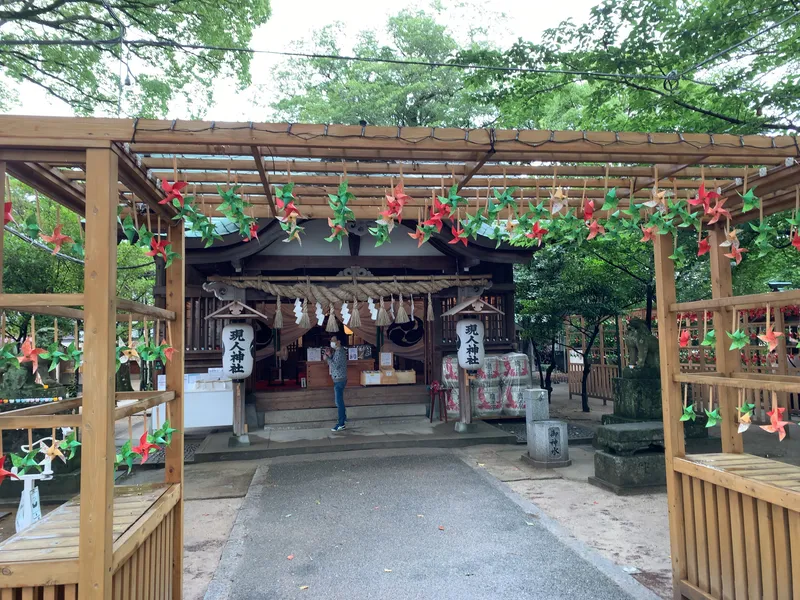
A shrine that calls itself the root and the oldest of the two thousand-odd shrines to the three Sumiyoshi deities, revered as the deity of fortune in work.
 Temple
Nanzo-in
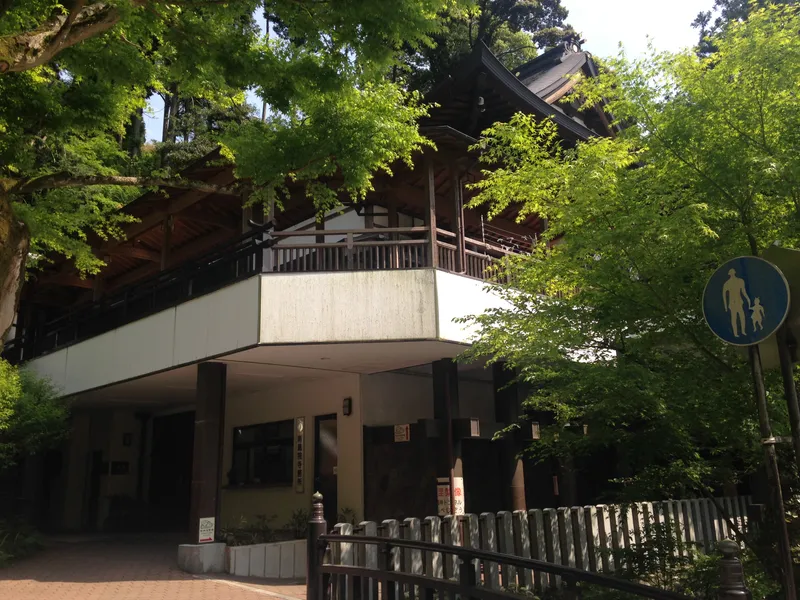
A reclining Buddha among the largest in the world in bronze, built as the place to house relics of three Buddhas presented from Myanmar.
 Shrine
Sumiyoshi Shrine
- Protection & Safety
- Purification
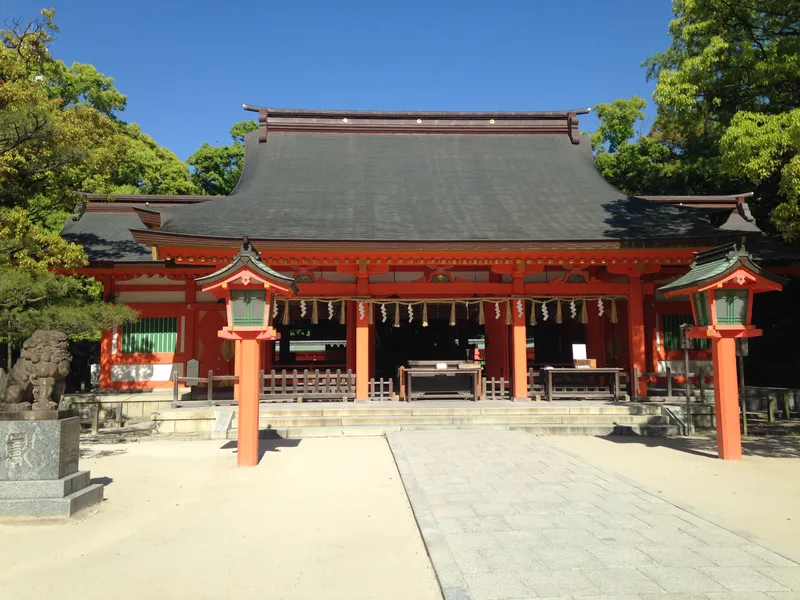
Said to be the first of the 2,129 Sumiyoshi shrines in the country, and revered as a deity who guards against every calamity by means of purity of body and mind.
 Shrine
Tooka Ebisu Shrine
- Family & Home
- Love & Romance
- Money & Prosperity
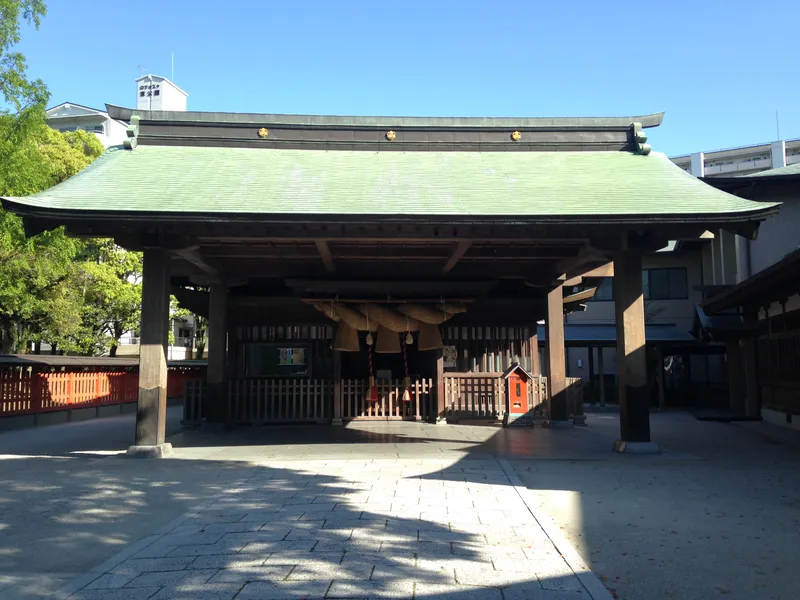
It began when a man walking home from Kashiigu and Hakozakigu picked an image of Ebisu up off the tide line, and a hall was built for it on the tenth day of the first month the following year.
 Shrine
Kego Shrine
- Protection & Safety
A shrine at Tenjin whose name carries the meaning of holding fast what matters against defilement and calamity from outside.
No places match your filters