Konan Jinja
Researched and translated with AI assistance. Every claim is linked to its source, but errors get through, so check the official site for opening times, fees and closures.About
In short
Begins with 220 households — 1,056 people — of farmer-soldiers who landed on 14 July 1889 and reached this ground the next day; those two days are still the shrine’s festival.
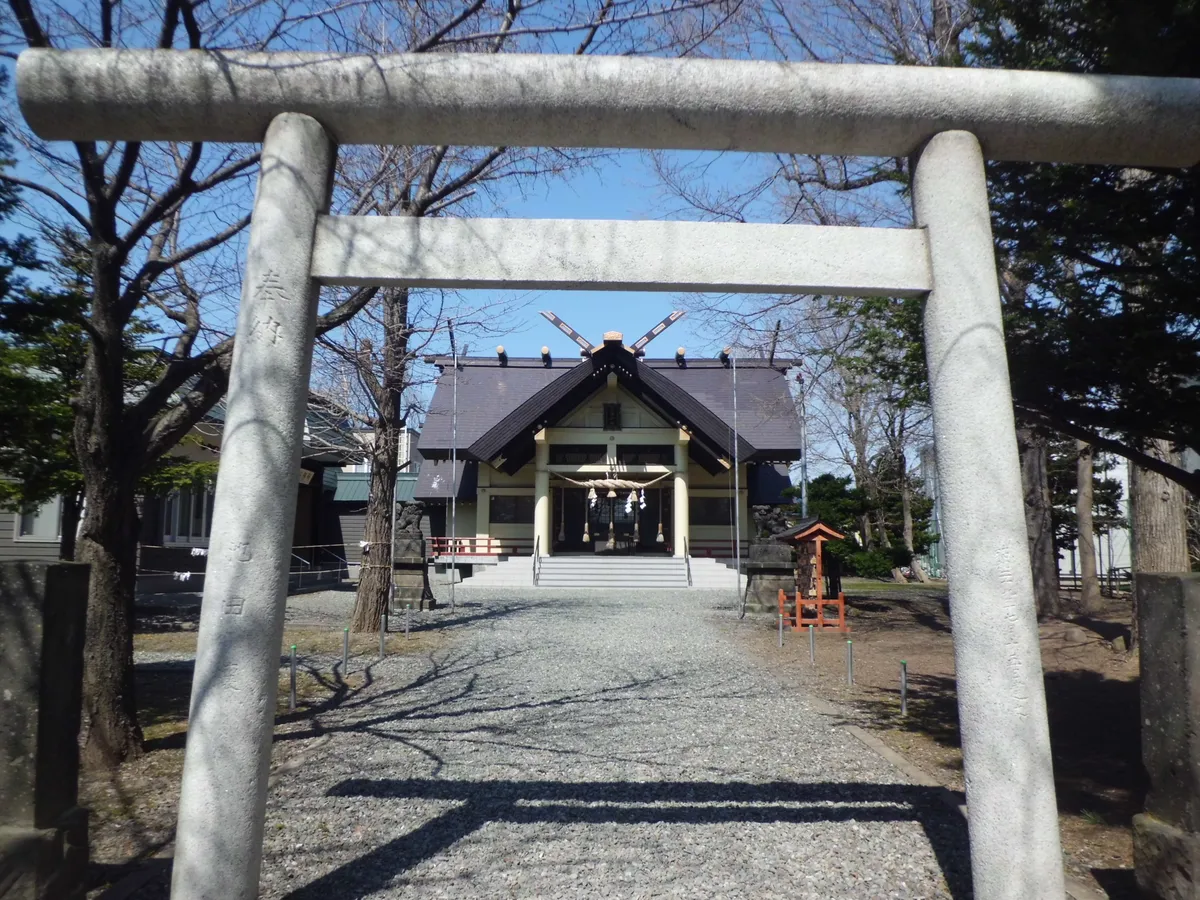
Quick facts
- Address
- 7-6-2-25 Tonden, Kita-ku, Sapporo, Hokkaido
- Spiritual entities
- Amaterasu Ōmikami (天照大御神)
About this place
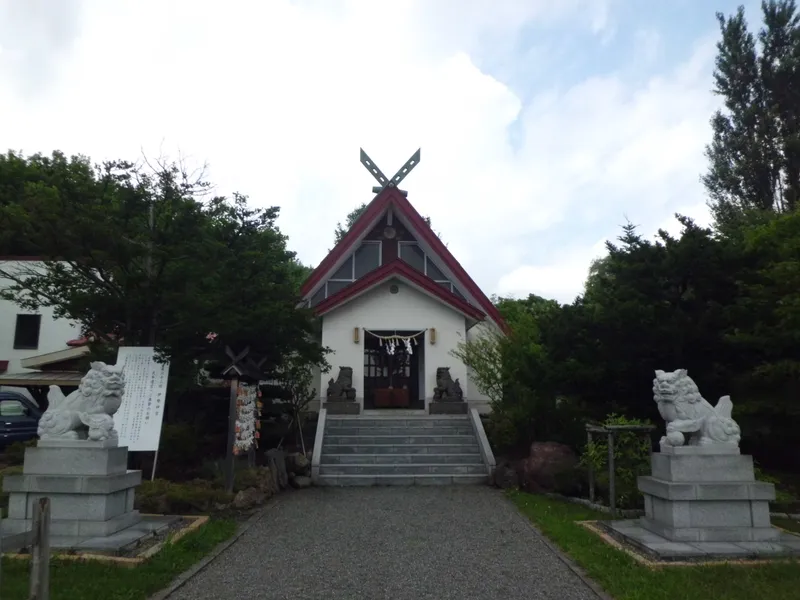
Konan Jinja stands in Kita-ku, Sapporo. Its deities are Amaterasu, Okunitama and Yamato Takeru. On 14 July 1889, 220 households of farmer-soldiers numbering 1,056 people, drawn from several prefectures, came ashore, and on the fifteenth they reached the present site. The soldiers fulfilled two great charges: to give themselves to the front line of northern defence, and to be pioneers in the opening of Hokkaido. Konan Jinja too has come down to the present through two or three rebuildings. The annual festival is 15 July, with the eve festival on 14 July. No benefit that may be prayed for is stated.
Origin and history
On 14 July 1889, 220 households of farmer-soldiers numbering 1,056 people, drawn from several prefectures, came ashore, and on the fifteenth they reached the present site.
The soldiers fulfilled two great charges: to give themselves to the front line of northern defence, and to be pioneers in the opening of Hokkaido.
Konan Jinja too has come down to the present through two or three rebuildings.
What it is locally associated with
220 households, 1,056 people
On 14 July 1889, 220 households of farmer-soldiers numbering 1,056 people, drawn from several prefectures, came ashore, and on the fifteenth they reached the present site.
documented historyThe two days of arrival kept as festival
The eve festival falls on 14 July, the day of the landing, and the annual festival on 15 July, the day they reached this ground.
documented historyTwo great charges
The soldiers fulfilled two great charges: to give themselves to the front line of northern defence, and to be pioneers in the opening of Hokkaido.
documented history
This shrine’s festival days are the days of arrival themselves. They landed on 14 July 1889 and reached this ground on the fifteenth — and the eve festival is 14 July, the annual festival 15 July. The day of the landing became the eve, the day of arrival the main rite. Shrines on this list usually take a founding or a deity’s day as their festival; this one keeps a two-day journey in the calendar.
This is Sapporo’s third farmer-soldier shrine. Kotoni Jinja records 240 households in 1875, Shinkotoni Jinja a company of the first infantry battalion in 1887, and this one 220 households of 1,056 people in 1889. Even how the numbers are given differs: this page counts households and people alike, as Soma Jinja does with its sixty-five households and 203 people.
They did not come from one province. Farmer-soldiers drawn from several prefectures, the shrine says. As Hoshioki Jinja became a village out of Hiroshima, Yamaguchi, Toyama and Aomori, a mixed company holding one shrine is a common shape in this region.
The halls have been replaced repeatedly: it has come down to the present through two or three rebuildings. That the count is left approximate is itself part of the record.
Claims and evidence levels 2
- 220 households of farmer-soldiers, 1,056 people from several prefectures, landed on 14 July 1889 and reached this site the following day. documented history
- The eve festival and annual festival fall on those two dates, 14 and 15 July. documented history
Related guides
- How to visit a shrine or temple in JapanThe country-wide basics: purifying at the water basin, the two-bows-two-claps-one-bow form at shrines, and what temples do instead.
- What a "power spot" actually isA modern Japanese coinage, not a traditional religious category. Where the word came from, what it does and does not claim, and why this site uses it anyway.
- Shrine or temple?A shrine is Shinto and a temple is Buddhist, and you can usually tell at the gate. Why the line is cleaner on paper than on the ground, and what a government order in 1868 has to do with it.
- Omamori, ema, omikuji and goshuinThe four things you are most likely to receive, write, draw or be given at a shrine or temple, what each is actually for, and the one of them people most often get wrong.
Sources
- 江南神社 — 北海道神社庁札幌支部 (accessed 2026-08-16)
Last updated:
Similar places
8 places
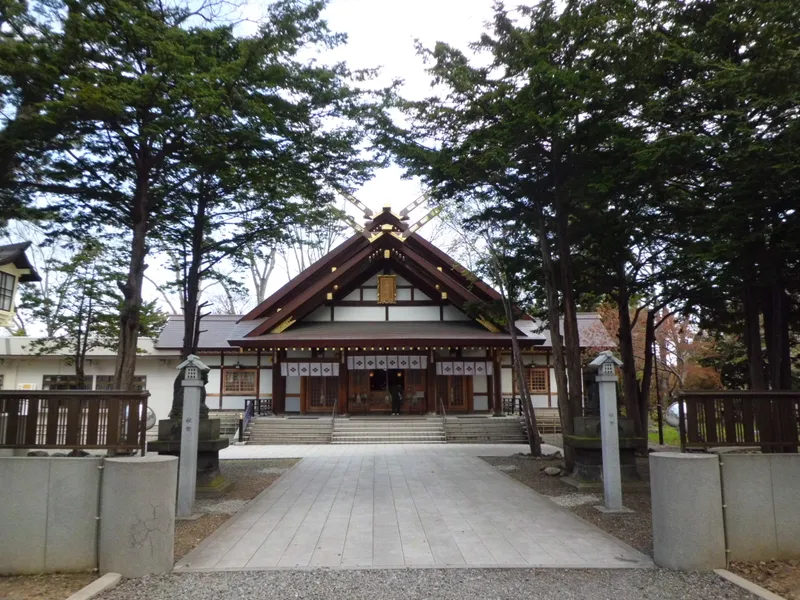 Shrine
Shinkotoni Jinja
Begins in 1887 when a company of army farmer-soldiers, newly settled, read the ground and chose a pure site where a clear spring rose, answering to the four guardian gods.
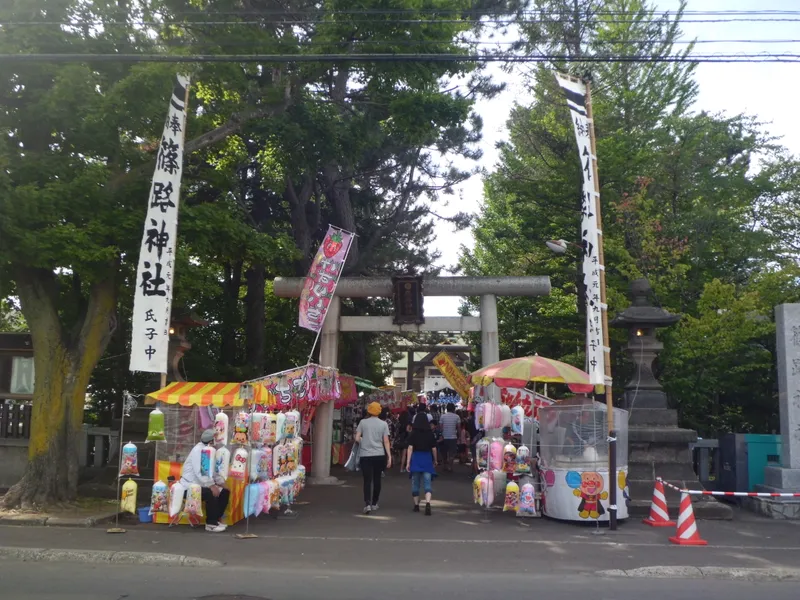 Shrine
Shinoro Jinja
Founded in 1855 as Wakamiya Hachiman under the Tokugawa shogunate’s resident-settler system, which makes it among the oldest shrines in Sapporo.
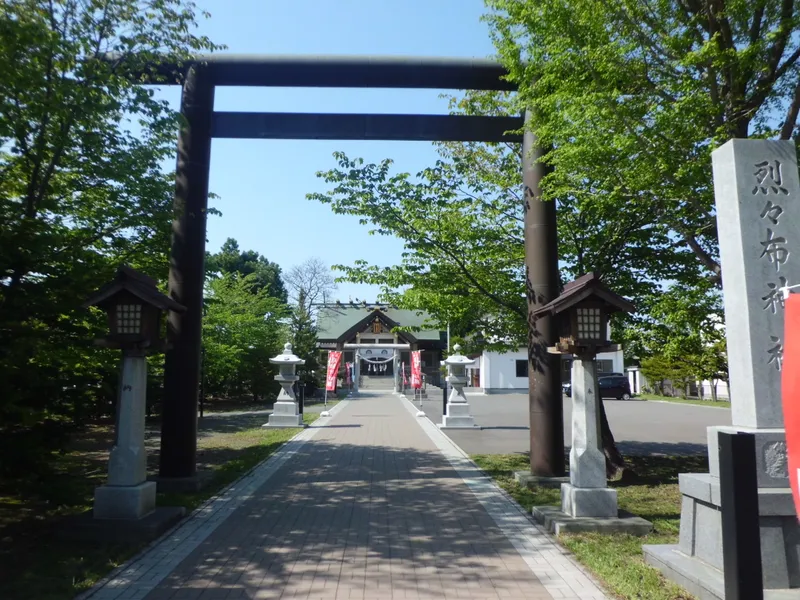 Shrine
Reppupu Jinja
Named after its village, and in 1893 given three divided deities from Miyoshi Jinja in Sapporo.
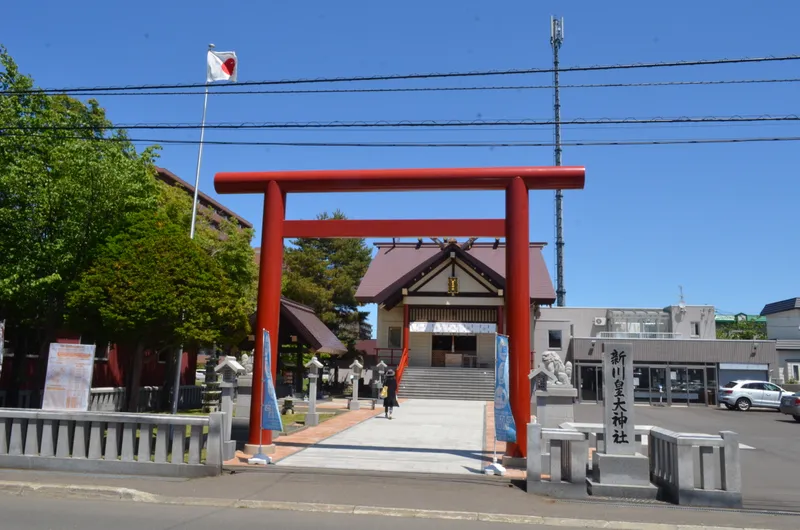 Shrine
Shinkawa Kotai Jinja
A shrine whose history records that seven promoters and thirty-seven parishioners served at its enshrinement rite in 1908.
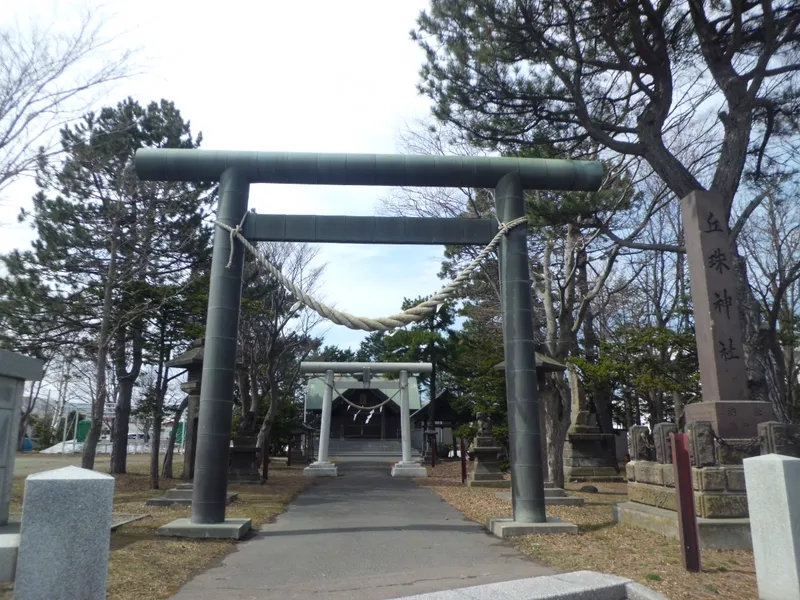 Shrine
Okadama Jinja
Grew out of an Ise confraternity formed by settlers in 1870; a small shrine was raised twelve years later, on 16 September 1882.
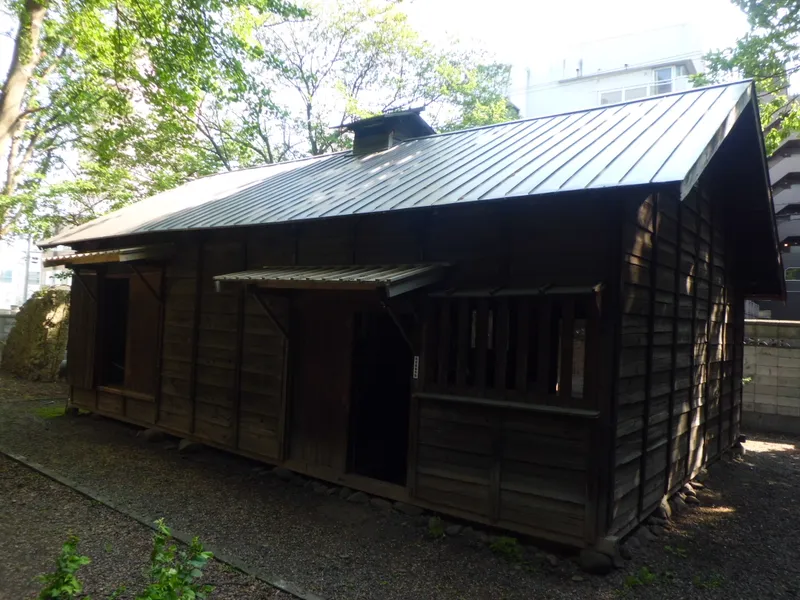 Shrine
Kotoni Jinja
Founded by the 240 households of Hokkaido’s first farmer-soldiers, who gave their old domain’s founder a god’s name and built the shrine under it.
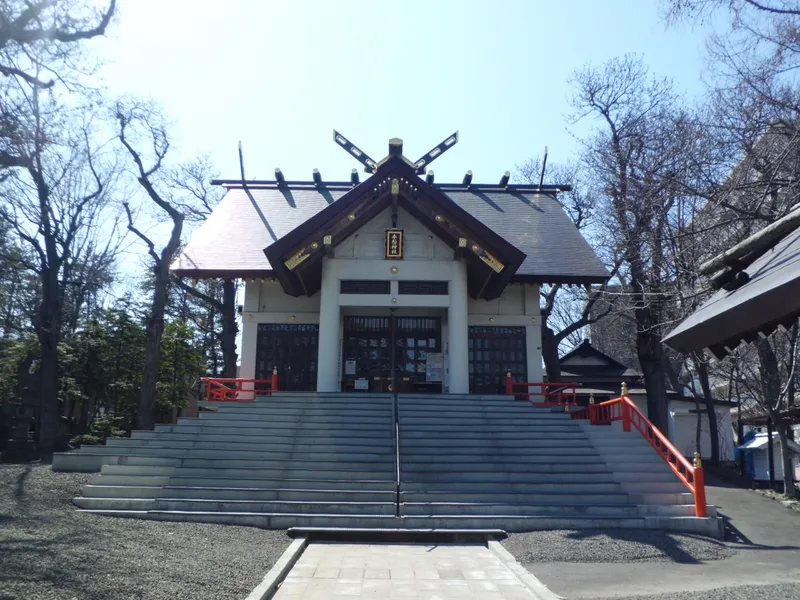 Shrine
Teine Jinja
Began when 250 households, unable to reach Sapporo Jinja in winter or at harvest, petitioned for a place to worship it from a distance — and later became a shrine itself.
 Shrine
Kamiteine Jinja
Begins in 1876 when settlers from the Sendai domain raised a small shrine to Susanoo as their guardian, and keeps a memorial mound for oxen and horses in its precinct.
No places match your filters