Chamseongdan, Manisan
Researched and translated with AI assistance. Every claim is linked to its source, but errors get through, so check the official site for opening times, fees and closures.About
In short
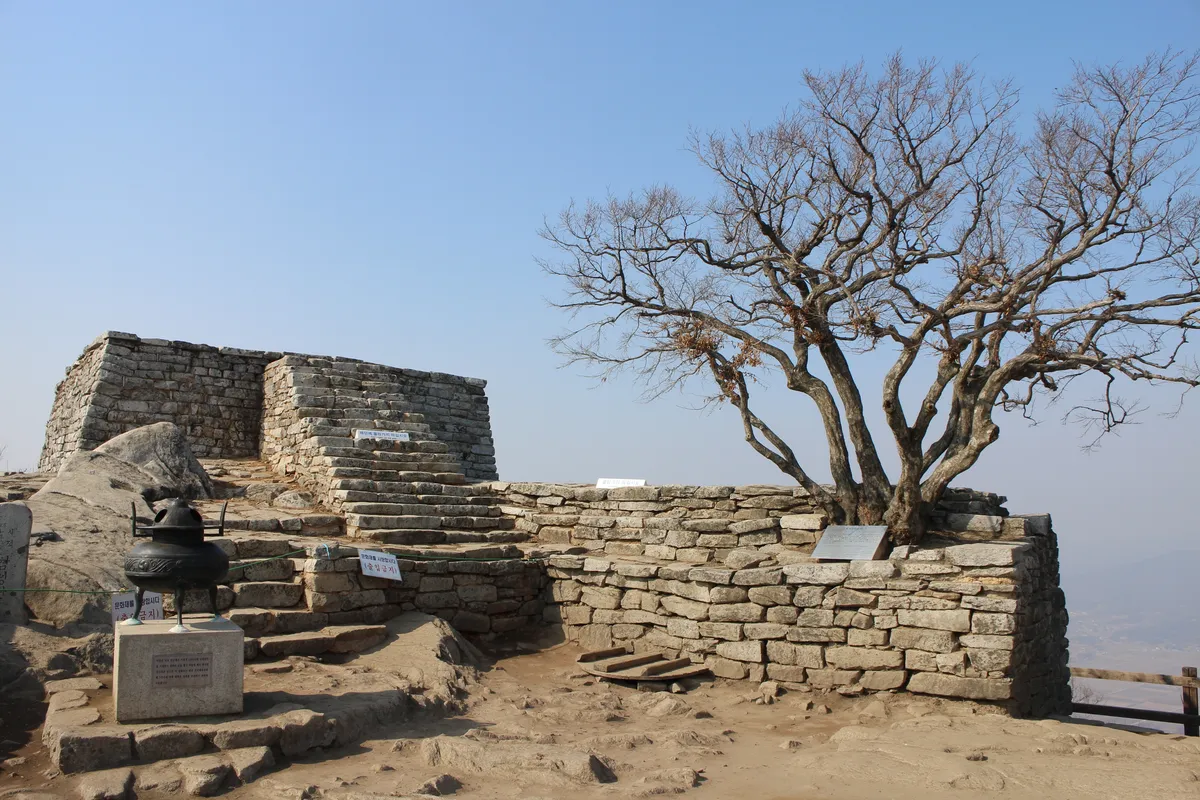
A stone altar said to have been raised by Dangun for rites to heaven, used for state sacrifices under Goryeo and Joseon, and the site of a rite held every National Foundation Day.
Quick facts
- Address
- Manisan, Hwado-myeon, Ganghwa-gun, Incheon
- Spiritual entities
- Dangun (檀君)
About this place
Chamseongdan is a stone altar on the summit of Manisan in Ganghwa. It is transmitted as having been built by Dangun to offer rites to heaven, and is understood as a place where offerings were made to Dangun. Under Goryeo and Joseon it served as an altar of state sacrifice, and that sacrifice was a Daoist rite. It was designated a Historic Site in 1964, and a rite revived in 1955 is still held each year on National Foundation Day.
Origin and history
Chamseongdan is transmitted as an altar Dangun raised in order to offer rites to heaven, and is understood as a place where offerings were made to Dangun. It was designated a Historic Site in 1964.
Under Goryeo and Joseon it was used as an altar of state sacrifice, and the sacrifice performed here was a cho rite, a Daoist observance. It was rebuilt in 1639 and again in 1700, the later work marked with a stele.
What it is locally associated with
Said to have been raised by Dangun
So it is transmitted; it is understood as a place where offerings were made to Dangun.
folk traditionRound below, square above
The lower tier measures sixty cheok around; each side of the upper tier is six cheok six chi.
documented historyA state altar, and a Daoist rite
Used for state sacrifice under Goryeo and Joseon, and the sacrifice was a Daoist cho rite.
documented historyGaecheondaeje
Revived in 1955 with the lighting of the national sports festival flame, and held each 3 October.
local custom
What was asked for at this altar is not something the records say. What survives is who sacrificed here, when, and in what form. The state sacrifices of Goryeo and Joseon were performed here as a Daoist cho rite, and that tradition was revived in 1955 when the flame for the national sports festival was lit here; it continues as Gaecheondaeje, held each year on 3 October.
This site files the place under "miscellaneous" not for want of a better fit but because a rite offered to heaven cannot be transcribed into any of the ordinary categories of request.
Claims and evidence levels 4
- Chamseongdan is transmitted as an altar raised by Dangun to offer rites to heaven, and is understood as a place where offerings were made to Dangun. folk tradition
- Under Goryeo and Joseon it was used as an altar of state sacrifice, and the rite performed here was a cho rite, a Daoist observance. documented history
- It was designated a Historic Site in 1964; it was rebuilt in 1639 and again in 1700, the later work marked with a stele. documented history
- The rite was revived in 1955 in connection with lighting the national sports festival flame and continues as Gaecheondaeje each 3 October. local custom
Related guides
- Musok and gut — Korea’s living folk religionWho the mudang are and what a gut is. And what to do if you walk in on one.
Sources
- 강화 참성단(江華 塹星壇) — 한국민족문화대백과사전 — Academy of Korean Studies (accessed 2026-08-10)
- Chamseongdan (Q16095131) — coordinate location — Wikidata (accessed 2026-08-10)
Last updated:
Similar places
8 places
 Temple
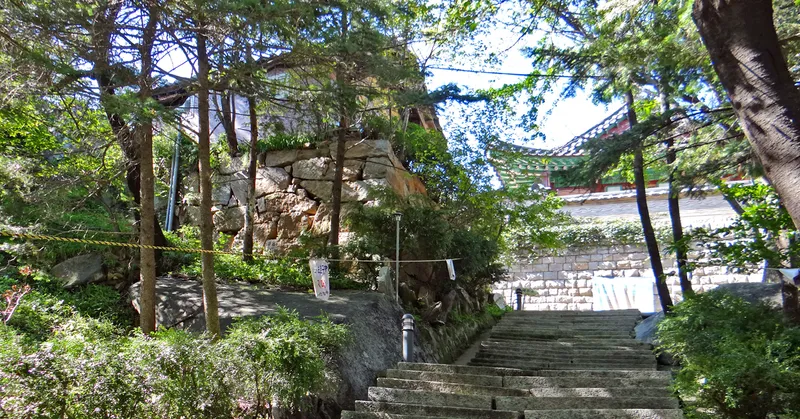
Jeongsusa, Manisan
A temple renamed for clear water someone saw rising to the west of its hall.
 Temple
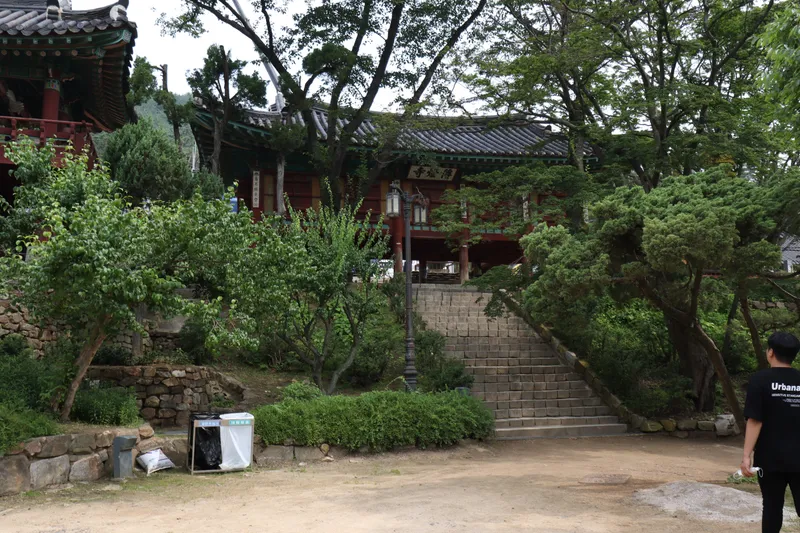
Jeondeungsa, Jeongjoksan
A temple renamed because of a single jade lamp given by a queen consort.
 Temple
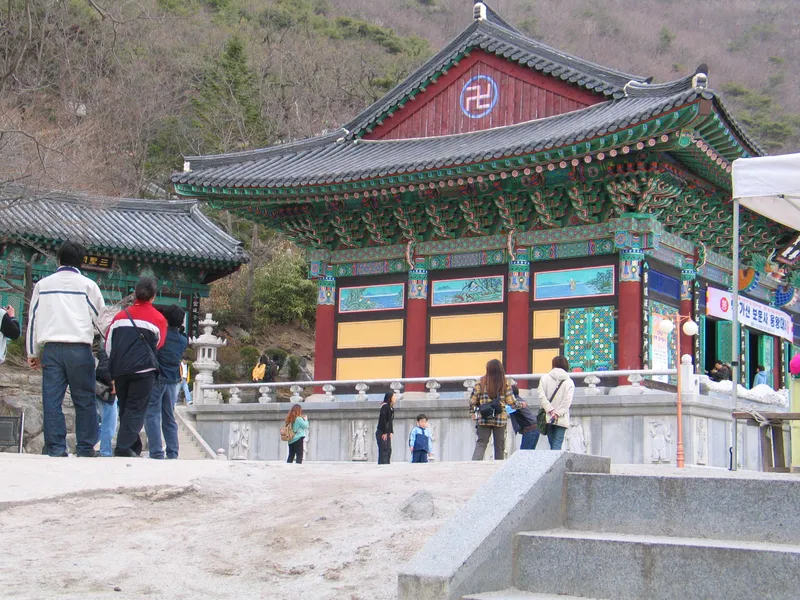
Bomunsa
- Wish Fulfillment
Counted with Boriam and Hongryeonam among Korea’s three great Avalokiteśvara sites, with a stone chamber holding figures said to have come up in a fisherman’s net.
 Temple
Baeknyeonsa, Goryeosan
The temple named for the place a white lotus came down.
 Temple
Beopjusa
- Miscellaneous
Founded in 553 and grown into the centre of Maitreya devotion, holding the only wooden pagoda in Korea.
 Temple
Yonggungsa, Baegunsan
- Fertility & Children
A temple renamed by the Heungseon Daewongun, with two zelkovas reckoned at about 1,300 years.
 Sacred Mountain
Taebaeksan Cheonjedan
- Miscellaneous
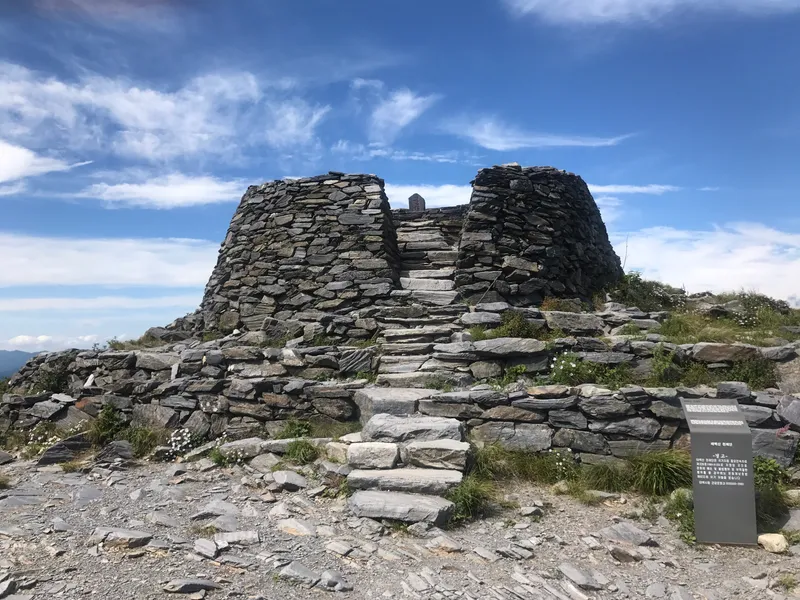
A stone altar for heaven rites on the summit, where a rite is offered each National Foundation Day and where the state has sacrificed since Silla.
 Temple
Jingwansa, Bukhansan
The temple where a Korean flag was found inside a wall.
No places match your filters