Jikjisa, Hwangaksan
Researched and translated with AI assistance. Every claim is linked to its source, but errors get through, so check the official site for opening times, fees and closures.About
In short
Named because Ado, standing at another temple, pointed his finger at this mountain.
Quick facts
- Address
- 95 Jikjisa-gil, Daehang-myeon, Gimcheon-si, Gyeongsangbuk-do
About this place
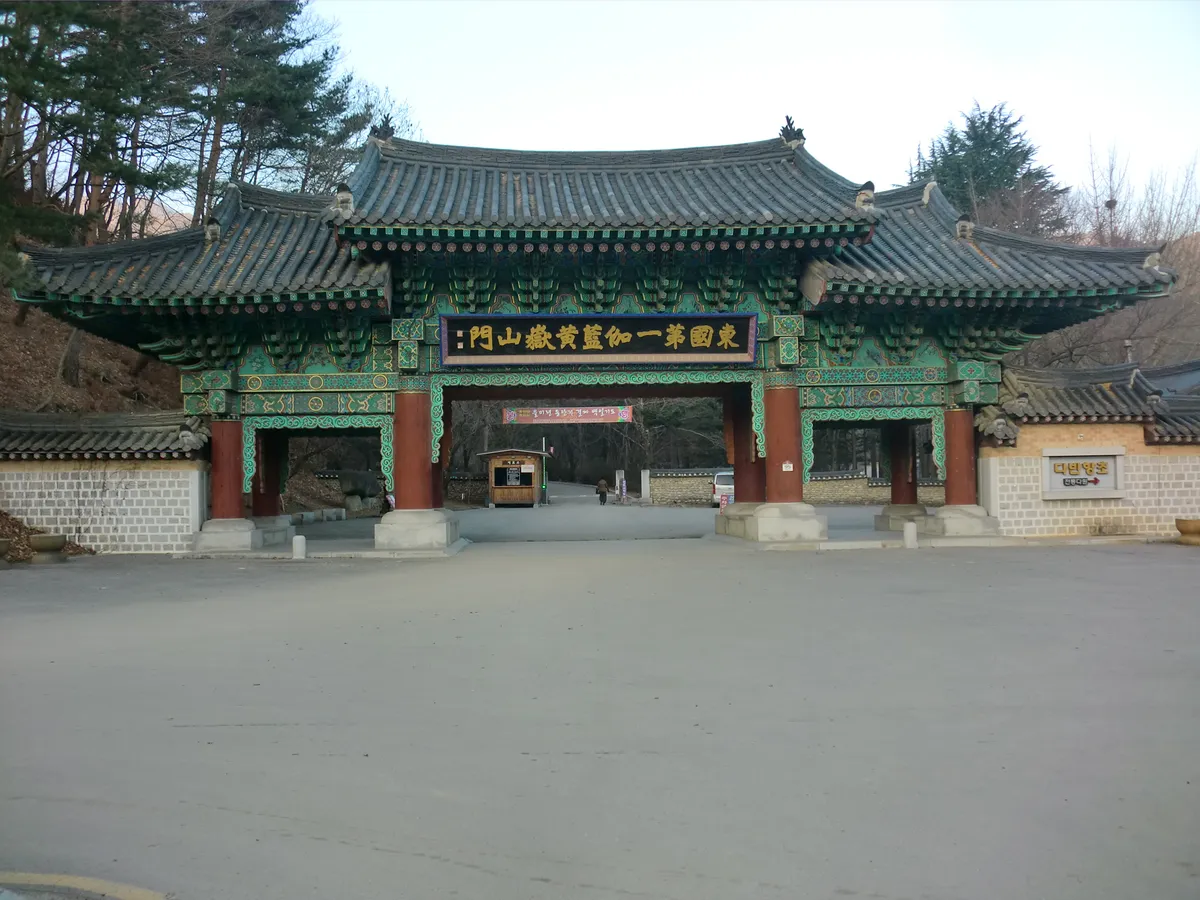
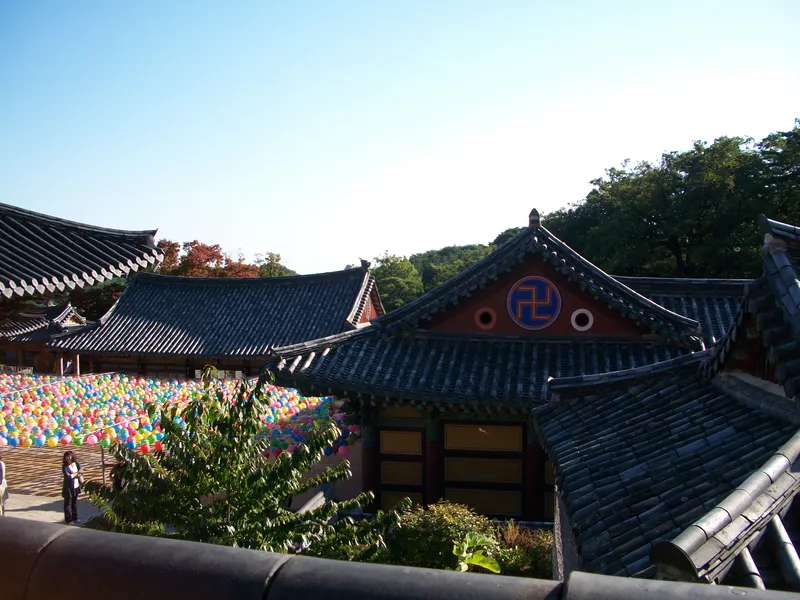
Jikjisa stands on Hwangaksan in Daehang-myeon, Gimcheon-si, Gyeongsangbuk-do, and is the head temple of the eighth district of the Jogye Order. Ado is said to have founded it in 418. Three accounts are given of the name Jikjisa; one of them is that the reverend Ado, having founded Dorisa in Seonsan, pointed his finger at Hwangaksan and said that over there was ground where a great temple would stand, and that it was called Jikjisa for this. By a temple record written in 1681 by Jo Jong-jeo, its scale at that time ran to eight halls, three pavilions, twelve chambers, three repositories and four gates, with three hundred and fifty-two bays in the main rooms alone, and twenty-six attached hermitages. The Samyeonggak enshrines the portrait of Samyeongdang, leader of the monk-soldiers in the Japanese invasions of the 1590s; it was built to keep in mind the purpose of a man who left home for the monastic life at this temple at fifteen and did great things for the country.
Origin and history
Ado is said to have founded Jikjisa in 418.
Three accounts are given of the name Jikjisa. One of them is that the reverend Ado, having founded Dorisa in Seonsan, pointed his finger at Hwangaksan and said that over there was ground where a great temple would stand, and that it was called Jikjisa for this.
By a temple record written in 1681 by Jo Jong-jeo, its scale at that time ran to eight halls, three pavilions, twelve chambers, three repositories and four gates, with three hundred and fifty-two bays in the main rooms alone, and twenty-six attached hermitages.
The Samyeonggak enshrines the portrait of Samyeongdang, leader of the monk-soldiers in the Japanese invasions of the 1590s. It was built to keep in mind the purpose of a man who left home for the monastic life at this temple at fifteen and did great things for the country.
What it is locally associated with
Over there a great temple will stand
One account says the reverend Ado, having founded Dorisa in Seonsan, pointed at Hwangaksan and said that over there was ground where a great temple would stand, and that the name came from this.
folk traditionThree hundred and fifty-two bays
A record of 1681 by Jo Jong-jeo gives eight halls, three pavilions, twelve chambers, three repositories and four gates, with three hundred and fifty-two bays in the main rooms alone and twenty-six attached hermitages.
documented historyWhere Samyeongdang left home
The Samyeonggak enshrines the portrait of Samyeongdang, who left home for the monastic life at this temple at fifteen and led the monk-soldiers in the 1590s.
documented history
This temple’s name came from a finger. By one of the three accounts handed down, the reverend Ado, after founding Dorisa in Seonsan, pointed at Hwangaksan and said that over there was ground where a great temple would stand — and so it became Jikjisa, pointing straight at.
The place that finger was pointing from is also on this site. Dorisa in Gumi is the temple Ado founded, and it is handed down as the first temple in Silla. The two temples’ records point at each other.
Gyeongsang’s old temples narrow to a few founders’ names. This one and Dorisa are Ado; Buseoksa in Yeongju and Beomeosa in Busan are Uisang.
The scale survives as figures. The 1681 record gives eight halls, three pavilions, twelve chambers, three repositories and four gates, three hundred and fifty-two bays in the main rooms alone, and twenty-six attached hermitages. Samyeongdang left home for the monastic life here at fifteen, and the Samyeonggak was built to keep his purpose in mind.
Claims and evidence levels 2
- One of three accounts of the name says Ado, having founded Dorisa, pointed at Hwangaksan and named the ground where a great temple would stand. folk tradition
- A temple record of 1681 gives the site at three hundred and fifty-two bays in the main rooms alone, with twenty-six attached hermitages. documented history
Related guides
- How to visit a Korean templeHands together and hands folded, how the bows work, and what to do at the threshold of a hall. Starting with what is different from visiting a Japanese shrine.
- The small hall behind the main one — sansingak and samseonggakUphill from the main hall of a Korean temple stands a smaller one, and inside it an old man with a tiger. This is where the indigenous religion sits, inside the Buddhist institution.
- Templestay — a night at a templeA programme that puts you inside a temple’s own timetable for a day or two. What you do, which type to book, and what to be ready for.
- Prayer sites and the one wishThe three great Gwaneum sites, the five relic halls, and the crowds before the entrance exam. Where the saying about one wish comes from, and where the record stops.
Sources
- 황악산 직지사(黃嶽山 直指寺) — 한국민족문화대백과사전 (accessed 2026-08-16)
Last updated:
Similar places
8 places
 Temple
Haeinsa
- Protection & Safety
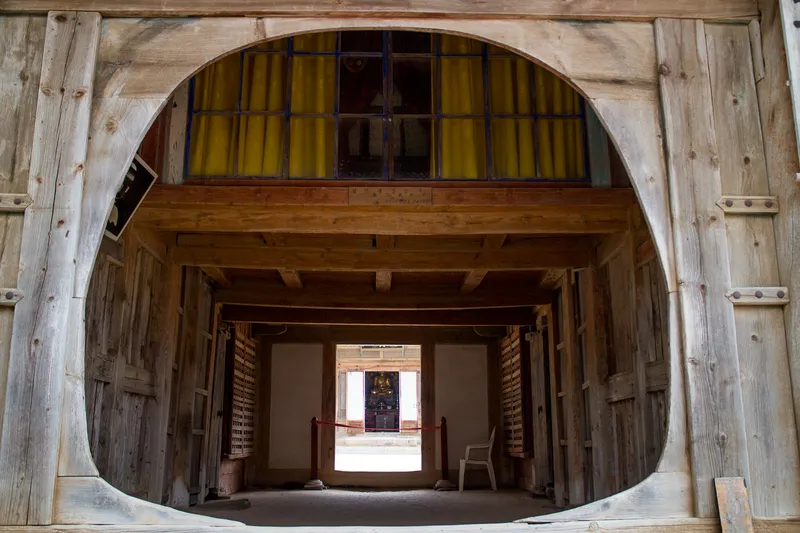
The temple holding the Tripitaka Koreana, cut out of a national wish to repel the Mongols, and the hall that has kept it.
 Temple
Dorisa, Naengsan
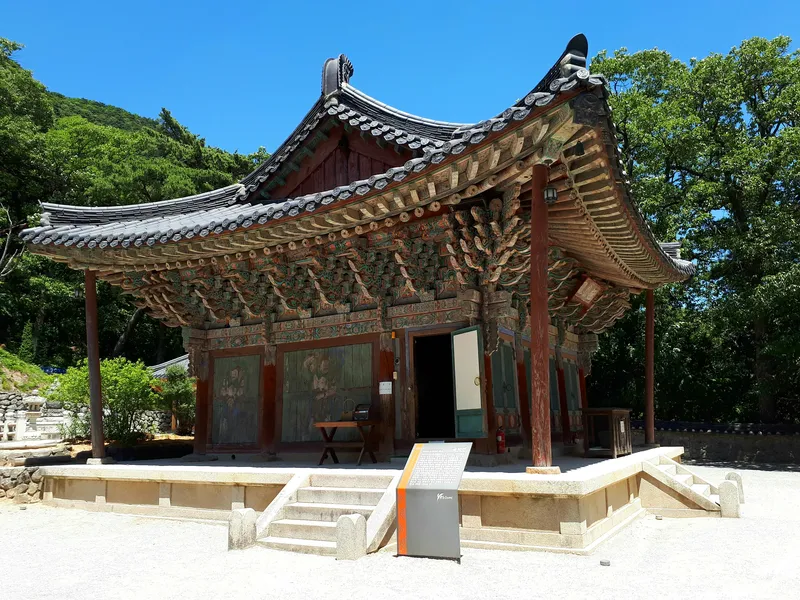
Founded, the account says, because flowers were in full bloom here in winter — and handed down as the first temple in Silla.
 Temple
Beopjusa
- Miscellaneous
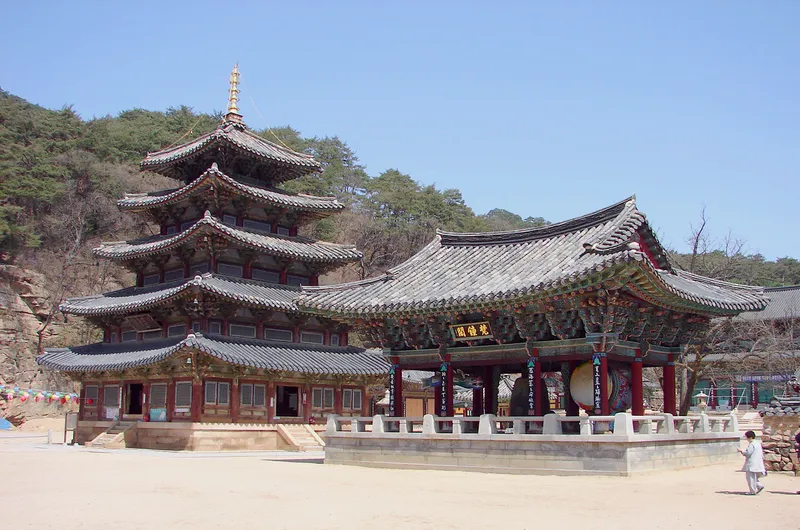
Founded in 553 and grown into the centre of Maitreya devotion, holding the only wooden pagoda in Korea.
 Temple
Pagyesa, Palgongsan
The temple where a king’s robe came out of an Avalokitesvara statue.
 Temple
Buinsa, Palgongsan
Where the woodblocks of the first Tripitaka, brought here for safety, were entirely destroyed in the Mongol invasion of 1232.
 Temple
Eunjeoksa, Apsan
Built at the cave where Wang Geon hid for three days, and named with the characters for hiding and for traces.
 Temple
Yongyeonsa, Biseulsan
Where a portion of Tongdosa’s Buddha relics, evacuated during the Imjin War, was taken in on the journey back.
 Temple
Donghwasa
A temple on Palgongsan founded by Simji, renamed Donghwasa because paulownia bloomed all around it.
No places match your filters