Hwaeomsa
Jirisan Hwaeomsa · Gakhwangjeon
Researched and translated with AI assistance. Every claim is linked to its source, but errors get through, so check the official site for opening times, fees and closures.About
In short
A temple whose great hall took the name Gakhwangjeon after King Sukjong sent down a board he had written himself.
Quick facts
- Address
- 539 Hwaeomsa-ro, Masan-myeon, Gurye-gun, Jeollanam-do
About this place
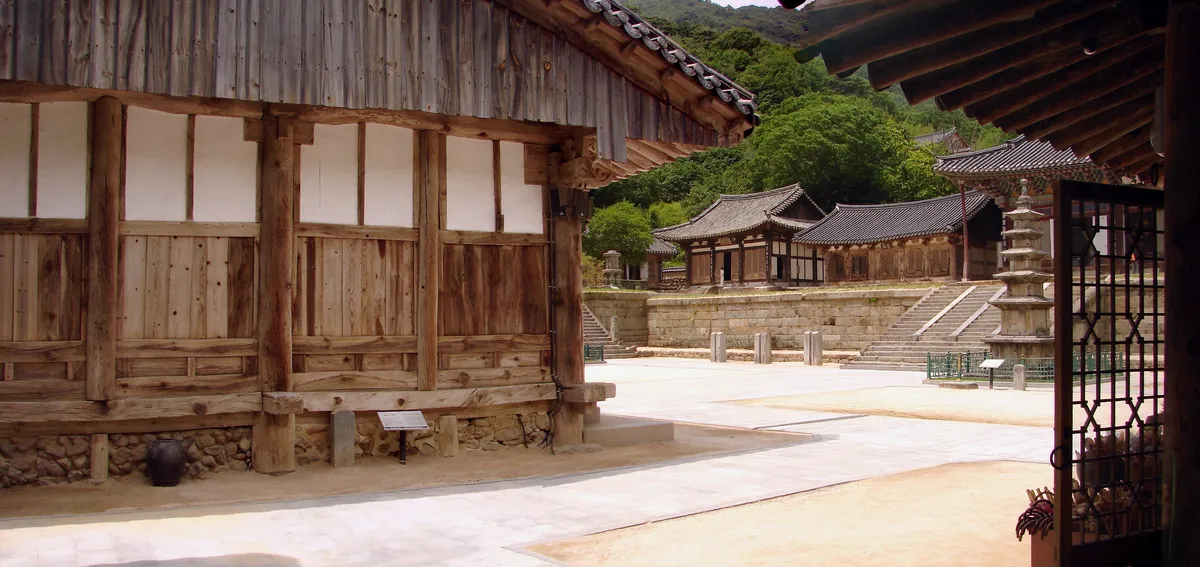
Hwaeomsa stands on Jirisan in Masan, Gurye, South Jeolla. Its Gakhwangjeon is a two-storey bracketed hall of seven bays by five. Rebuilding began in 1630 under Master Byeogam and was completed in 1702, when the hall rose again as a two-storey structure of seven bays. On its completion King Sukjong sent down a name board he had written himself, and from then on it was called Gakhwangbojeon. It was designated a National Treasure on 20 December 1962.
Origin and history
The Encyclopedia of Korean Culture describes the Gakhwangjeon of Hwaeomsa in Masan, Gurye, as a temple building rebuilt in the later Joseon period, a two-storey bracketed hall seven bays across and five deep.
After it was destroyed in the Imjin War, Master Byeogam began rebuilding in 1630, the eighth year of King Injo, and the hall was completed in 1702, the twenty-eighth year of King Sukjong, as a two-storey structure of seven bays.
On its completion King Sukjong sent down a board he had written himself, reading Gakhwangbojeon, and from then on the hall was called by that name. It was designated a National Treasure on 20 December 1962.
What it is locally associated with
A board in the king’s hand
On completion King Sukjong sent down a board he had written himself, reading Gakhwangbojeon, and the hall took that name.
documented historySeventy-two years of rebuilding
Master Byeogam began the work in 1630; the hall was finished in 1702 as a two-storey structure of seven bays.
documented historySeven bays, two storeys
A bracketed two-storey hall, seven bays across and five deep. Designated a National Treasure on 20 December 1962.
documented history
The surest story this temple keeps is how its hall changed its name. It was originally the Jangyukjeon. After the Imjin War brought it down, rebuilding began in 1630 and finished in 1702, and the king then sent a board in his own hand, after which it was the Gakhwangbojeon.
Several accounts of the founding circulate, but what the state record confirms with dates is this rebuilding and this royal name. So the page begins with the building rather than the legend.
What people ask for here does not appear in the record, so no category of prayer is attached.
Claims and evidence levels 4
- The Gakhwangjeon of Hwaeomsa is a two-storey bracketed hall seven bays across and five deep, rebuilt in the later Joseon period. documented history
- Master Byeogam began rebuilding it in 1630, and the hall was completed in 1702 as a two-storey structure of seven bays. documented history
- On its completion King Sukjong sent down a name board he had written himself, reading Gakhwangbojeon, and the hall was called by that name thereafter. documented history
- It was designated a National Treasure on 20 December 1962. documented history
Related guides
- How to visit a Korean templeHands together and hands folded, how the bows work, and what to do at the threshold of a hall. Starting with what is different from visiting a Japanese shrine.
- The small hall behind the main one — sansingak and samseonggakUphill from the main hall of a Korean temple stands a smaller one, and inside it an old man with a tiger. This is where the indigenous religion sits, inside the Buddhist institution.
- Templestay — a night at a templeA programme that puts you inside a temple’s own timetable for a day or two. What you do, which type to book, and what to be ready for.
- Prayer sites and the one wishThe three great Gwaneum sites, the five relic halls, and the crowds before the entrance exam. Where the saying about one wish comes from, and where the record stops.
Sources
- 구례 화엄사 각황전(求禮 華嚴寺 覺皇殿) — 한국민족문화대백과사전 — Academy of Korean Studies (accessed 2026-08-12)
Last updated:
Similar places
8 places
 Sacred Mountain
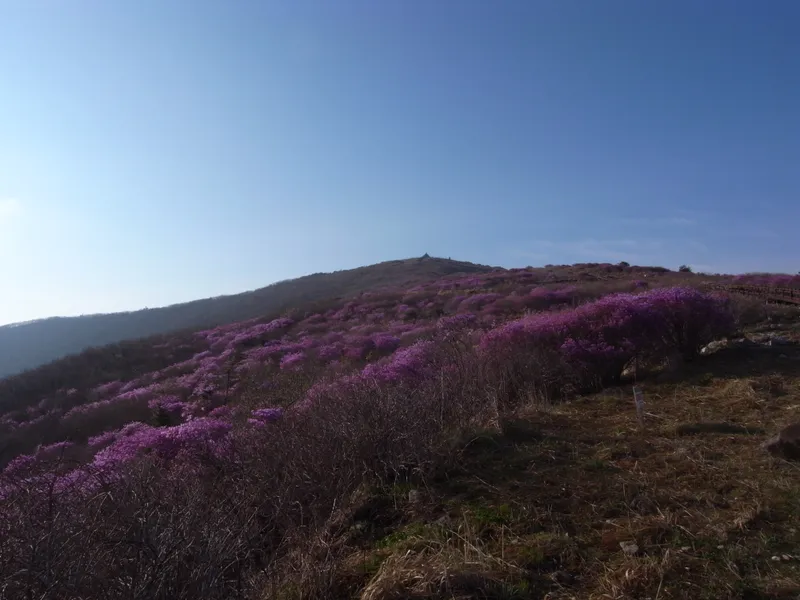
Nogodan
The peak where rites to the Holy Mother of Jirisan began, before the rite moved to Namaksa and later to a hall beside Hwaeomsa.
 Temple
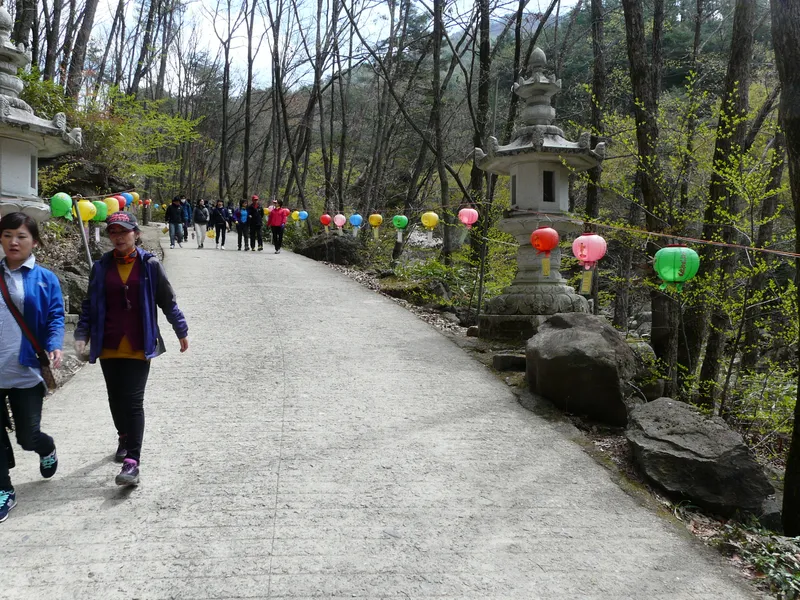
Ssanggyesa, Jirisan
The ground a tiger led them to, after a search for a place with snow and flowers at once.
 Temple
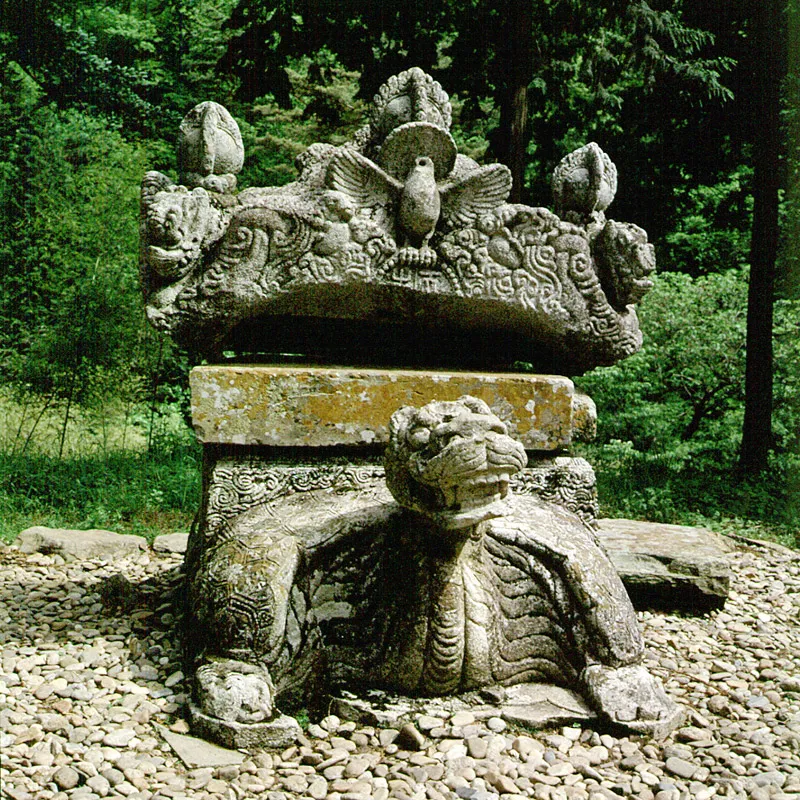
Taeansa, Dongnisan
The central temple of the Dongni school, one of the Nine Mountain Seon schools.
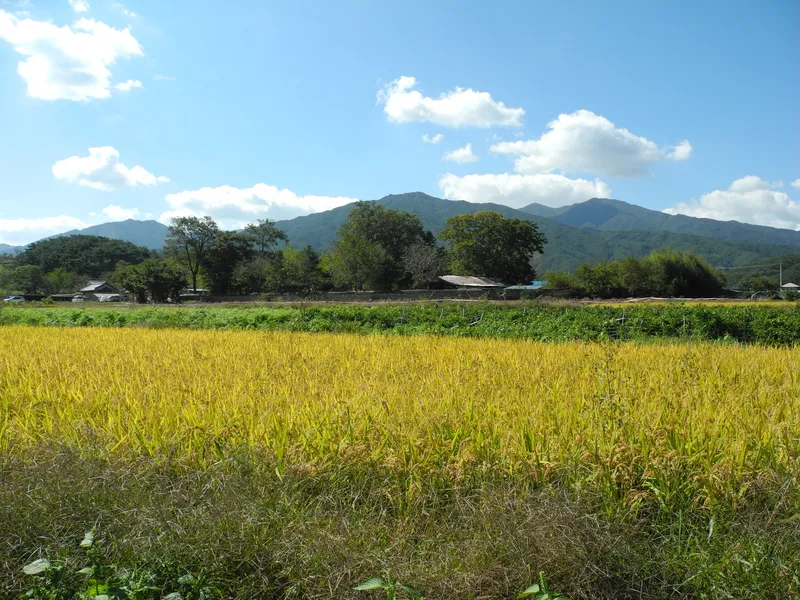 Temple
Silsangsa, Jirisan
Founded at the moment the Silsang school, one of the Nine Mountain Seon schools, was opened.
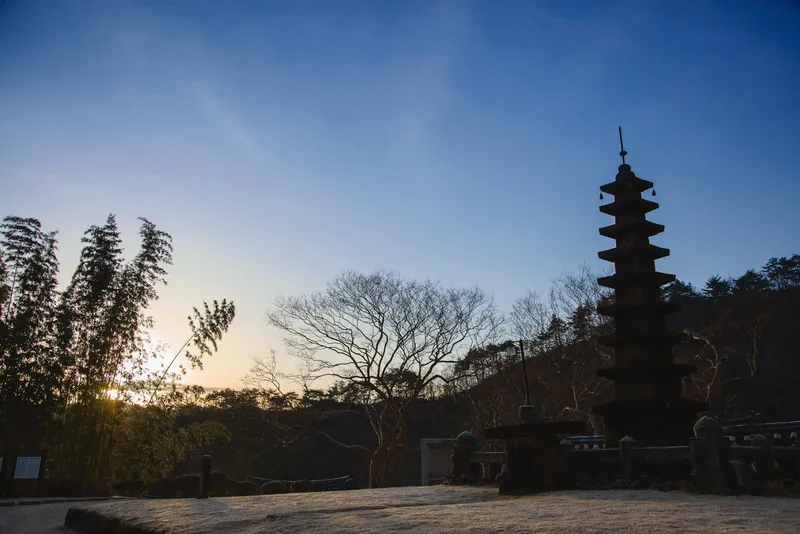 Temple
Daewonsa, Jirisan
Counted among the country’s leading meditation halls for women in the monastic life.
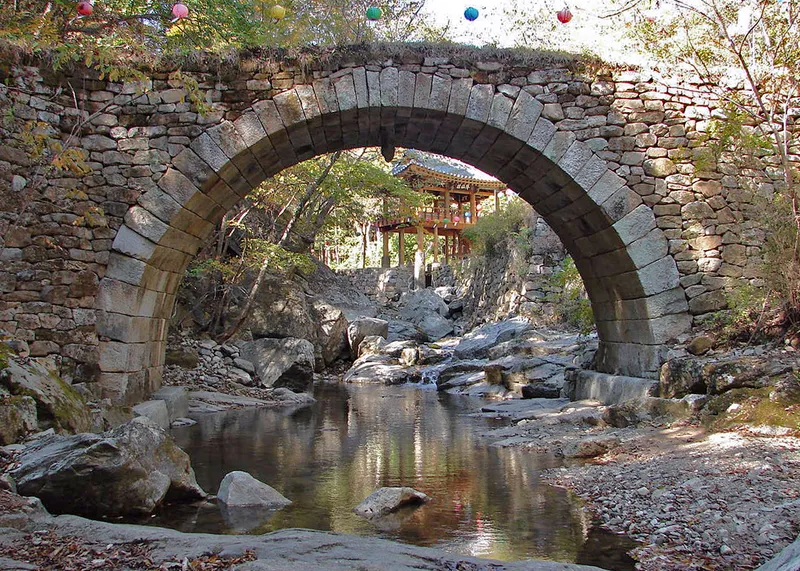 Temple
Seonamsa, Jogyesan
A temple whose record sets two founding accounts side by side and says which it trusts more.
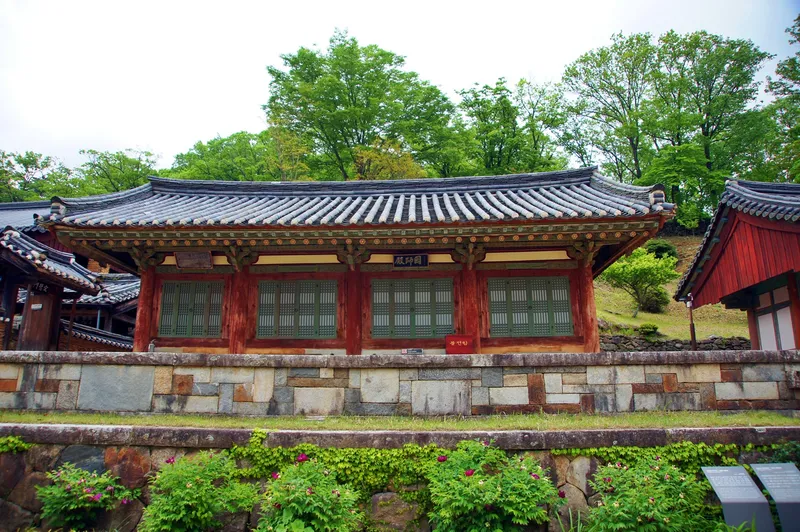 Temple
Songgwangsa
The temple called the Sangha Jewel because so many great masters came from it, completing the trio with Tongdosa and Haeinsa.
 Temple
Tapsa, Maisan
- Protection & Safety
A temple among stone towers raised by one man over a lifetime, of which about eighty of the original hundred and eight still stand.
No places match your filters