To-ji
Kyoogokoku-ji
Researched and translated with AI assistance. Every claim is linked to its source, but errors get through, so check the official site for opening times, fees and closures.About
In short
A state temple raised with the capital itself, entrusted by Emperor Saga to Kukai — and Japan’s first esoteric Buddhist temple was born from it.
Quick facts
- Address
- 1 Kujocho, Minami-ku, Kyoto
About this place
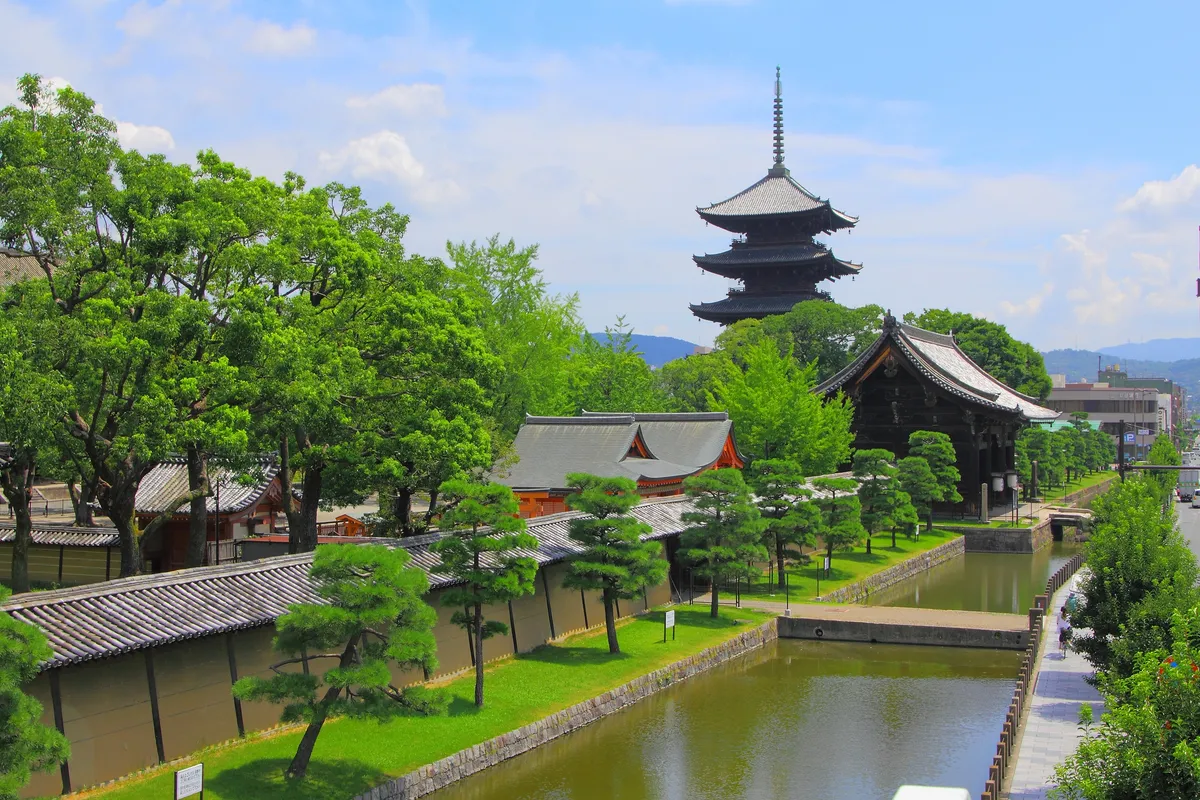
To-ji, properly Kyoogokoku-ji, stands in Minami, Kyoto. It was built with the move of the capital to Heian as a kanji — a state temple. Emperor Saga, who succeeded Emperor Kanmu, entrusted that state temple to Kobo Daishi Kukai, newly returned from Tang China where he had studied esoteric Buddhism. With that, Japan’s first esoteric Buddhist temple came into being. Roughly twelve hundred years after its founding, it was inscribed as World Heritage in 1994.
Origin and history
To-ji was built with the move of the capital to Heian as a kanji — that is, a state temple.
Emperor Saga, who succeeded Emperor Kanmu, entrusted that state temple to Kobo Daishi Kukai, who had returned from Tang China after studying the new Buddhism, the esoteric teaching. With that, Japan’s first esoteric Buddhist temple came into being.
Roughly twelve hundred years after its founding, it was inscribed as World Heritage in 1994.
What it is locally associated with
Japan’s first esoteric temple
Emperor Saga entrusted it to Kukai, returned from Tang China with esoteric Buddhism, and the temple records that Japan’s first esoteric temple came into being there.
documented historyA state temple, built with the capital
To-ji was raised with the move of the capital to Heian as a kanji — a state temple.
documented historyTwelve hundred years on
Roughly twelve hundred years after its founding, it was inscribed as World Heritage in 1994.
documented history
The hinge of this temple is a handover. To-ji began as a state temple — built by the government, put up at the same time as the capital itself. A public institution.
Emperor Saga gave that state temple to one man just back from abroad: Kukai, returned from Tang China with esoteric Buddhism. The temple’s own words are that Japan’s first esoteric temple came into being there. A government building handed to a returning student, and a school of Buddhism starting from it.
About twelve hundred years have passed, and it was inscribed as World Heritage in 1994. No category of prayer is attached: what the temple records is this history.
Claims and evidence levels 3
- To-ji was built with the move of the capital to Heian as a state temple. documented history
- Emperor Saga entrusted it to Kobo Daishi Kukai, returned from Tang China with esoteric Buddhism, and the temple records that Japan’s first esoteric Buddhist temple came into being there. documented history
- It was inscribed as World Heritage in 1994, about twelve hundred years after its founding. documented history
Related guides
- How to visit a shrine or temple in JapanThe country-wide basics: purifying at the water basin, the two-bows-two-claps-one-bow form at shrines, and what temples do instead.
- What a "power spot" actually isA modern Japanese coinage, not a traditional religious category. Where the word came from, what it does and does not claim, and why this site uses it anyway.
- Shrine or temple?A shrine is Shinto and a temple is Buddhist, and you can usually tell at the gate. Why the line is cleaner on paper than on the ground, and what a government order in 1868 has to do with it.
- Omamori, ema, omikuji and goshuinThe four things you are most likely to receive, write, draw or be given at a shrine or temple, what each is actually for, and the one of them people most often get wrong.
Sources
- 東寺について — 東寺 — To-ji (accessed 2026-08-13)
Last updated:
Similar places
8 places
 Temple
Sanjusangendo
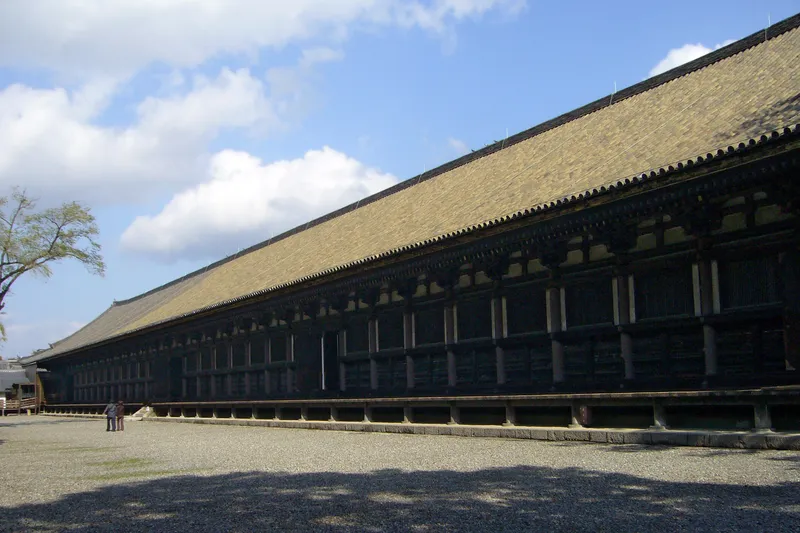
A hall founded inside the detached palace of the retired Emperor Go-Shirakawa, holding a thousand and one standing images of Kannon.
 Temple
Mibu-dera
- Protection & Safety
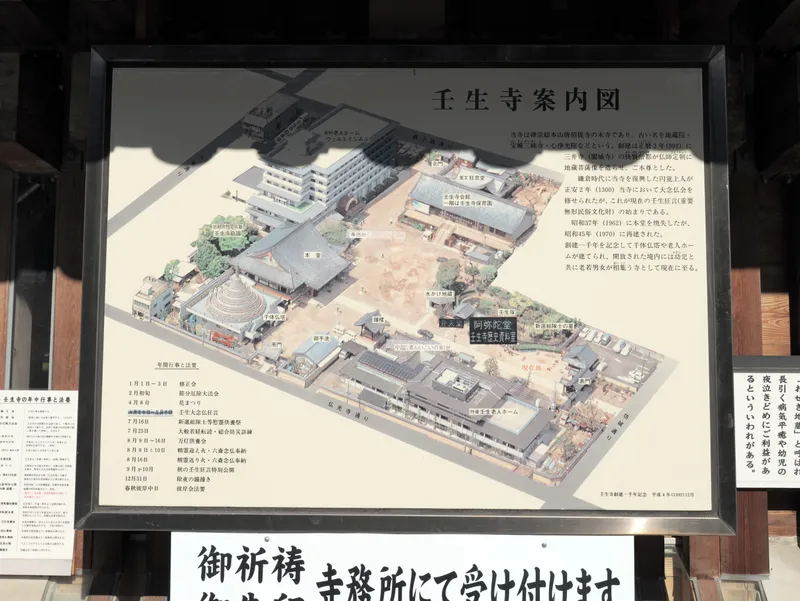
Founded in 991 as a temple for warding off misfortune, whose February setsubun rite has about nine hundred years of history.
 Temple
Tofuku-ji
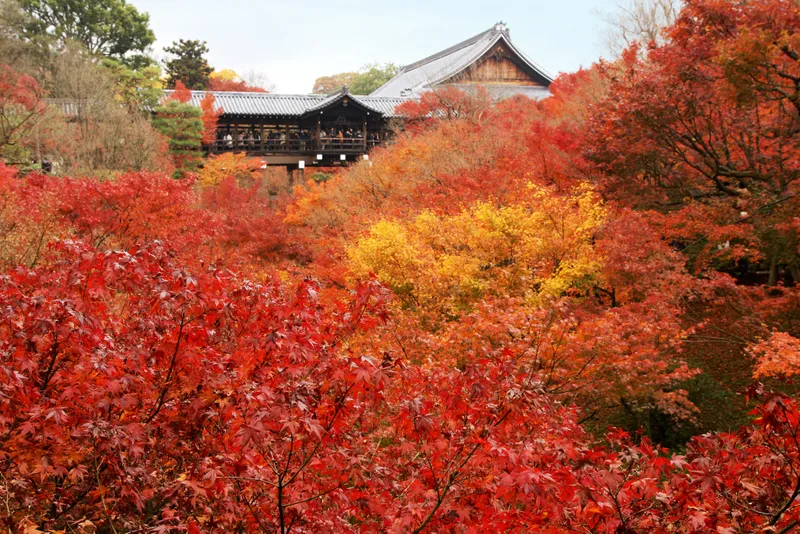
Named with one character each from Nara’s Todai-ji and Kofuku-ji, and built over nineteen years from 1236.
 Temple
Rokuharamitsu-ji
- Health & Healing
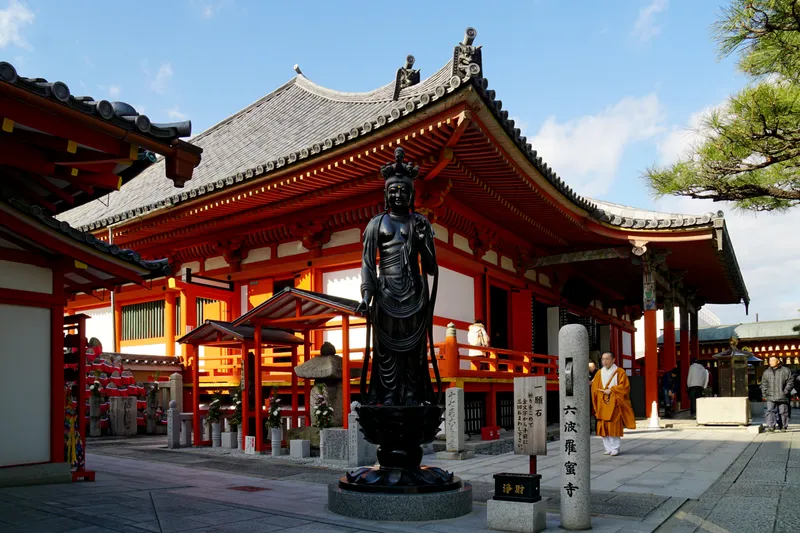
Founded in 951, where Kuya hauled a Kannon he had carved through the streets against an epidemic — and the tea he gave the sick is still served.
 Shrine
Fushimi Inari Taisha
- Money & Prosperity
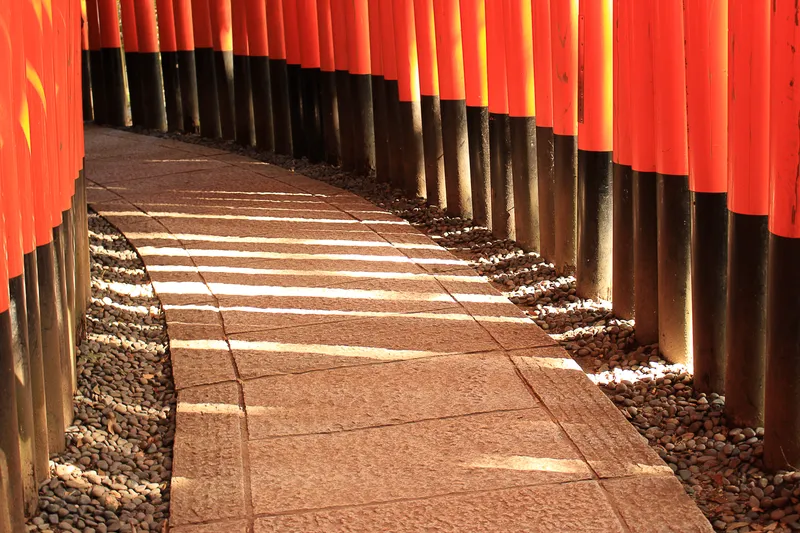
The head shrine of the thirty thousand Inari shrines across Japan, whose deity is venerated for harvests and the prosperity of trade.
 Temple
Kennin-ji
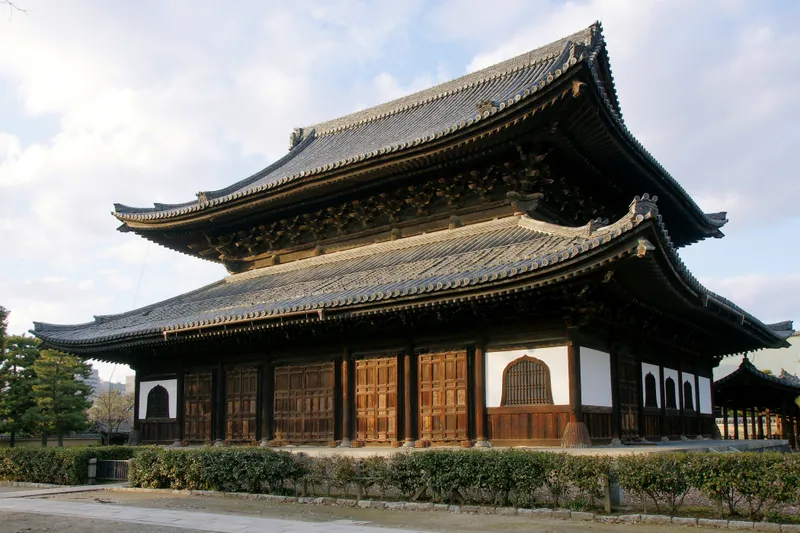
Kyoto’s first Zen temple, founded in 1202 when the shogun Minamoto no Yoriie gave the land and Eisai became founding abbot.
 Temple
Rokkakudo
- Skill & Mastery
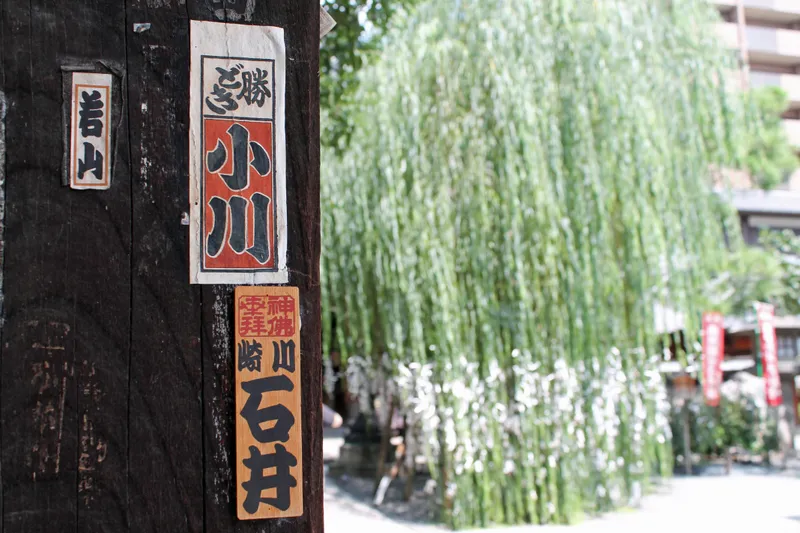
Said to be founded by Prince Shotoku, and the birthplace of ikebana — the head of the Ikenobo school serves as its abbot.
 Shrine
Nishiki Tenmangu
- Exams & Study
A shrine to Sugawara no Michizane, known as the deity of learning, standing in the middle of an arcade facing the Nishiki food market.
No places match your filters