Hokkaido Jingu
Sapporo Shrine
Researched and translated with AI assistance. Every claim is linked to its source, but errors get through, so check the official site for opening times, fees and closures.About
In short
A shrine that begins with three deities enshrined in Tokyo in 1869, shipped to Hakodate, and carried the rest of the way to Sapporo on the back of the colonisation magistrate Shima Yoshitake.
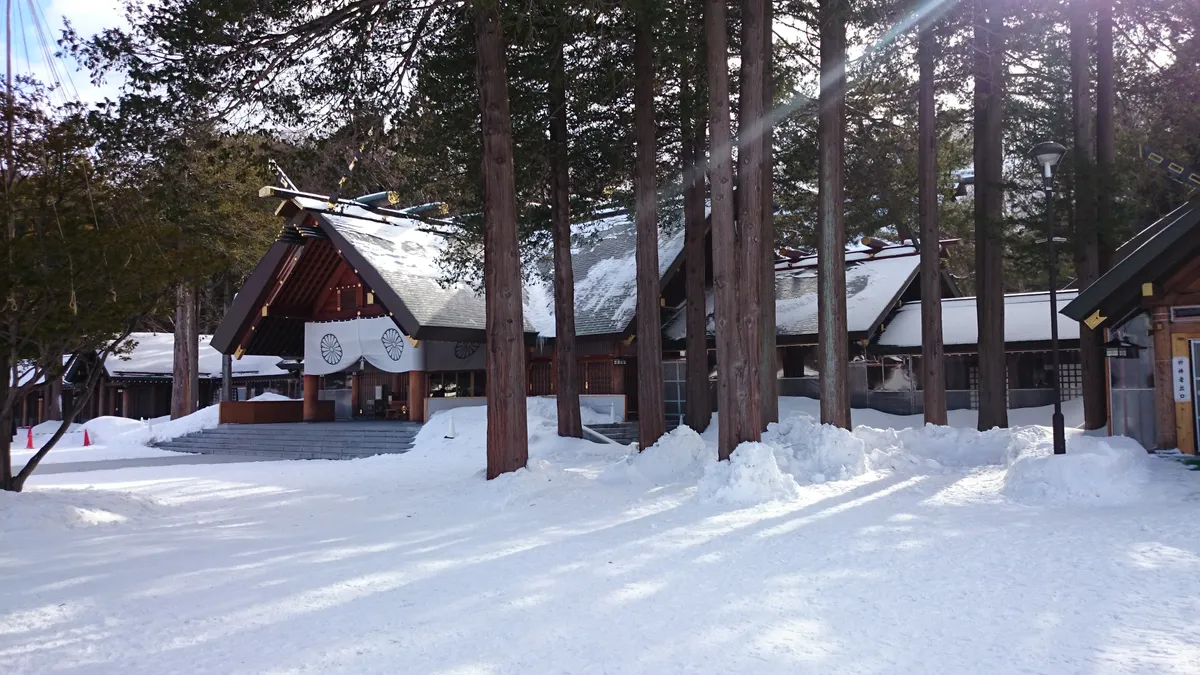
Quick facts
- Address
- 474 Miyagaoka, Chuo-ku, Sapporo, Hokkaido
- Spiritual entities
- Emperor Meiji (明治天皇) · Ōkuninushi (大国主命)
About this place
Hokkaido Jingu stands in Chuo-ku, Sapporo. Its deities are Okunitama, Onamuchi, Sukunahikona and Emperor Meiji. On the first day of the ninth month of 1869, by decree of Emperor Meiji, the Jingikan in Tokyo performed the rite enshrining the three colonisation deities — Okunitama, Onamuchi and Sukunahikona. On the twenty-first day of that month the spirit-tokens were borne by Higashikuze Michitomi, the second colonisation commissioner, aboard the British ship Thales to Hakodate, and from Hakodate the colonisation magistrate Shima Yoshitake carried them on his back into Sapporo. A temporary hall was raised at Kita 5-jo Higashi 1-chome in 1870; in 1871 the shrine was named Sapporo Jinja and ranked a national shrine, and in the ninth month of that year a hall was built at Maruyama. It was raised to the highest imperial rank in 1899, and in 1913 a main hall was completed using old timber from Ise. On 5 October 1964 Emperor Meiji was added and the shrine was renamed Hokkaido Jingu. The annual festival is 15 June. No benefit that may be prayed for is stated.
Origin and history
On the first day of the ninth month of 1869, by decree of Emperor Meiji, the Jingikan in Tokyo performed the rite enshrining the three colonisation deities — Okunitama, Onamuchi and Sukunahikona.
On the twenty-first day of that month the spirit-tokens were borne by Higashikuze Michitomi, the second colonisation commissioner, aboard the British ship Thales to Hakodate, and from Hakodate the colonisation magistrate Shima Yoshitake carried them on his back into Sapporo. A temporary hall was raised at Kita 5-jo Higashi 1-chome in 1870; in 1871 the shrine was named Sapporo Jinja and ranked a national shrine, and in the ninth month of that year a hall was built at Maruyama.
It was raised to the highest imperial rank in 1899, and in 1913 a main hall was completed using old timber from Ise. On 5 October 1964 Emperor Meiji was added and the shrine was renamed Hokkaido Jingu.
What it is locally associated with
Carried into Sapporo on a man’s back
The spirit-tokens crossed to Hakodate aboard the British ship Thales, and from Hakodate the colonisation magistrate Shima Yoshitake carried them into Sapporo on his back.
documented historyThree deities enshrined in Tokyo
By decree of Emperor Meiji, the Jingikan in Tokyo performed the rite enshrining Okunitama, Onamuchi and Sukunahikona in the ninth month of 1869.
documented historyA main hall of old Ise timber
Raised to the highest imperial rank in 1899, and in 1913 a main hall was completed using old timber from Ise.
documented history
This shrine begins with gods being carried. The spirit-tokens crossed to Hakodate aboard the British ship Thales, and from Hakodate the colonisation magistrate Shima Yoshitake carried them into Sapporo on his back — a ship, and then a man’s back. Nowhere else on this list records not just where a god came from but how it travelled.
The shrines on this list are usually gods of their own ground. Omiwa in Nara takes a mountain as the body of its deity, Fushimi Inari in Kyoto takes Inari-yama, and Munakata Taisha in Fukuoka stands on islands out at sea. Here it runs the other way: the deities were enshrined at the Jingikan in Tokyo and brought afterwards. Most of Sapporo’s shrines have the same shape — Kotoni Jinja’s farmer-soldiers brought the founder of the domain they had left, Miyoshi Jinja’s founder brought a divided spirit from Akita, and Nishino Jinja’s five households came holding the guardian deity of home.
The name has changed twice. It was fixed as Sapporo Jinja in 1871, and became Hokkaido Jingu in 1964 when Emperor Meiji was added. Hikosan Jingu in Fukuoka was renamed twice by imperial order and Fuuji Hachimangu at Tagawa a character at a time by its lords. This one was renamed because the company of its gods grew.
The 1913 main hall was built with old timber from Ise. The page names no benefit, so this page carries no tag for what may be prayed for.
Claims and evidence levels 2
- The spirit-tokens were shipped to Hakodate and carried from there into Sapporo on the back of the colonisation magistrate Shima Yoshitake. documented history
- Named Sapporo Jinja in 1871, it was renamed Hokkaido Jingu in 1964 when Emperor Meiji was added to its deities. documented history
Related guides
- How to visit a shrine or temple in JapanThe country-wide basics: purifying at the water basin, the two-bows-two-claps-one-bow form at shrines, and what temples do instead.
- What a "power spot" actually isA modern Japanese coinage, not a traditional religious category. Where the word came from, what it does and does not claim, and why this site uses it anyway.
- Shrine or temple?A shrine is Shinto and a temple is Buddhist, and you can usually tell at the gate. Why the line is cleaner on paper than on the ground, and what a government order in 1868 has to do with it.
- Omamori, ema, omikuji and goshuinThe four things you are most likely to receive, write, draw or be given at a shrine or temple, what each is actually for, and the one of them people most often get wrong.
Sources
Last updated:
Similar places
8 places
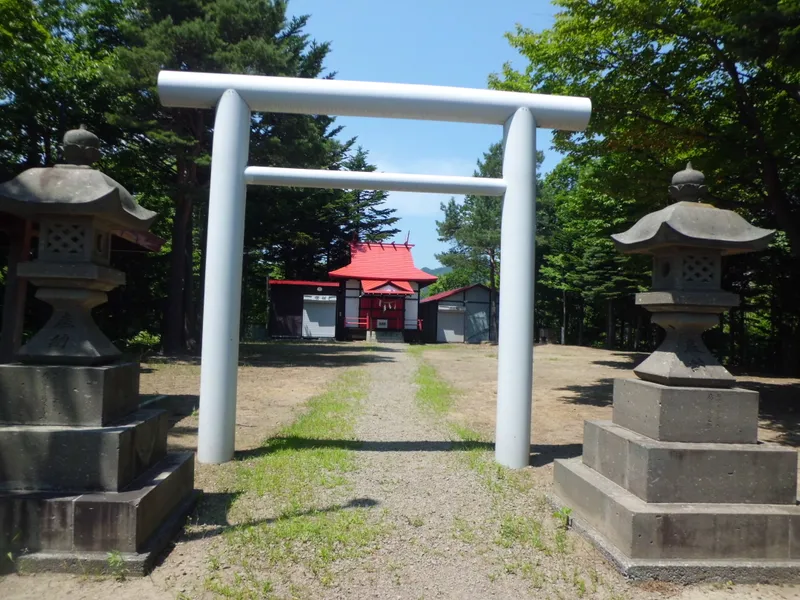 Shrine
Sapporo Fujino Jinja
Begins in September 1961 when the people of the Nonozawa district raised a wooden marker post; a hall followed eleven years later.
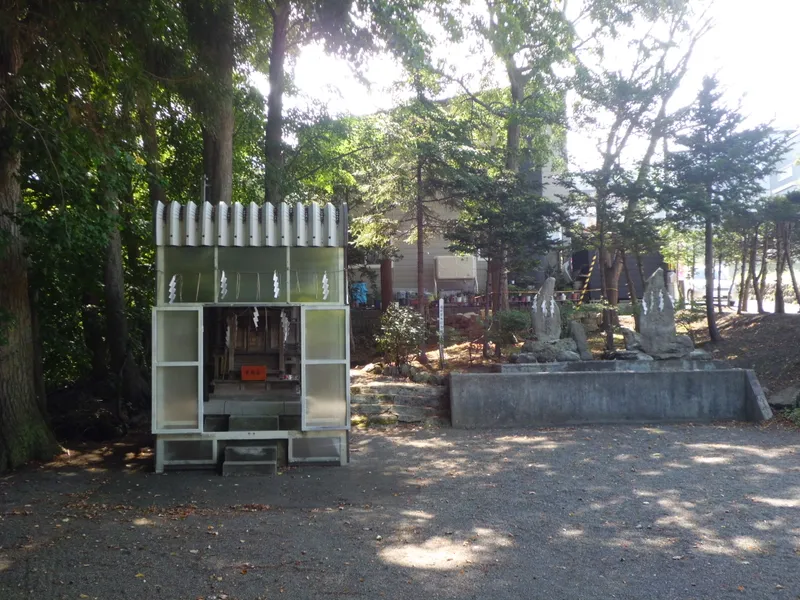 Shrine
Maruyama-nishimachi Jinja
Its hall is the shrine that once stood on the roof of the Hokkaido Takushoku Bank’s head office, handed over in 1951.
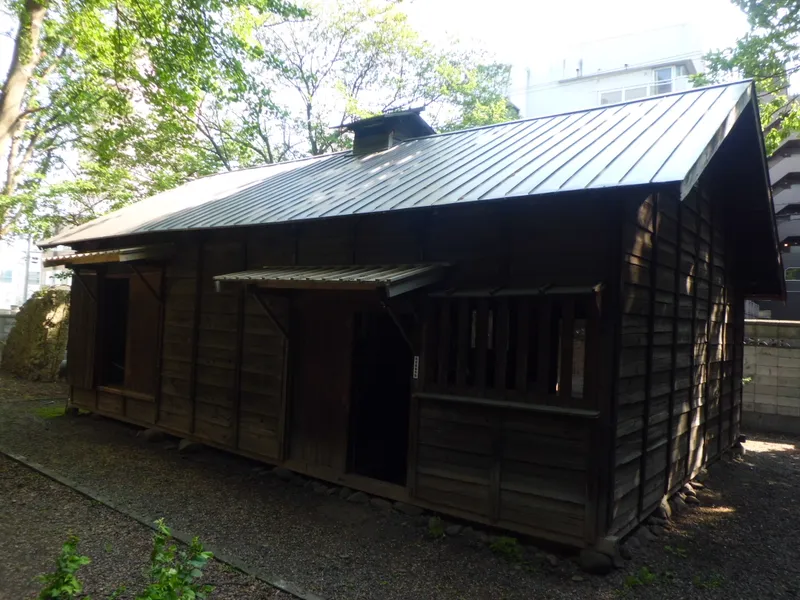 Shrine
Kotoni Jinja
Founded by the 240 households of Hokkaido’s first farmer-soldiers, who gave their old domain’s founder a god’s name and built the shrine under it.
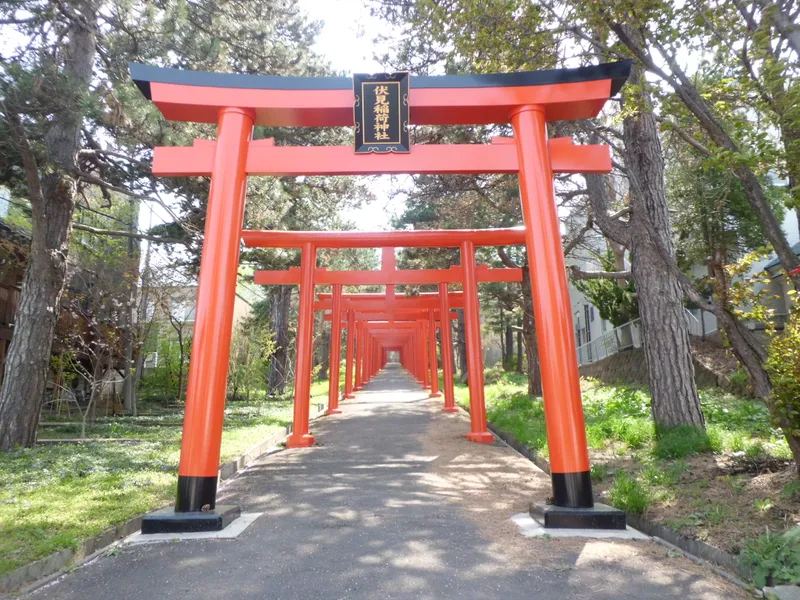 Shrine
Sapporo Fushimi Inari Jinja
- Career & Work
- Money & Prosperity
Begins in 1884 with a divided spirit brought from Fushimi Inari Taisha in Kyoto, and holds its deity to be the progenitor of food, clothing and shelter, and guardian of harvests, industry and trade.
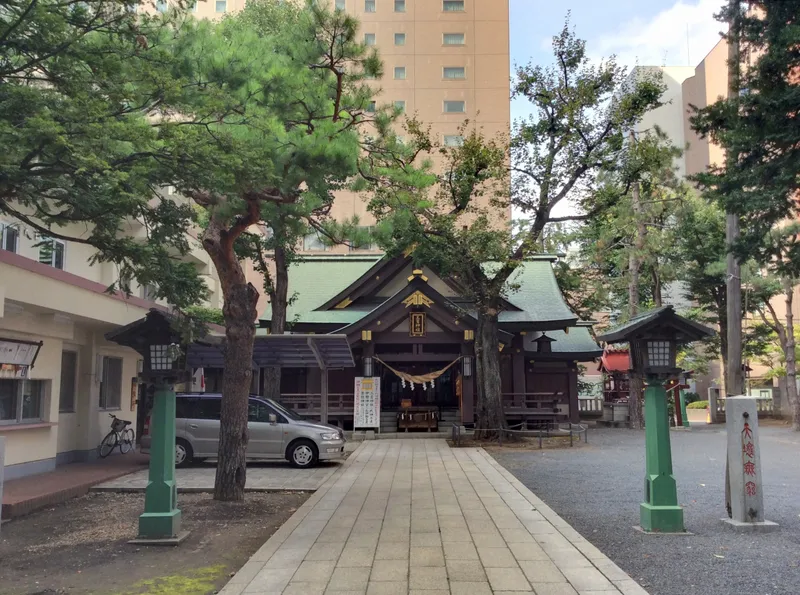 Shrine
Sapporo Miyoshi Jinja
Begins in 1878 when Kimura Tōkichi, a man from Akita, enshrined a divided spirit of his home province’s Miyoshi Shrine on the east bank of the Toyohira river.
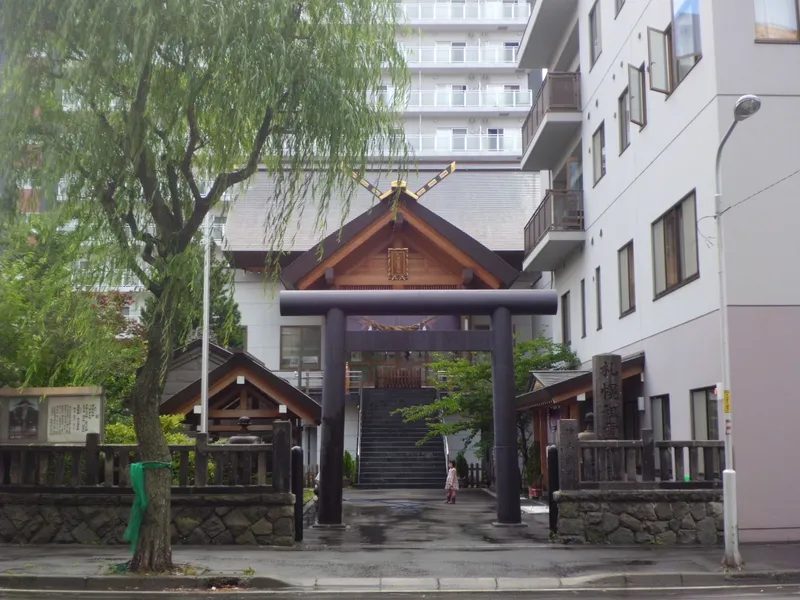 Shrine
Sapporo Sorei Jinja
Begins in 1871 with a spirit shrine built at the entrance to a communal burial ground.
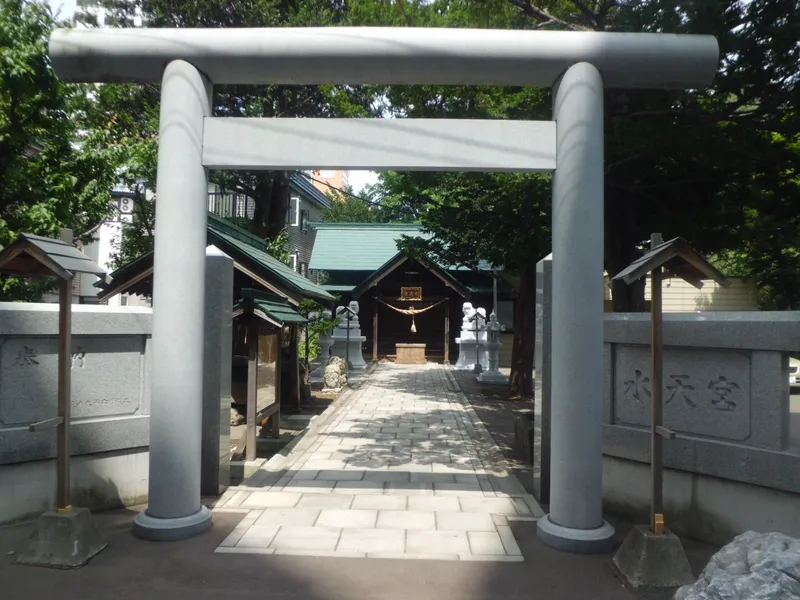 Shrine
Sapporo Suitengu
Begins in 1884 when Mizuno Genshirō, a former retainer of the Kurume domain, carried a divided spirit north from the head shrine of Suitengu at Kurume in Kyushu; it is Japan’s thirty-ninth branch shrine.
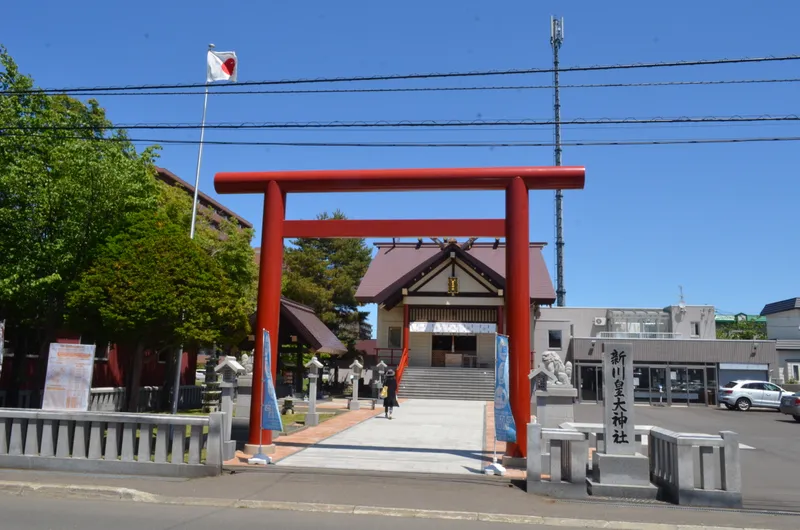 Shrine
Shinkawa Kotai Jinja
A shrine whose history records that seven promoters and thirty-seven parishioners served at its enshrinement rite in 1908.
No places match your filters