Munakata Taisha Nakatsu-gu
Nakatsu-gu
Researched and translated with AI assistance. Every claim is linked to its source, but errors get through, so check the official site for opening times, fees and closures.About
In short
One of the three halls of Munakata Taisha, standing on the island of Oshima, where Tagitsuhime is enshrined and the weaver and the herdsman each have a shrine of their own.
Quick facts
- Address
- 1811 Oshima, Munakata, Fukuoka
- Spiritual entities
- Izanagi (伊邪那岐命) · Izanami (伊邪那美命)
About this place
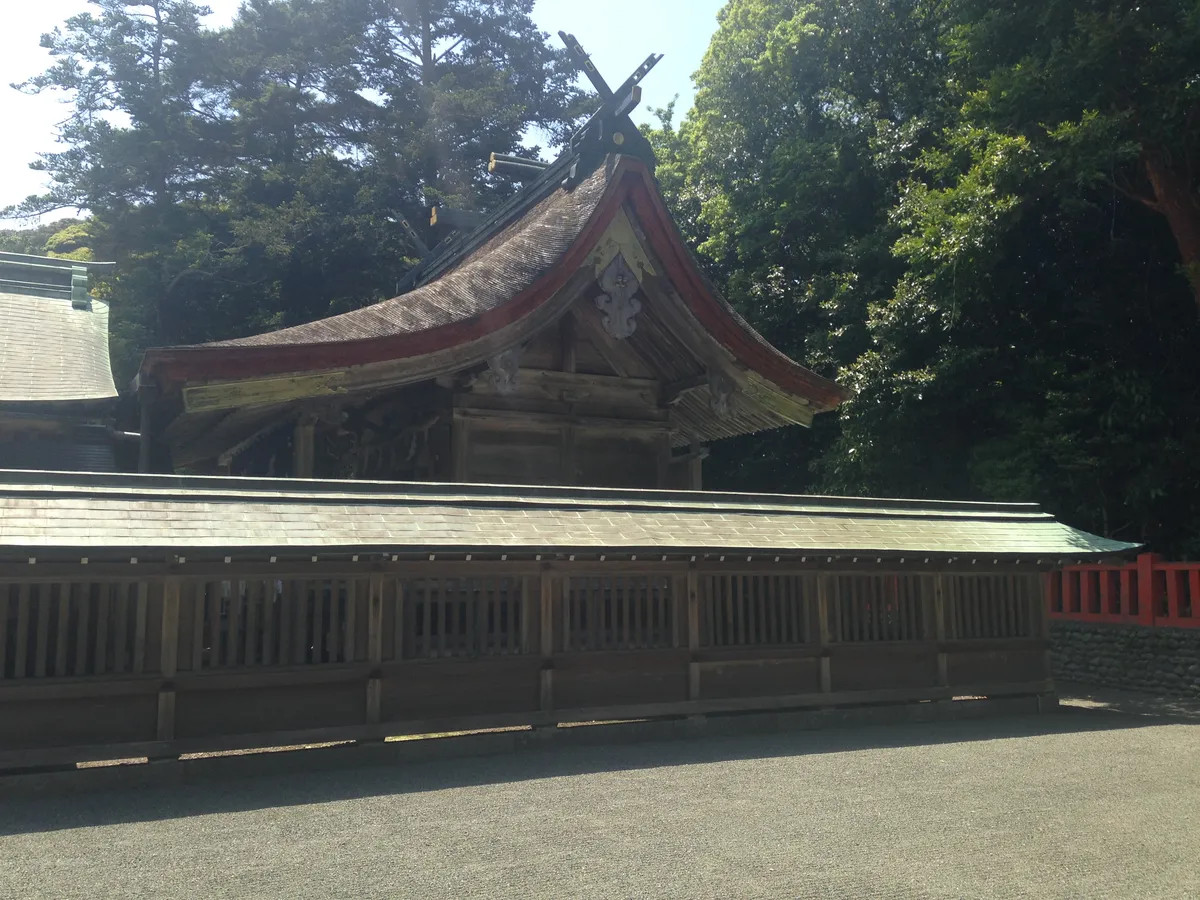
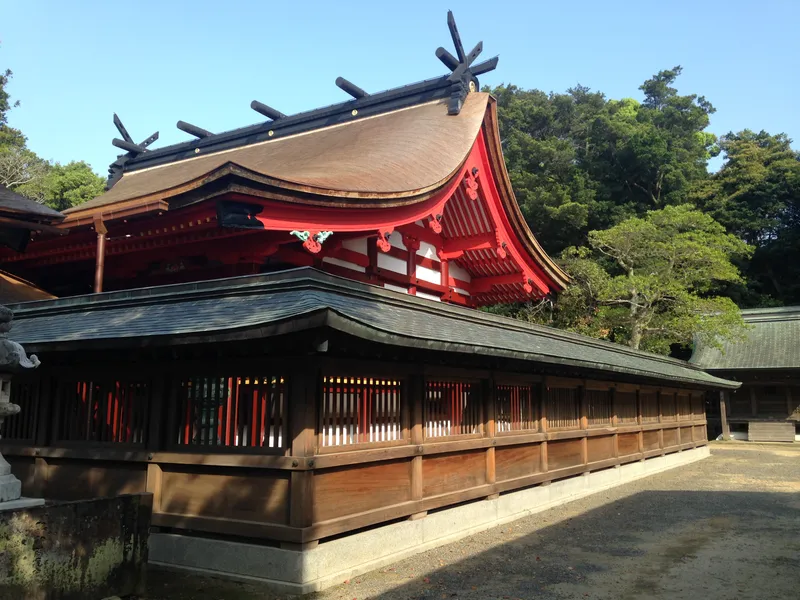
Munakata Taisha Nakatsu-gu stands on the island of Oshima in Munakata, Fukuoka, and is one of the three halls of Munakata Taisha. Its deity is Tagitsuhime. The main hall dates from 1566 and is a prefecturally designated cultural property; the worship hall was built in 1928. Within the precinct stand the Weaver Shrine, enshrining Izanami, and the Herdsman Shrine, enshrining Izanagi. The page states no benefit that may be prayed for.
Origin and history
Munakata Taisha Nakatsu-gu stands on the island of Oshima, and its deity is Tagitsuhime.
The main hall dates from 1566 and is a prefecturally designated cultural property; the worship hall was built in 1928.
Within the precinct stand the Weaver Shrine, enshrining Izanami, and the Herdsman Shrine, enshrining Izanagi.
What it is locally associated with
The Weaver and the Herdsman
Within the precinct stand the Weaver Shrine, enshrining Izanami, and the Herdsman Shrine, enshrining Izanagi.
documented historyOne of three halls, to Tagitsuhime
It stands on Oshima as one of the three halls of Munakata Taisha, and its deity is Tagitsuhime.
documented historyA main hall of 1566
The main hall dates from 1566 and is a prefecturally designated cultural property; the worship hall was built in 1928.
documented history
In this precinct the two figures of the star festival each stand as a shrine of their own — the Weaver Shrine and the Herdsman Shrine. But who is enshrined in them is the surprise: Izanami in the Weaver Shrine, Izanagi in the Herdsman Shrine. The woman at the loom and the man with the oxen are identified with the pair who made the land. That identification is the page’s own.
This hall is on an island. Munakata Taisha Hetsu-gu, also on this list, is the hall on the mainland, and the shrine as a whole is divided across Okitsu-gu, Nakatsu-gu and Hetsu-gu. One shrine in three places, two of them out at sea. Of the three goddesses, this hall holds Tagitsuhime.
The buildings carry dates. The main hall is of 1566 and prefecturally designated; the worship hall is of 1928 — two structures standing together with nearly four centuries between them.
The page names no benefit, so this page carries no tag for what may be prayed for.
Claims and evidence levels 2
- Nakatsu-gu on Oshima is one of the three halls of Munakata Taisha, and its deity is Tagitsuhime. documented history
- Its main hall dates from 1566 and is a prefecturally designated cultural property; the Weaver Shrine enshrines Izanami and the Herdsman Shrine Izanagi. documented history
Related guides
- How to visit a shrine or temple in JapanThe country-wide basics: purifying at the water basin, the two-bows-two-claps-one-bow form at shrines, and what temples do instead.
- What a "power spot" actually isA modern Japanese coinage, not a traditional religious category. Where the word came from, what it does and does not claim, and why this site uses it anyway.
- Shrine or temple?A shrine is Shinto and a temple is Buddhist, and you can usually tell at the gate. Why the line is cleaner on paper than on the ground, and what a government order in 1868 has to do with it.
- Omamori, ema, omikuji and goshuinThe four things you are most likely to receive, write, draw or be given at a shrine or temple, what each is actually for, and the one of them people most often get wrong.
Sources
- 中津宮 — Munakata Taisha (accessed 2026-08-15)
Last updated:
Similar places
8 places
 Shrine
Taga Shrine
- Fertility & Children
- Health & Healing
- Love & Romance
A shrine to Izanagi and Izanami, the married pair who made the land and bore the eight million deities, where prayers run from long life to safety on a worksite.
 Shrine
Washio Atago Shrine
Transmitted as founded some nineteen hundred years ago, it took its present name in 1901 when Washio Shrine and Atago Shrine became one; it is one of the three great Atago shrines.
 Sacred Mountain
Hikosan Jingu
- Career & Work
- Protection & Safety
A mountain shrine that began as “the mountain of the sun’s child” and had its name altered twice by imperial act, in 819 and again in 1729; its virtues are the guarding of farming, mines and factory safety, and fortune in winning.
 Shrine
Sumiyoshi Shrine
- Protection & Safety
- Purification
Said to be the first of the 2,129 Sumiyoshi shrines in the country, and revered as a deity who guards against every calamity by means of purity of body and mind.
 Shrine
Umi Hachimangu
- Family & Home
- Fertility & Children
Empress Jingu gave birth to Emperor Ojin here, holding on to the branch of a pagoda tree, and the town’s name comes from that delivery.
 Shrine
Munakata Taisha Okitsu-gu Yohaisho
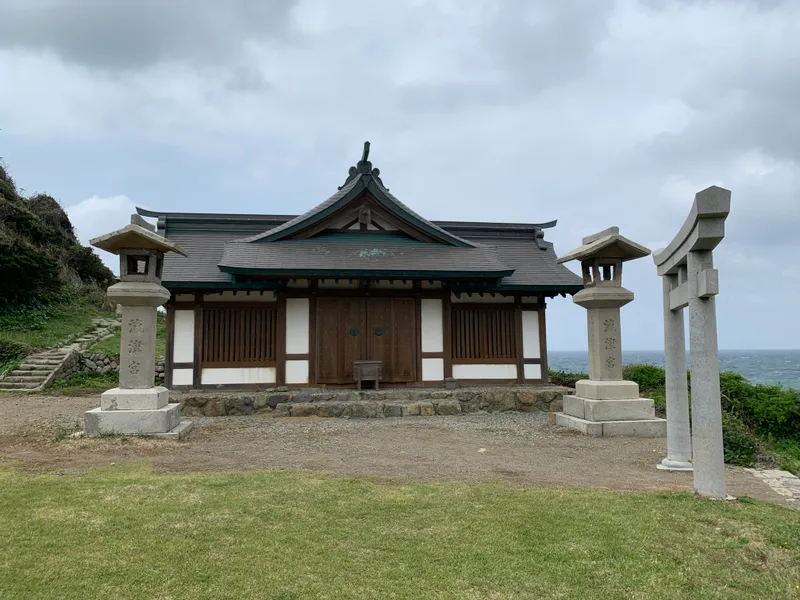
A place on Oshima built for worshipping Okitsu-gu across the water, on the island of Okinoshima, which no one but a priest may enter.
 Temple
Chinkoku-ji
Kobo Daishi met a great storm on his crossing to Tang China and was saved when Fudo Myoo appeared among the waves; after returning he opened this temple on Mount Byobu.
 Shrine
Munakata Taisha
Three goddesses, daughters of Amaterasu, enshrined across three halls, with some eighty thousand national treasures excavated from the island of Okinoshima confirming traces of state ritual.
No places match your filters